In an era increasingly defined by environmental consciousness, reducing waste has emerged as a critical imperative for individuals, communities, and businesses alike. This comprehensive reduction of waste guide offers actionable insights and proven strategies to minimize your environmental footprint, conserve resources, and embrace a more sustainable lifestyle. Drawing on decades of experience, we delve into the core principles, practical applications, and best practices that underpin effective waste management.
From simple everyday choices to large-scale industrial transformations, understanding how to implement effective waste-reduction strategies is crucial for fostering a healthier planet. Join us as we explore the journey towards a world where less truly means more.
Why Waste Reduction Matters: The Big Picture
The accumulation of waste poses significant challenges to our planet, impacting ecosystems, economies, and public health. Every item we discard contributes to landfills, which are major sources of greenhouse gas emissions and pollution. Embracing the reduction of waste philosophy isn’t just an eco-friendly trend; it’s a fundamental shift towards responsible resource management.
- Environmental Protection: Less waste means fewer resources extracted, less energy consumed in manufacturing, and reduced pollution from disposal.
- Resource Conservation: By reducing consumption and reusing items, we preserve valuable natural resources for future generations.
- Economic Benefits: Waste reduction can lead to significant cost savings for households and businesses through reduced purchasing, lower waste disposal fees, and increased material efficiency.
- Health Improvement: Minimizing landfill reliance and incineration reduces air and water pollution, leading to better public health outcomes.
- Climate Change Mitigation: Reduced production and waste decomposition significantly lowers greenhouse gas emissions.
“The greatest threat to our planet is the belief that someone else will save it.” – Robert Swan. Waste reduction is a personal and collective responsibility we must all embrace.
Practical Reduction of Waste Tips for Everyday Life
Implementing effective reduction of waste tips doesn’t require drastic lifestyle changes overnight. Small, consistent efforts can collectively make a monumental difference. Here are some actionable strategies:
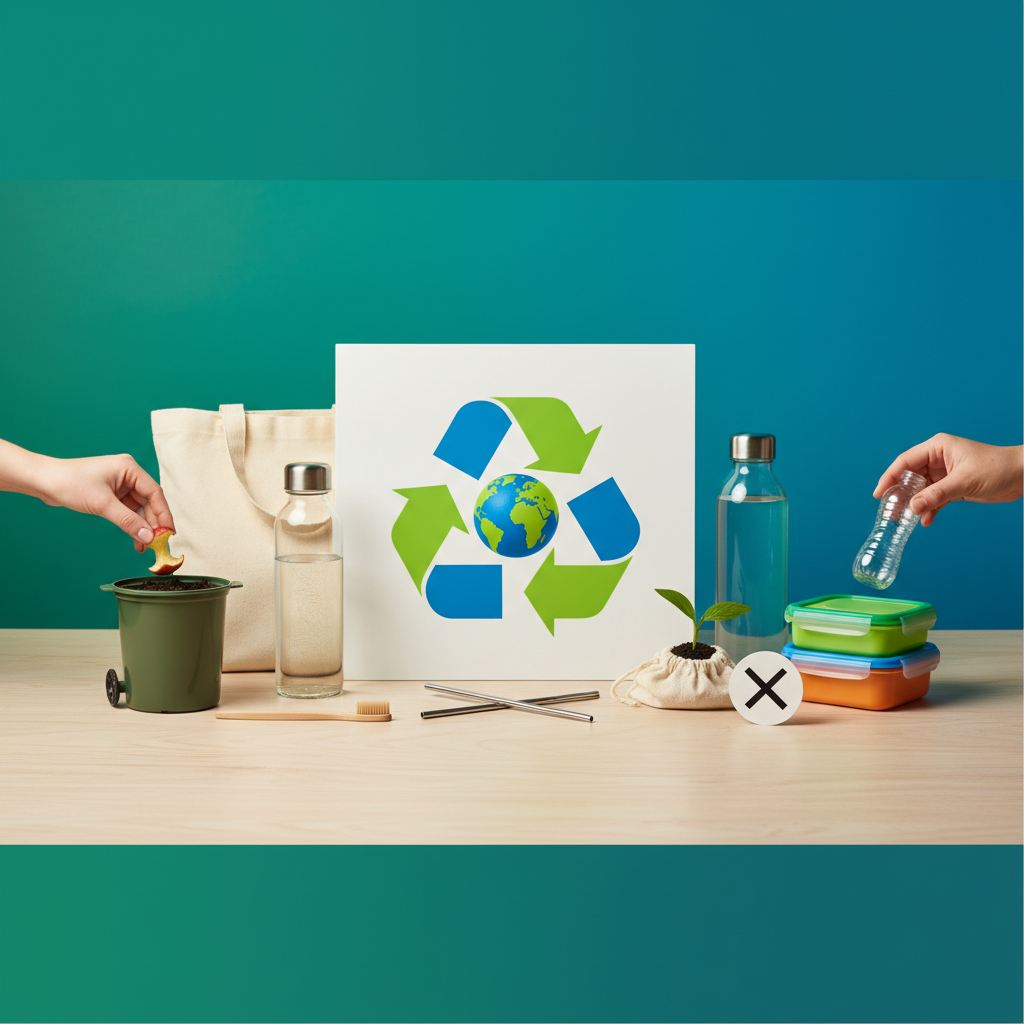
- Refuse What You Don’t Need: Say no to freebies, plastic bags, and excessive packaging. Carry a reusable water bottle and coffee cup.
- Reduce Consumption: Prioritize needs over wants. Before buying, ask yourself: Do I truly need this? Can I borrow it, repair it, or buy it second-hand?
- Reuse Items: Opt for reusable containers, shopping bags, and batteries. Repurpose old items rather than discarding them (e.g., old t-shirts as cleaning rags).
- Compost Food Scraps: A significant portion of household waste is organic. Composting not only reduces landfill waste but also creates nutrient-rich soil.
- Buy in Bulk: Reduce packaging by purchasing groceries and household items in larger quantities or from bulk bins using your own containers.
- Repair, Don’t Replace: Extend the life of appliances, clothing, and electronics by repairing them instead of buying new.
- Mindful Shopping: Choose products with minimal, recyclable, or compostable packaging. Support brands committed to sustainability.
Reduction of Waste Examples Across Industries
The principles of reduction of waste are adaptable and beneficial across diverse sectors. Observing successful reduction of waste examples can inspire new initiatives:
- Manufacturing: Implementing lean manufacturing processes to minimize scrap material, optimizing packaging designs, and reusing by-products.
- Retail: Reducing plastic bag usage, offering refill stations for products, and optimizing supply chain logistics to prevent product damage and returns.
- Food Service: Donating surplus food, composting kitchen waste, using reusable dishware, and implementing “ugly” produce initiatives.
- Construction: Recycling demolition debris, salvaging materials for reuse, and designing buildings for deconstruction.
- Healthcare: Sterilizing and reusing certain medical instruments, optimizing supply inventories to prevent expiration, and responsible disposal of hazardous waste.
Many organizations are leading the charge. For further inspiration, explore the U.S. Environmental Protection Agency’s resources on waste reduction.
Implementing a Reduction of Waste Template: A Step-by-Step Approach
For organizations and dedicated individuals, a structured approach is key to achieving significant waste reduction. This reduction of waste template provides a roadmap:
- Conduct a Waste Audit: Identify what kind of waste is generated, in what quantities, and from where. This is your baseline for effective waste reduction.
- Set Clear Goals: Based on your audit, establish measurable, achievable, relevant, and time-bound (SMART) goals. E.g., “Reduce landfill waste by 20% within 12 months.”
- Develop an Action Plan: Outline specific strategies to meet your goals. This might include new purchasing policies, employee training, or infrastructure changes (e.g., new recycling bins).
- Implement and Educate: Roll out your plan. Crucially, educate all stakeholders (employees, family members) on new procedures and the importance of their participation.
- Monitor and Measure Progress: Regularly track your waste generation against your baseline. Are you meeting your goals? What’s working? What isn’t?
- Review and Refine: Use your data to adjust your strategies. Continuous improvement is vital for long-term success.
Waste Audit Checklist Example
This table provides a basic checklist for conducting a preliminary waste audit, a crucial step in any waste reduction template.
| Waste | Category | Common | Items Current Disposal Method Reduction Opportunity |
|---|---|---|---|
| Paper | Office paper, cardboard, newspapers | Recycling bin, general waste | Go digital, double-sided printing, reuse boxes |
| Plastics | Packaging, bottles, containers | Recycling bin, general waste | Buy in bulk, choose plastic-free alternatives, reuse containers |
| Organic/Food | Food scraps, garden waste | General waste | Compost, plan meals, donate edible surplus |
| Electronics (E-waste) | Old phones, computers, batteries | Specialized recycling, general waste | Repair, extend lifespan, certified e-waste recycling |
| Textiles | Old clothes, fabric scraps | Donation, general waste | Repair, upcycle, donate to charities |
Best Practices for Sustainable Waste Management
Beyond individual efforts, systemic changes and embracing the reduction of waste best practices are essential for true sustainability. These include:
- Circular Economy Principles: Moving away from a linear “take-make-dispose” model to one where resources are kept in use for as long as possible, extracting maximum value from them, then recovering and regenerating products and materials at the end of each service life. Learn more about the circular economy from the Ellen MacArthur Foundation.
- Product Redesign: Manufacturers designing products for durability, repairability, and recyclability from the outset.
- Extended Producer Responsibility (EPR): Holding producers accountable for the entire lifecycle of their products, including post-consumer waste management.
- Community-Level Initiatives: Supporting local repair cafes, community composting programs, and municipal bulk waste collection events.
- Policy and Regulation: Advocating for government policies that incentivize waste reduction and disincentivize waste generation.
Your Reduction of Waste Checklist
Use this simple reduction of waste checklist to evaluate your current habits and identify areas for improvement:
- ✓ Do I carry reusable bags for shopping?
- ✓ Do I use a reusable water bottle and coffee cup?
- ✓ Do I plan meals to avoid food waste?
- ✓ Do I compost food scraps or use a food waste disposal service?
- ✓ Do I buy products with minimal or recyclable packaging?
- ✓ Do I repair items before buying new ones?
- ✓ Do I donate or sell items I no longer need instead of discarding them?
- ✓ Do I properly sort my recyclables according to local guidelines?
- ✓ Do I avoid single-use plastics whenever possible?
- ✓ Have I considered alternatives like package-free soaps or detergents?
If you answered “No” to any of these, that’s an opportunity for a positive change!
Frequently Asked Questions About Waste Reduction
Q: What is the most effective way to start reducing waste?
A: The most effective way to start is by focusing on the “Reduce” principle first. Evaluate your consumption habits. Can you buy less, borrow more, or choose reusable alternatives? Addressing food waste at home is also a high-impact area, as organic waste contributes significantly to landfills and greenhouse gases. Small, consistent changes build momentum.
Q: How can businesses effectively implement waste reduction strategies?
A: Businesses should begin with a thorough waste audit to understand their waste streams. Key strategies include optimizing procurement to reduce packaging, implementing comprehensive recycling and composting programs, training employees on waste reduction, and exploring opportunities to reuse or repurpose materials within their operations. Embracing circular economy principles in product design and supply chains offers long-term benefits. For more, see our hypothetical internal resource: Business Sustainability Strategies.
Q: What’s the difference between reducing, reusing, and recycling?
A: These are the three R’s of waste hierarchy, in order of preference for environmental benefit:
- Reduce: Preventing waste from being created in the first place by consuming less. This is the most impactful step in the reduction of waste.
- Reuse: Finding new purposes for items or using them multiple times before disposal. This extends the lifespan of products.
- Recycle: Processing used materials into new products to prevent waste of potentially useful materials and reduce the consumption of fresh raw materials. While good, it still requires energy and resources, making it less impactful than reduce or reuse.
Conclusion: Embracing a Future with Less Waste
The journey towards a world with reduced waste is a collective one, requiring dedication and conscious choices from every individual and organization. This waste reduction guide has highlighted the critical importance of minimizing our environmental footprint and provided a comprehensive framework of waste reduction tips, examples, and best practices.
By integrating a practical reduction of waste checklist into our daily lives and business operations, we not only protect our planet but also foster innovation and economic efficiency. Let’s commit to making waste reduction a cornerstone of our efforts towards a truly sustainable future. Every decision, no matter how small, contributes to the bigger picture.
About the author