Eco-Friendly Waste Containers Transform Office Recycling: Practical Steps to Cut Costs and Boost Sustainability
By BKThemes
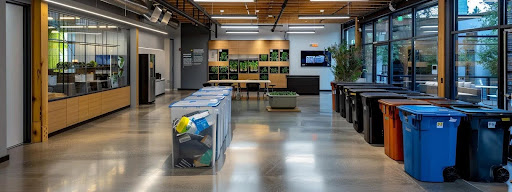
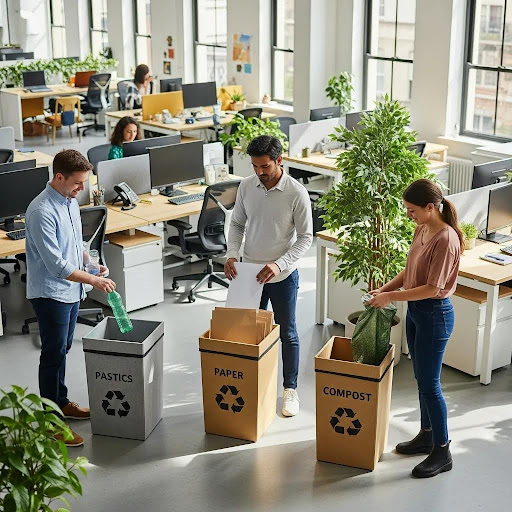
Workplaces today need smarter, greener waste systems. Purpose-built eco-friendly waste containers make recycling simpler for employees, lower disposal bills, and help offices meet regulatory expectations. When the right containers are paired with clear processes, recycling becomes easier to follow and more cost-effective to run. This article explains how those containers save money, what compliance looks like, ways to improve recycling efficiency, and how multi-site organizations scale successful programs — with real examples.
Effective waste management is more than a bin — it’s an organized system. Research on sustainable development shows that a mix of prevention, reuse and recycling strategies delivers the best results.
Sustainable Waste Management Strategies for Resource Conservation
Waste management includes collection, transport, processing and disposal. Tactics such as prevention, recycling, reuse and recovery ease pressure on landfills, conserve resources and lower energy use. These approaches help organizations use materials more efficiently and support long-term sustainability.
Waste management strategies for sustainable development, C Wan, 2019
How Eco-Friendly Waste Containers Cut Office Recycling Costs
The right containers make sorting straightforward and reduce contamination — both of which directly lower disposal costs. Durable, recyclable bins last longer and reduce replacement spend, and when combined with stronger recycling practices they can reduce pickup frequency and landfill charges. Adopting eco-friendly waste containers delivers measurable savings and helps build a workplace culture that supports ongoing sustainability.
What Cost-Reduction Benefits Recyclable Containers Deliver

Recyclable containers lower costs in three key ways. First, they divert material from expensive landfill disposal. Second, clearer sorting improves the quality and value of recyclables, which can lower overall waste-management fees. Third, properly sized or better-designed bins reduce collection frequency, cutting transport and service costs over time.
How Multi-Location Businesses Scale Container Solutions
Rolling out a consistent container program across sites requires a central plan plus local flexibility. Standardized bin styles and signage simplify training, while site-level adjustments account for local regulations and unique waste streams. Adding technology — like fill-level sensors and centralized reporting — lets managers monitor performance across locations and focus improvements where they’ll have the most impact.
What Compliance Requirements Apply to Office Recycling Containers?
Regulatory compliance is a core consideration when selecting and using eco-friendly containers. Rules differ by jurisdiction but commonly address container materials, labeling and required stream separation. Knowing and following those rules helps avoid fines and keeps your program aligned with environmental guidelines.
Which Regulations Govern Office Recycling Containers?
Local, state and national environmental laws form the basic framework for office recycling. Businesses should ensure their waste containers and labels meet applicable standards — for example, guidance from the U.S. Environmental Protection Agency or equivalent authorities abroad. Properly specified and labeled containers make compliance easier to demonstrate and audit.
How Recyclable Containers Support Waste Management Standards
Purpose-built recyclable containers reduce cross-contamination and make routine segregation practical, which improves compliance metrics. When organizations standardize containers and processes, audits are simpler and reporting is clearer — strengthening reputation while lowering regulatory risk. waste management trends
How Recyclable Waste Containers Raise Office Recycling Efficiency
Smart container design and thoughtful placement remove guesswork for staff. Clear labels, right-sized bins and durable materials lower contamination and speed sorting, which increases recycling rates and streamlines collection operations.
Emerging container technologies also improve material separation — automating repetitive tasks and boosting recovery rates.
Automated Recycling Bins for Improved Material Separation
Researchers describe automated bins that use sensors and actuators to sort incoming items into separate compartments. Technologies such as inductive, capacitive and infrared sensing detect material types, while mechanical components divert items into metal, paper or plastic streams. These systems aim to increase segregation accuracy and processing throughput.
The effectiveness of segregation recyclable materials by automated motorized bin, S Norhafiza, 2018
What Container Sizes and Materials Work Best
Match container size to volume and traffic — large bins in high-use communal areas, smaller ones in private offices and meeting rooms. Choose durable, recyclable materials for the containers themselves so they last and align with sustainability goals. Tailor bin types to the dominant waste streams at each site to reduce overflow and unnecessary pickups.
How Smart Waste Containers Improve Operations
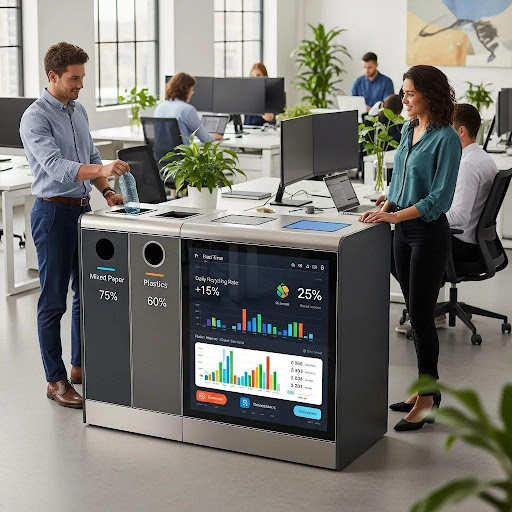
Smart containers add sensors and connectivity to deliver real-time fill data. That information lets teams schedule pickups only when needed, reducing route time and service cost. Over time, the data reveals waste patterns so you can refine bin placement, collection cadence and employee guidance.
Real-time container data is a practical way to cut empty runs and optimize collection logistics.
Real-time Data Optimization for Smart Waste Collection
Sensors in bins can report fill levels continuously. That feed supports dynamic optimization models that plan more efficient collection routes and schedules. Using timely waste-level data is a key advantage of modern smart-collection systems.
A data‐driven optimization approach to plan smart waste collection operations, CS de Morais, 2024
Why Sustainable Waste Programs Matter for Multi-Location Businesses
For companies with multiple sites, consistent waste programs reduce costs, simplify compliance and strengthen corporate responsibility. A clear, scalable approach to containers and procedures minimizes variation between locations and makes it easier to measure and improve performance across the organization.
How Eco-Friendly Containers Support Corporate Sustainability Goals
Eco-friendly containers reduce landfill waste and make recycling part of everyday operations. That helps companies meet sustainability targets, improve public perception, and attract customers and partners who value environmental stewardship. Consistent, repeatable practices also boost employee engagement in sustainability.
Best Practices for Centralized Waste Management
Centralized programs work best when paired with clear segregation rules, consistent signage, employee training and technology for performance tracking. Regular audits reveal opportunities to cut costs and improve compliance. With these building blocks, organizations can scale efficient, auditable waste programs across sites.
Case Studies: Success with Eco-Friendly Office Recycling Containers
Case studies demonstrate how focused container programs produce environmental and financial returns. The examples below highlight measurable outcomes from targeted implementations.
How Businesses Have Cut Costs with Recyclable Containers
Organizations that adopted standardized recyclable containers often report significant reductions in disposal costs. For example, one multi-location firm saw up to a 30% drop in waste disposal expenses in the first year after launching a coordinated recycling container program — driven by higher diversion rates and reduced landfill fees.
Compliance Improvements in Multi-Location Programs
Standardizing containers and procedures across sites improves regulatory compliance and lowers the risk of fines. Companies that implement consistent labeling, training and audits report clearer reporting and a stronger sustainability profile.
Frequently Asked Questions
What materials are suitable for eco-friendly waste containers?
Eco-friendly containers are commonly used for paper, cardboard, plastics, metals and glass. Local recycling rules vary, so confirm which materials are accepted in your area. Choose bins made from recyclable or biodegradable materials where possible to align the container lifecycle with your sustainability goals. Properly matching containers to streams reduces contamination and improves recycling outcomes.
How can businesses encourage employees to use eco-friendly waste containers?
Use clear signage, short hands-on training and regular reminders. Place bins where people naturally discard items and show concrete examples of what belongs in each stream. Recognition programs or team challenges can increase participation and reinforce the desired behavior.
What role does technology play in modern waste management?
Technology — from sensors to analytics — adds visibility and control. Smart bins report fill levels, analytics reveal waste patterns, and route optimization lowers collection costs. Together these tools make programs more efficient and provide the data needed for continuous improvement.
How do eco-friendly waste containers affect corporate branding?
Visible, well-run recycling programs show that a company takes sustainability seriously. That strengthens brand reputation, attracts like-minded customers and partners, and supports marketing messages about environmental responsibility.
What challenges do businesses face when launching eco-friendly waste programs?
Common challenges include changing employee habits, upfront costs for new containers, and aligning practices across jurisdictions with different rules. Address these with phased rollouts, clear communication of benefits, targeted training and by tracking metrics to show early wins.
How can businesses measure the success of recycling initiatives?
Track metrics such as volume or weight recycled, landfill-diversion rates, collection frequency and cost savings. Regular audits and employee surveys add qualitative insight. Use those data points to refine the program and report progress to stakeholders.
Conclusion
Eco-friendly waste containers are a practical, high-impact step toward better office recycling. They reduce contamination, lower costs and support compliance — especially when combined with training and data-driven operations. If you’re ready to improve recycling across your sites, our range of durable, clearly labeled containers and smart tools can help you start saving and meet your sustainability goals today.
About the author