Hazardous environmental waste threatens public health and ecosystems unless it’s managed deliberately and in line with regulations. This guide breaks down what hazardous waste is, how it’s classified, the regulatory frameworks that govern it, and practical disposal and prevention approaches. Whether you run a facility or manage household disposal programs, understanding these fundamentals helps you reduce risk, stay compliant, and protect people and places.
Research consistently shows the serious health and environmental consequences of mishandled hazardous waste — reinforcing the need for strong management systems and clear regulatory oversight.
Hazardous Waste Management: Health, Environment & Regulations
Characterization, health and environmental implications of waste management; treatment approaches and regulations for hazardous waste disposal. Hazardous waste — impact on health and environment and development of improved waste management strategies in India, 2005
What is environmental hazardous waste — and what are its key characteristics?
Hazardous waste includes materials whose chemical or physical properties pose risks to human health or the environment. The U.S. Environmental Protection Agency (EPA) sets criteria that identify wastes requiring special management. Recognizing these traits is the first step toward correct handling, storage, transport, and disposal.
How does the EPA define hazardous waste?
The EPA describes hazardous waste as solid waste (or a combination of solid wastes) that, because of quantity, concentration, or its physical, chemical, or infectious properties, can increase mortality or cause serious or incapacitating illness, or otherwise present a substantial hazard to people or the environment if mismanaged. Common examples include batteries, solvents, and certain industrial by‑products. The EPA’s definition targets wastes that are ignitable, corrosive, reactive, or toxic, so they can be identified and controlled to reduce harm. waste management vendor contracts
What are the four primary characteristics of hazardous waste?
Hazardous waste is commonly identified by four characteristics :
- Ignitability: Materials that readily catch fire and sustain combustion.
- Corrosivity: Substances that corrode metal or have very low or high pH (≤2 or ≥12.5).
- Reactivity: Unstable wastes that can explode, emit toxic gases, or react violently with water.
- Toxicity: Wastes are harmful or fatal when ingested or absorbed, often determined by the Toxicity Characteristic Leaching Procedure (TCLP).
These characteristics guide how a waste stream is managed — from labeling and storage to treatment and final disposal.
Hazardous Waste: Types, Characteristics & Disposal Impact
An overview of waste types, their sources and traits, and how disposal practices affect environmental outcomes. Hazardous waste characteristics and standard management approaches, G Singh, 2022
Identifying the correct characteristics is essential because they determine the legal and technical controls required for safe handling and disposal.
Which types of hazardous waste should you know about?
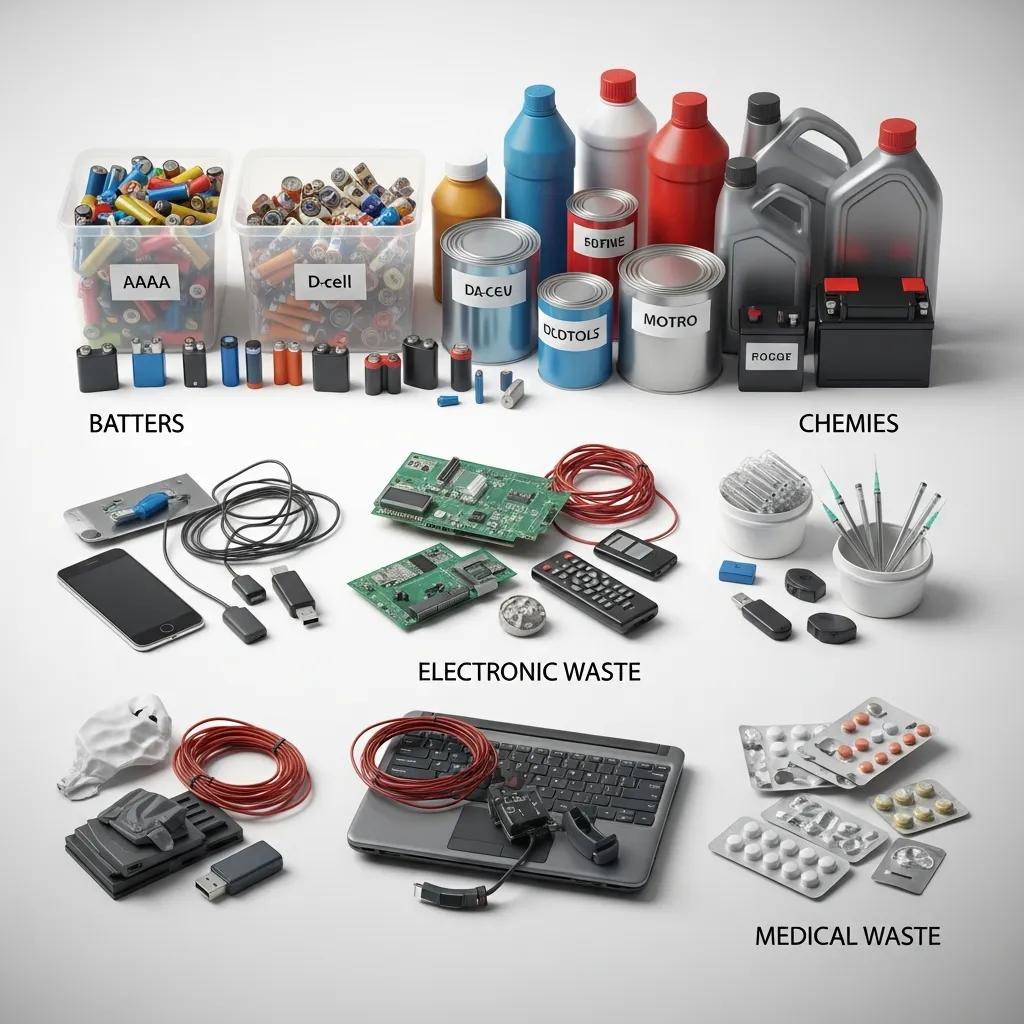
Hazardous waste appears in different forms and regulatory categories. Knowing these categories helps organizations apply the right controls and meet reporting obligations.
What are the listed characteristics, universal, and mixed wastes?
Common regulatory categories include:
- Listed waste: Wastes specifically identified by the EPA, such as the F‑list (from common industrial processes), K‑list (industry‑specific wastes), and the P‑ and U‑lists (discarded commercial chemical products).
- Characteristic waste: Wastes that exhibit one or more hazardous traits (ignitability, corrosivity, reactivity, toxicity).
- Universal waste: Frequently generated hazardous items subject to streamlined rules, including batteries, certain pesticides, mercury‑containing equipment, and fluorescent and other regulated lamps.
- Mixed waste: Materials that contain both radioactive and hazardous components and therefore require specialized handling and disposal pathways.
Categorizing waste correctly is a practical step toward effective management and regulatory compliance.
How do emerging contaminants like PFAS and PCBs fit into hazardous waste types?
Emerging contaminants create new regulatory and technical challenges. PFAS (per‑ and polyfluoroalkyl substances) are persistent in the environment and increasingly linked to health concerns. PCBs (polychlorinated biphenyls) are toxic legacy contaminants once widely used in electrical equipment. PCBs are regulated under the Toxic Substances Control Act (TSCA); PFAS are under growing regulatory scrutiny and are being evaluated for broader classification, though they are not universally listed under RCRA at this time.
How does the Resource Conservation and Recovery Act regulate hazardous waste?
The Resource Conservation and Recovery Act (RCRA) is the primary federal framework in the U.S. for governing hazardous waste disposal. RCRA creates a system for identifying hazardous waste, tracking it, and ensuring it’s treated and disposed of in ways that protect health and the environment.
What is the cradle‑to‑grave system for hazardous waste management?
RCRA’s cradle‑to‑grave approach requires hazardous waste to be tracked from the point of generation to final disposal. This tracking ensures accountability at every stage — generation, transportation, treatment, storage, and disposal — and helps prevent illegal dumping and accidental releases.
What are state‑specific hazardous waste regulations and compliance requirements?
States may adopt regulations that are stricter than federal rules or add procedural requirements. Generators and waste managers must understand both federal and state obligations — including permitting, manifesting, and recordkeeping — to avoid penalties and ensure safe operations.
What are the safe and effective methods for hazardous waste disposal?
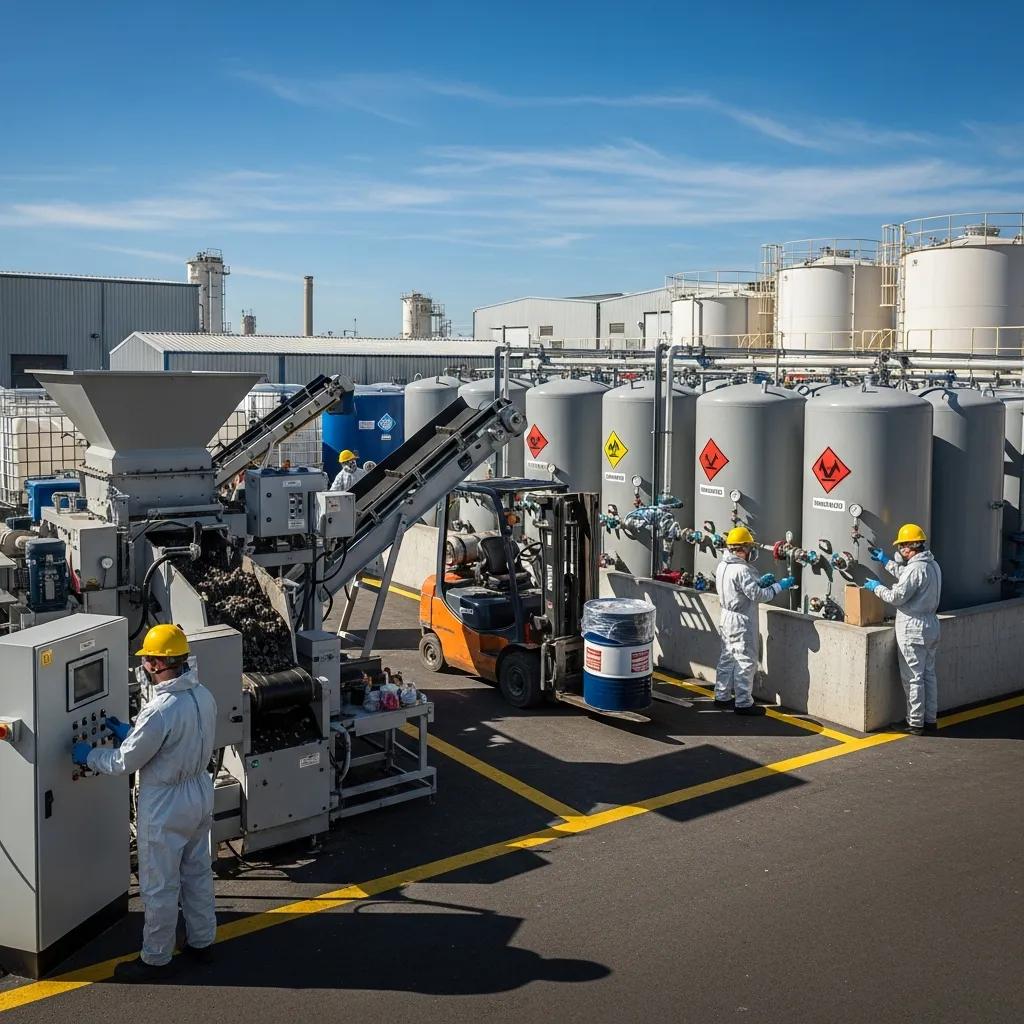
Safe disposal depends on matching the waste type to the right management technology and facility. Options range from on‑site treatment to specialized off‑site disposal at permitted facilities.
How are Treatment, Storage, and Disposal Facilities used in waste management?
Treatment, Storage, and Disposal Facilities (TSDFs) provide regulated spaces to treat hazardous wastes, store them safely while awaiting treatment or disposal, or dispose of them in permitted units. TSDFs must meet strict design, operational, and monitoring standards to protect workers, communities, and the environment.
What recycling and waste minimization strategies are available?
Reducing hazardous waste at the source and recovering materials can cut costs and environmental impact. Effective strategies include: waste minimization opportunities in vehicle maintenance and repair .
- Source reduction: Changing processes or inputs to generate less hazardous waste.
- Recycling and reclamation: Recovering solvents, metals, and other materials for reuse.
- Treatment technologies: Using chemical, thermal, biological, or physical treatments to neutralize or reduce hazard before disposal.
Combining prevention and recovery with effective treatment helps facilities meet regulatory goals and improve sustainability.
How should household and industrial hazardous waste be managed?
Both households and businesses produce hazardous wastes, but the scale and options for management differ. Clear procedures and community programs make safe disposal practical for everyone.
What are best practices for household hazardous waste collection and disposal?
Households can reduce risk by following simple practices :
- Proper storage: Keep hazardous products in their original containers, sealed, labeled, and out of reach of children and pets.
- Community collection events: Use local household hazardous waste collection days or drop‑off locations rather than putting hazardous items in regular trash.
- Consumer education: Learn which products are hazardous and follow disposal guidance on labels or municipal websites.
These steps prevent accidental exposures and environmental releases.
What industrial hazardous waste management solutions exist for different sectors?
Industrial operations should adopt sector‑appropriate controls, such as:
- Compliance audits: Periodic reviews of waste streams, manifests, and permits to confirm legal and operational compliance.
- Training programs: Regular employee training on identification, handling, emergency response, and recordkeeping.
- Partnerships with TSDFs: Working with licensed facilities for off‑site treatment and disposal and leveraging their technical expertise.
Adopting these solutions reduces liability and improves environmental performance.
What are the environmental and health impacts of improper hazardous waste management?
Poor handling and disposal of hazardous waste can cause long‑term harm to ecosystems and human health. Understanding these impacts helps prioritize prevention and rapid response.
What risks do improper disposal practices pose to human health and the environment?
Consequences of improper disposal include:
- Soil contamination: Hazardous chemicals can leach into soils and damage plant life or contaminate groundwater.
- Water pollution: Contaminants entering rivers, lakes, or aquifers can harm aquatic life and pose drinking‑water risks.
- Air quality impacts: Releases from open burning, uncontrolled treatment, or volatilization can create respiratory hazards and broader air pollution.
These outcomes underscore the importance of following proper storage, transport, and disposal protocols.
How can emergency response and remediation mitigate hazardous waste hazards?
Preparedness and remediation reduce harm when incidents occur:
- Rapid response teams: Trained responders who can contain spills, secure areas, and limit exposure.
- Remediation technologies: Approaches such as bioremediation, chemical immobilization, or excavation and disposal to clean contaminated sites.
- Public awareness campaigns: Community outreach that promotes reporting, safe handling, and participation in collection programs.
Effective response and cleanup protect public health and restore damaged environments.
The table below summarizes common hazardous waste categories and recommended management approaches, highlighting the need for fit‑for‑purpose strategies.
| Waste Type | Description | Management Strategy |
|---|---|---|
| Listed Waste | Wastes explicitly identified by the EPA as hazardous | Manage and dispose according to EPA listings and applicable permits |
| Characteristic Waste | Wastes that display ignitability, corrosivity, reactivity, or toxicity | Characterize, treat as required, and follow handling rules |
| Universal Waste | Common hazardous items such as batteries, lamps, and mercury devices | Use streamlined collection and recycling programs where available |
In short, recognizing hazardous waste types, following regulations, and using appropriate disposal and prevention measures are essential to protect people and the environment. Businesses and communities that adopt these practices reduce risk and support long‑term sustainability.
As science and regulations evolve, so will management approaches — staying informed and proactive remains critical. Waste minimization planning
Evolving Hazardous Waste Management & Environmental Impact
Hazardous waste management practices have changed as our understanding of hazards and treatment techniques has advanced. Tracking how toxic compounds move through the environment has guided improved cleanup and prevention methods. Hazardous Waste Management, JC Evans, 2010
About the author