
How to Resolve Your Company's Waste Crisis: Practical, Sustainable Steps for Multi‑Location Operations
By BKThemes
Maintain a centralized regulatory map that captures local, state, and federal rules. Train employees on compliance and documentation standards. Conduct periodic compliance audits to find gaps and fix them. Assign a compliance lead to coordinate across sites and vendors—this reduces the chance of violations and associated penalties.
A corporate waste crisis happens when rising disposal fees, regulatory exposure, and inconsistent practices across sites combine to create financial, legal, and reputational risk. This guide lays out clear, step‑by‑step actions multi‑location organizations can use to diagnose root causes, reclaim avoidable costs, and build scalable diversion pathways that support company goals. You’ll get a practical playbook for running a multi‑location waste audit, prioritizing reduction tactics, streamlining operations through data and vendor consolidation, and navigating multi‑jurisdictional compliance while moving toward zero-waste certification. We cover source reduction, reuse, recycling, composting, and waste-to-energy—and show how invoices, contracts, and KPIs reveal immediate savings. Each section includes checklists, comparison tables, and implementation steps designed for businesses with dozens to thousands of sites, plus ways to measure results and sustain continuous improvement.
How can a comprehensive multi‑location waste audit resolve your waste crisis?

A multi‑location waste audit is a systematic, side‑by‑side assessment that quantifies waste streams, spots trouble areas, and uncovers billing or operational gaps across an enterprise. We combine on‑site sampling, container and route observations, and centralized invoice review to build a clear baseline of volumes, diversion rates, and cost drivers that leadership can act on. Early wins often include targeted source‑reduction opportunities, recovery of erroneous charges, and a defensible diversion baseline to show progress against sustainability targets. Establishing an audit cadence and consistent data capture turns anecdote into objective KPIs and enables focused pilots that prove ROI before broader rollout.
Key audit benefits at a glance:
- Identifies high‑cost sites and waste streams so you can prioritize action.
- Uncovers billing mistakes and avoidable fees through invoice review.
- Creates diversion and volume baselines to measure improvement.
- Generates site‑specific action plans that lower costs and regulatory exposure.
These points explain why the audit is the diagnostic foundation; the next section explains why you should start there when designing a remediation plan.
Why start with a waste audit when managing a waste crisis?
A waste audit replaces guesswork with measured data and exposes root causes rather than treating symptoms. Sampling waste streams, tracking container fill and haul frequency, and reconciling billed services with observed activity reveal mismatches—incorrect container sizing, unnecessary routes, or recurring line‑item charges—that drive costs and contamination. Audits also establish the diversion baseline required for credible zero‑waste goals and regulatory reporting, reducing compliance uncertainty. Regular audits create a feedback loop: findings inform pilots, pilots are re‑measured, and validated savings are scaled across sites.
That diagnostic logic leads directly to what to measure during a multi‑site waste stream analysis. waste management
What should a multi‑location waste stream analysis include?
A robust multi‑location analysis captures consistent metrics at every site, so results can be compared and rolled up centrally. Core data points include waste type (general refuse, recyclables, organics, hazardous), volumes or weights, container counts and sizes, pickup frequency, contamination rates, and matching invoice line items. Photos, route manifests, and sort samples add context and help prioritize interventions by cost‑per‑ton and diversion potential. The output is a ranked action list—high‑cost/low‑diversion sites first—so limited resources deliver the fastest measurable impact.
Use the compact comparison below to guide data collection and immediate site actions.
| Waste Element | Measurement Method | Recommended Immediate Action |
|---|---|---|
| Mixed refuse | Weight per pickup & fill rate observation | Right‑size containers; reduce frequency |
| Recyclables | Sort sample & contamination rate | Improve signage and staff training |
| Organics | Volume per week & odor/contamination | Pilot composting or anaerobic digestion |
| Invoiced services | Line‑item reconciliation | Conduct an invoice audit and recover charges |
This table links measurements to corrective steps and provides the starting point for pilots and vendor conversations.
What strategic waste-reduction techniques cut costs for businesses?
Strategic reduction combines design and operational changes that reduce material generation at the source and improve recapture across sites. Tactics range from procurement standards that favor reusable or lower-waste packaging to operational changes that eliminate single‑use items and improve yields. The math is straightforward: less material means fewer hauls and lower tipping fees; cleaner recyclables lower contamination surcharges and boost diversion. Use audit data to target the highest‑volume streams and highest‑cost sites first, then scale proven tactics with standardized playbooks.
Top enterprise waste-reduction techniques:
- Source reduction via procurement controls: Standardize packaging and supplier requirements to reduce incoming waste and simplify recycling streams.
- Reusable systems and asset pools: Replace appropriate single‑use items with reusable alternatives supported by centralized logistics.
- Packaging optimization and takeback programs: Partner with suppliers on recyclable or refillable packaging to close material loops.
- Operational behavior programs: Train staff, update signage, and adjust floor‑level processes to cut contamination and landfill waste.
These approaches yield measurable cost and diversion improvements and should follow a pilot → measure → scale sequence driven by audit baselines. The table below summarizes typical cost impacts.
| Technique | Implementation Steps | Expected Cost Impact |
|---|---|---|
| Procurement controls | Supplier standards, contract clauses | 5–12% reduction in disposal fees |
| Reusable systems | Asset management, sterilization/logistics | 8–20% reduction in single‑use spend |
| Packaging takeback | Supplier collaboration, reverse logistics | 4–10% net disposal savings |
| Staff behavior programs | Training, signage, incentives | 2–8% in reduced contamination fees |
How do source reduction and reuse programs reduce business waste?
Source reduction and reuse stop materials before they enter the waste stream and keep assets circulating longer. Start with procurement policy changes—specify minimal or recyclable packaging—then deploy operational tactics like standardized trays, cloth service items, or refillable containers in retail and foodservice. Successful programs need logistics for collection, cleaning, and redistribution, and contract language with suppliers to enable closed‑loop options. Early wins often come where single‑use packaging is common; track units eliminated, haul frequency reductions, and net cost per transaction to measure success.
How do circular economy principles support sustainable waste solutions?
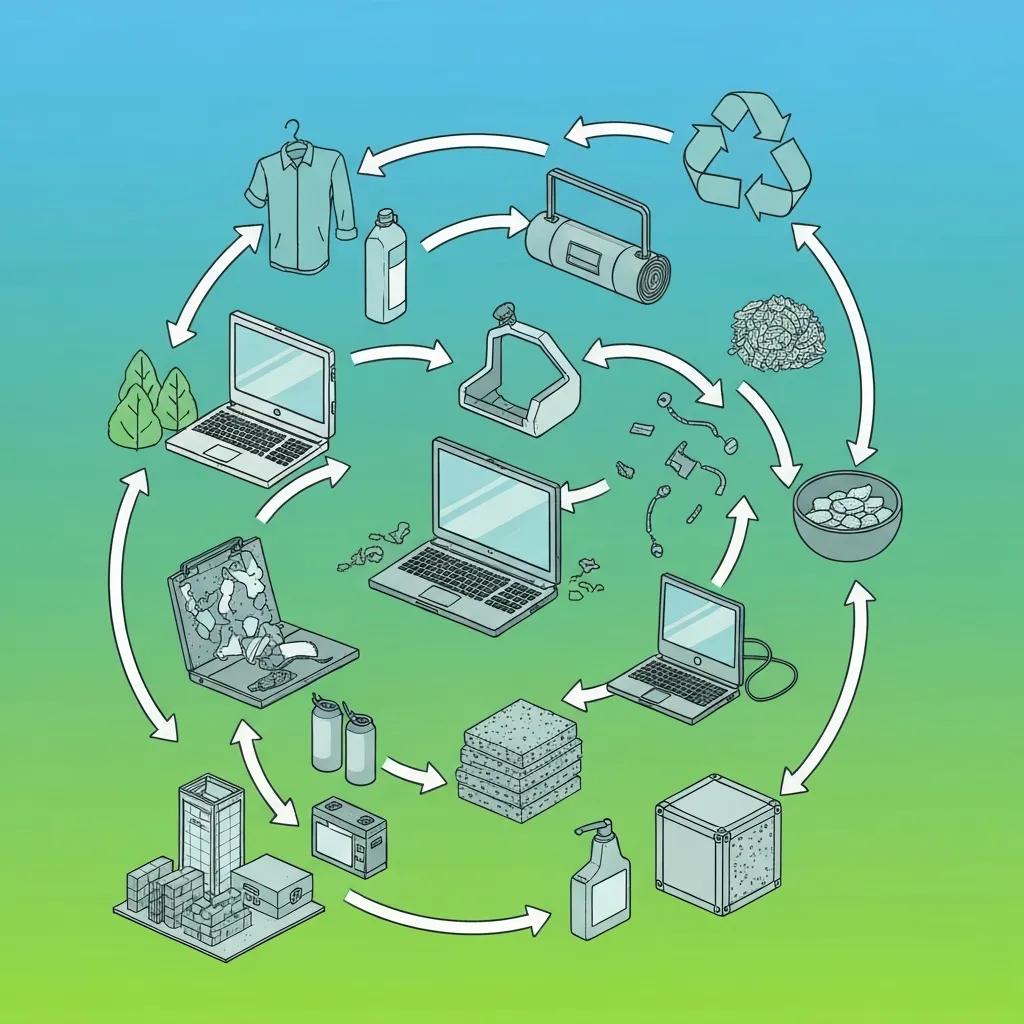
The circular economy—designing out waste, keeping materials in use, regenerating systems—reshapes corporate waste strategy by treating materials as assets, not disposables. Practically, this means designing packaging for recyclability, launching supplier takeback programs, and investing in material‑recovery partnerships that keep value in the stream. Benefits include lower raw‑material costs, stronger supplier relationships, and measurable progress toward diversion targets. Pilots focused on high‑volume packaging often deliver operational savings and positive brand outcomes, building momentum for broader circular initiatives.
How does optimizing operations and costs improve efficiency across many locations?
Operational optimization aligns vendor networks, contracts, and data so you can reduce wasteful spend and create consistent KPIs across sites. Key levers are invoice auditing to catch billing errors, vendor consolidation to leverage scale and consistent SLAs, and centralized reporting that turns disparate site data into usable dashboards. The result: lower unit costs, fewer service exceptions, and higher diversion through standardized processes. Technology platforms that combine route, weight, and billing data help operations teams detect anomalies quickly and hold vendors accountable to performance targets.
Invoice auditing provides high impact; the typical process and benefits look like this: sustainable waste management helps
- Automated invoice ingestion: Centralize bills from all sites for consistent review.
- Line‑item validation: Match billed services and quantities to contracts and manifests.
- Dispute and recovery workflow: Secure credits and adjust future billing to recoup overcharges.
- Ongoing trend reporting: Track recoveries and surface improvement opportunities.
The table below compares optimization tactics with common KPIs and results.
| Tactic | Attribute | Typical KPI / Result |
|---|---|---|
| Invoice auditing | Frequency & depth | Recoveries up to 15–20% vs current programs |
| Vendor consolidation | Coverage & contracts | Lower unit rates; standardized SLAs |
| Centralized reporting | Dashboards & KPIs | Faster anomaly detection; improved OTD metrics |
| Route/logistics optimization | Routing & container sizing | Reduced pickups; lower transport costs |
How can invoice auditing reveal hidden savings in waste management?
Invoice auditing finds savings by matching what you’re billed to what was actually delivered and to contract terms, uncovering overcharges and duplicate fees that quietly add up. Typical errors include wrong container sizes, missed credits, phantom line items, and misapplied surcharges. A thorough audit ingests invoices, maps charges to contracted rates, and reconciles quantities with manifests and scale data to identify recoverable amounts. Credits and corrected billing deliver immediate returns, and recurring audit cycles prevent repeat errors and strengthen negotiation leverage.
What are the benefits of streamlined vendor management and contract negotiation?
Simplified vendor management cuts administrative burden and gives enterprises leverage for better pricing, service levels, and innovation partnerships. Consolidated contracts under uniform terms ease auditing, make SLAs enforceable across many sites, and create a single escalation path for performance issues. Negotiation tactics include benchmarking rates across the footprint, specifying contamination and diversion SLAs, and embedding audit and reporting requirements in agreements. The operational payoff is predictable costs, steady service, and a better ability to scale diversion programs with trusted partners.
How can multi‑location businesses stay compliant and reduce regulatory risk?
Multi‑jurisdictional compliance means mapping and managing local, state/provincial, and federal rules that vary by waste type, transport, and disposal. A compliance‑first approach inventories site obligations, standardizes documentation, and assigns central oversight to maintain consistent training and record keeping. Proactively addressing regulatory differences reduces fines and remediation costs and improves governance‑level environmental metrics. Integrating operational data into compliance workflows ensures audits, manifests, and training records are complete and inspection‑ready
Key steps for managing multi‑jurisdictional compliance :
- Keep a centralized regulatory map and a site‑level obligations registry.
- Standardize manifests, training logs, and hazardous-waste paperwork.
- Run regular compliance audits and track corrective actions.
- Use centralized reporting to flag deviations and close gaps fast.
This checklist shows where controls should live and why central oversight reduces legal and operational exposure; the next section explains why these complexities make centralization necessary.
What makes navigating multi‑jurisdictional waste rules complex?
Complexity comes from varying definitions, allowed disposal routes, and reporting thresholds across jurisdictions—and from stream‑specific rules for hazardous, electronic, and organic wastes. Enterprises must track generator status, manifesting requirements, recycling mandates, permits, and landfill bans that can change even within a state or province. Missing local nuances can lead to noncompliance, so a disciplined mapping process—regulatory research, site questionnaires, and periodic legal review—is essential. Aggregated compliance data lets you concentrate mitigation where regulatory burden is highest.
These complexities underscore why central compliance teams and specialists add value by coordinating across sites and vendors.
How does proactive, in‑house compliance management reduce environmental liabilities?
Proactive compliance assigns central specialists to maintain current regulatory maps, approve handling protocols, and coordinate corrective actions across sites. An in‑house compliance manager connects operations, legal, and vendors—ensuring training, manifests, and disposal routes meet local rules and that exceptions are documented and remediated. Regular audits and centralized records reduce enforcement risk by demonstrating due diligence. Central oversight speeds incident response and feeds audit learnings back into operations for continuous improvement.
Centralized compliance also supports certification efforts and the diversion pathways described next.
What are the essential steps to reach zero-waste certification and build a sustainable future?
Zero-waste certification requires a phased, documented program that moves an organization from baseline measurement to sustained high‑diversion performance. Core steps are a baseline multi‑location audit, a diversion plan with site‑level targets, prioritized interventions (source reduction, recycling, organics), consistent KPI tracking, and compiling certification documentation. Certification bodies expect governance, documented diversion thresholds, training programs, and evidence of continuous improvement. The process is both an external validation and an internal framework for scaling sustainable operations.
Pathway to certification readiness :
- Baseline audit: Establish volumes, diversion rates, and site priorities.
- Diversion plan: Set phased targets, allocate budgets, and assign site owners.
- Implement pilots: Validate interventions and measure ROI.
- Document & submit: Compile training records, manifests, diversion metrics, and governance materials for certification.
This roadmap clarifies the certification steps; the table below summarizes advanced diversion options and where they typically apply.
| Diversion Method | Suitable Waste Streams | Expected Diversion Performance |
|---|---|---|
| Curbside recycling | Paper, plastics, metals | 30–60% depending on contamination |
| Composting / AD | Food scraps, organics | 40–90% for food‑heavy operations |
| Material recovery (MRF) | Mixed recyclables | 50–80% depending on downstream markets |
| Waste‑to‑energy | Non‑recoverable organics/combustibles | Net diversion plus energy recovery |
If you want an operational partner with enterprise experience, National Waste Associates offers continuous invoice auditing, vendor consolidation strategies, and a centralized client portal for customized reporting and KPIs to accelerate audits, recover costs, and scale diversion across 50–5,000 locations. Their model pairs a six‑step invoice audit methodology for identifying recoverable charges with a broad hauler network for contract consolidation and consistent SLAs, plus client reporting designed for multi‑site transparency. National Waste Associates also provides regulatory assurance via an in‑house compliance manager and supports advanced diversion through recycling, composting, and waste-to-energy pathways to help clients progress toward zero‑waste goals.
How can centralized vendor management simplify waste crisis solutions for multi‑location companies?
Centralized vendor management streamlines procurement, enforces contracts, and monitors performance so enterprise teams reduce administrative overhead and get consistent service delivery. Consolidation creates negotiating leverage for better rates, standard contract terms that include auditability and SLAs, and simpler dispute resolution. Central management also enables consolidated dashboards that show on‑time service, contamination rates, and diversion metrics across the portfolio, supporting continuous improvement and fast corrective action. Together, these elements reduce the variability that typically drives the operational and financial symptoms of a waste crisis.
Why consolidating waste contracts matters:
- Reduces administrative burden by centralizing invoicing and contracts.
- Enables enterprise pricing and volume discounts through aggregated demand.
- Standardizes expectations with SLAs and performance clauses.
- Simplifies audits by aligning billing formats and reporting needs.
These benefits translate into measurable savings and consistent service; the next section covers monitoring performance to sustain gains.
Why consolidate waste contracts for multi‑site businesses?
Consolidation aligns pricing, billing, and service expectations across locations, eliminating regional inconsistencies that inflate costs and complicate audits. Standard contract terms can require regular reporting, set contamination thresholds, and define dispute processes that protect the enterprise from surprise fees. Negotiating on aggregated volumes secures better rates and either guaranteed service levels or financial remedies for poor performance. Consolidation also eases vendor transitions and supports uniform training and signage, improving diversion results.
Those gains only materialize when performance is actively monitored and managed, as the next section explains.
How does vendor performance monitoring improve waste management efficiency?
Vendor performance monitoring tracks agreed KPIs—on‑time pickups, contamination rates, diversion percentages, and billing accuracy—to spot service gaps and trigger corrective action. Typical cadence includes monthly scorecards, quarterly business reviews, and exception workflows for missed services or contamination spikes. SLA escalation paths ensure persistent issues result in credits or corrective plans rather than repeated operational disruption. Regular reviews turn vendor relationships into partnerships focused on continuous improvement, which lowers costs and increases diversion over time.
These continuous‑improvement cycles close the loop between audits, operational changes, and sustainable diversion targets so enterprises manage crises proactively.
For teams ready to move from diagnosis to action, National Waste Associates combines a multi‑step invoice audit program, a large hauler network, and a centralized client reporting portal to simplify vendor consolidation, recover billed overcharges, and track KPIs across hundreds or thousands of locations. Their approach emphasizes measurable savings—clients report recoveries and optimizations that translate into meaningful cost reductions—and pairs operational tools with a dedicated compliance function to reduce regulatory risk while advancing diversion goals. To discuss an enterprise assessment or learn how a structured audit and consolidation program could work for your organization, contact National Waste Associates to explore next steps.
Conclusion
A strong corporate waste management strategy reduces financial and regulatory risk while advancing sustainability across multiple locations. Comprehensive audits, operational optimization, and centralized vendor and compliance management uncover significant savings and create a clear path toward zero-waste goals. The practical steps in this guide give organizations the tools to act now and measure progress over time. To begin transforming your waste program, explore our tailored sustainable waste solutions and start with a focused assessment.
About the author