Costs to recycle wood depend on the material, whether it’s treated, contamination levels, and local market conditions. Understanding those drivers lets businesses control waste budgets and reduce compliance risk. This guide lists typical cost‑per‑ton ranges for major wood streams—clean pallets and dimensional lumber, C&D wood, engineered products, and treated lumber—and explains how tipping fees, hauling, processing, and resale markets move prices. You’ll find a clear cost table, a side‑by‑side look at treated vs. untreated wood, practical ways to lower commercial wood waste expenses, and the recycling routes commonly used: reuse, chipping for mulch, and biomass conversion. For multi‑location operators dealing with complex invoices and uneven vendor performance, National Waste Associates (NWA) offers audits and program management focused on cutting costs, improving efficiency, ensuring compliance, and increasing diversion. This guide also maps common hidden fees, regional tipping differences, and the operational choices that turn a wood stream into a cost or a revenue offset—so facility managers and procurement teams can plan smarter, lower‑cost wood waste programs across sites.
What is the average cost per ton to recycle different wood types?
Recycling costs span from low fees for clean, untreated pallets to much higher charges for contaminated or chemically treated lumber. Market demand, processing capacity, and local facility options largely determine price. Clean, untreated C&D wood often sits at the low end because it can be chipped and sold as mulch or biomass. Treated wood usually needs segregation, testing, and sometimes special disposal, which raises handling fees. Below are typical cost bands by wood type and notes on what drives variability, so commercial buyers can estimate budgets and potential revenue offsets.
| Material | Typical Cost (USD/ton) | Why it varies |
|---|---|---|
| Clean, untreated pallets & dimensional lumber | $40 - $80 | Lower processing costs; often reusable or chipped for mulch/biomass |
| Construction & demolition (C&D) mixed wood | $50 - $120 | Wide range due to contaminants (fasteners, drywall) and separation needs |
| Engineered wood products (OSB, MDF) | $60 - $140 | Binders and adhesives limit end markets; higher processing fees |
| Treated or preservative‑coated wood | $90 - $200+ | Regulatory handling, testing, and limited recovery options increase costs |
These ranges show how treatment and contamination raise recycling costs—budget conservatively for a mixed or treated stream.
How do treated and untreated wood recycling costs compare?
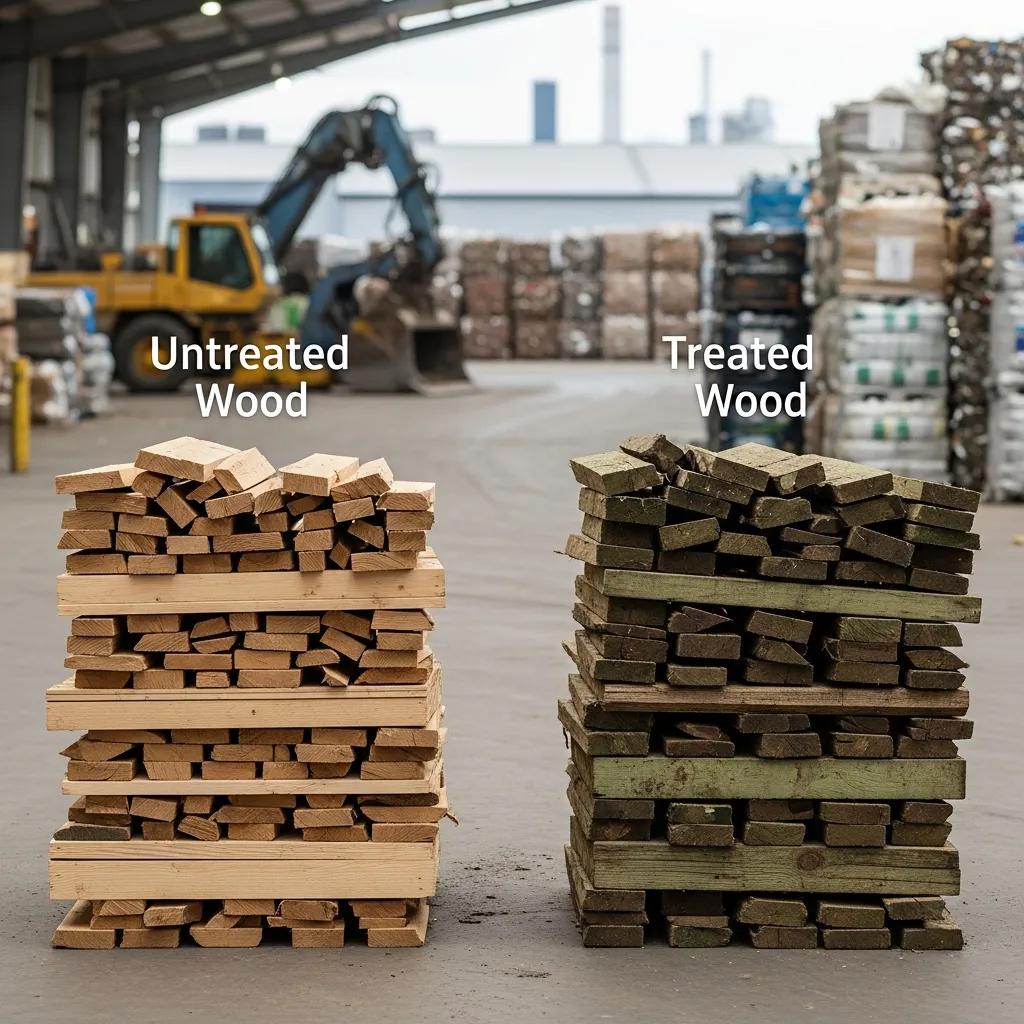
Treated wood adds complexity: preservatives and coatings limit reuse and trigger regulatory controls, so handling costs more than for clean, untreated wood. Clean, untreated material can often be reused, repaired, or ground into mulch or fuel—reducing net disposal costs and sometimes producing small revenue. Treated wood typically requires testing, segregation, specialized transport, and disposal at approved sites, adding per‑ton surcharges. A common delta: clean, untreated wood often costs about $40–$80/ton, while treated wood can run $90–$200+/ton depending on local rules and end markets. Knowing that gap helps teams prioritize source separation and negotiate appropriate disposal terms with haulers and processors.
Actionable levers—better source separation and stronger vendor contracts—can narrow the treated/untreated cost difference and improve program economics.
Which factors influence commercial wood waste recycling prices?
Key drivers include local tipping fees, distance to processors, contamination levels, presence of treated material, and contract terms set by haulers and facilities. Tipping fees reflect local capacity and demand for recovered wood; transport costs rise with distance; and processing complexity—removing nails, adhesives, or coatings—adds labor and equipment expense. Contract language also matters: minimum service fees, contamination surcharges, and frequency charges can significantly change the effective per‑ton cost for multi‑site programs. The table below summarizes common cost drivers and their typical impact so procurement and operations teams can prioritize interventions.
| Cost Driver | Direction of Impact | Estimated Impact or Notes |
|---|---|---|
| Tipping fees | Increase | $10–$80+/ton depending on region and facility type |
| Transportation distance | Increase | $5–$30+/ton with longer hauls or intermodal transfers |
| Contamination & processing complexity | Increase | 10–50% higher processing costs; nail removal and sorting add labor |
| Treated wood regulatory handling | Increase | Substantial: testing, segregation, and restricted end markets |
| Contractual hidden charges | Increase/variable | Minimum service fees, set‑out fees, and surcharges can add 5–20%+ |
While tipping fees are often the lowest line-item, operational choices—better separation, route optimization, and contract clarity —have a major influence on total cost.
What are hidden fees and overcharges in wood waste management?
Hidden fees show up as contamination surcharges, minimum service charges, extra pick‑up or set‑out fees, and processing surcharges buried in invoice line items. Contamination fees are common when mixed loads include prohibited materials or require extra sorting; minimums apply even with low volumes; and special handling fees can appear for metal fasteners or coated materials. Spotting these overcharges requires a structured invoice audit: check line‑item consistency across sites and reconcile contracted vs. invoiced rates. An audit checklist that targets contamination surcharges, verifies minimums, and reconciles weight‑based charges is a practical first step to recover avoidable spend.
Finding hidden fees unlocks immediate savings and strengthens your vendor negotiation position.
How do regional tipping fees affect wood disposal costs?
Tipping fees vary widely by region because they reflect local processing capacity, landfill alternatives, and demand for wood‑derived products. Urban areas with more processors often have lower tipping fees for clean wood; rural or capacity‑constrained regions tend to see higher per‑ton charges—especially for treated or mixed loads. Facility density affects hauling options: more processors within a short radius reduce transport costs and improve negotiation leverage; sparse networks increase haul distances and per‑ton costs. Tactics such as consolidating loads, partnering with local processors, or using mobile grinding services can reduce regional cost disparities.
Understanding regional fee structures allows multi‑site operators to optimize routing and processor selection to lower overall wood disposal spend.
What recycling solutions are available for different wood waste types?
Common recycling and reuse pathways include direct reuse, remanufacturing, chipping for mulch, conversion to biomass fuel, and recovery for engineered products—each with different cost and revenue profiles. The right pathway depends on cleanliness, adhesives or preservatives, and local market options. Pallets and clean dimensional lumber are strong candidates for reuse or repair; screened C&D wood often becomes mulch or biomass; engineered products have limited end markets because of binders. The table below compares solution types, typical end uses, and suitability so planners can match streams to the most economical route. For multi‑location programs, providers like NWA can design collection and separation systems that route material to the highest‑value pathway available regionally.
| Solution Type | Typical End Use / Revenue Potential | Notes on Suitability / Scale |
|---|---|---|
| Reuse & repair (pallets) | Resale value or reduced purchase costs | Best for intact pallets; program scale increases ROI |
| Mulch / chipping | Mulch or landscaping fuel; low revenue | Requires clean wood free of contaminants |
| Biomass fuel | Cogeneration or industrial fuel; modest revenue | Clean, consistent supply needed for higher value |
| Engineered product recovery | Limited resale; niche markets | Often low revenue due to adhesives and binders |
Use this comparison to prioritize investments in sorting and separation that maximize recovery value and lower net disposal costs.
How is construction and demolition wood recycled and priced?
C&D wood recycling typically follows these steps: collection and on‑site separation, transport to a transfer or processing facility, sorting and removal of contaminants (metal, gypsum), grinding or chipping, and sale into mulch, engineered recovery, or biomass markets. Pricing depends on stream cleanliness, required sorting effort, and demand for processed output; clean, source‑separated C&D wood is less costly to process, while mixed loads with contaminants draw higher fees. Processors often charge gate fees that scale with contamination and labor intensity; revenue from mulch or biomass sales can reduce net cost per ton. Upstream controls, like on‑site separation and deconstruction practices, increase the portion of wood that reaches higher-value end markets.
Effective C&D programs rely on upstream controls and strong end‑market relationships to convert waste streams into recoverable value.
What are the benefits and costs of pallet recycling programs?
Pallet programs follow two main paths: repair and reuse—capturing the most value—or chipping and resale as mulch/biomass, which handles damaged units efficiently but returns less revenue.
Repair and reuse require collection logistics, repair labor, and inventory tracking, but they lower net procurement costs for pallet‑heavy operations. Chipping programs simplify logistics but produce smaller revenue offsets.
At scale, centralized repair hubs or contract partnerships reduce per‑location labor and boost recovery rates. Ad‑hoc collection without repair capacity typically yields lower recovery and higher net disposal costs.
Even modest repair‑center throughput across dozens of locations can recover a meaningful share of pallet spend. The right strategy balances repair labor and logistics against resale or disposal economics—scale usually favors centralized repair and waste management and redistribution.
How does National Waste Associates optimize wood waste recycling costs?
National Waste Associates (NWA) helps multi‑location businesses cut wood waste costs through invoice audits, vendor management, program consolidation, and data‑driven reporting. NWA audits invoices to find overcharges and hidden fees, taps a hauler network of 3,500+ relationships to negotiate rates and service terms, and designs programs that emphasize source separation and routing to the highest‑value end markets. Clients use the NWA360° portal for customized reporting and transparency, supporting ongoing optimization and compliance tracking. As a member of the U.S. Zero Waste Business Council, NWA focuses on sustainable solutions and helps clients divert over 90% of waste from landfills. Typical outcomes include better efficiency, stronger compliance, and measurable cost reduction —some clients save up to 20% after audits and program optimization.
What cost reduction strategies does NWA use for wood waste?
NWA combines proven tactics to lower wood waste expense: systematic invoice audits to recover billing errors, vendor consolidation to boost purchasing leverage, route and schedule optimization to cut transport costs, and program standardization across locations to remove variability.
Audits target contamination surcharges, minimum service charges, and misapplied tipping rates; vendor consolidation uses the NWA hauler network to competitively tender services across regions. Commercial services are a key aspect of efficient waste management.
Route optimization reduces empty miles and combines loads for better per‑ton transport economics, while standardized operational guidelines improve separation and increase the share of material eligible for reuse or resale.
These tactics scale across 50–5,000 location programs, delivering consistent cost and compliance improvements.
Pairing operational fixes with procurement leverage turns recurring waste spend into a managed, lower‑cost program.
How does NWA ensure compliance in treated wood disposal?
NWA lowers compliance risk for treated wood through strict segregation protocols, coordinated testing, documented chain‑of‑custody, and routing to approved processors or disposal sites. Segregation at the point of generation prevents commingling with clean streams and simplifies contractor compliance; documented testing and chain‑of‑custody support regulatory audits and reduce client liability. NWA’s compliance management connects to reporting tools that show how treated streams were handled and disposed of, helping sustainability and EHS teams demonstrate due diligence. Treated streams do carry higher per‑ton costs for testing and restricted end markets, but rigorous compliance practices reduce regulatory risk and potential penalties.
What are the environmental and financial benefits of wood recycling?
Recycling wood lowers landfill methane potential, preserves embodied carbon in timber, and can replace virgin materials—delivering measurable greenhouse‑gas and economic benefits that support corporate sustainability goals. Financially, diversion reduces tipping fees and may generate revenue from mulch, biomass, or repaired pallet resale, offsetting disposal budgets. Avoided disposal costs plus resale revenue improve the net economics of recycling programs. Diverting one ton of wood to reuse or energy recovery reduces CO2e compared with landfilling; those avoided emissions can be included in corporate GHG inventories and sustainability reporting. Linking environmental outcomes with cost savings builds a stronger business case for better separation, targeted recycling pathways, and investment in processing infrastructure.
How does recycling wood reduce carbon emissions and landfill impact?
Reusing or recycling wood preserves the carbon stored in timber and avoids methane emissions from anaerobic decomposition in landfills, improving lifecycle greenhouse‑gas profiles. Using clean wood as biomass to displace fossil fuels can yield net carbon benefits depending on combustion efficiency and avoided fossil fuel use; reusing wood in construction or pallet repair extends the service life of embodied carbon. Reporting teams can convert diverted tons to CO2e with standard conversion factors to quantify avoided emissions for sustainability targets. These accounting practices tie diversion rates directly to corporate climate goals, making wood recycling both an environmental priority and a reportable financial asset.
Can wood waste be converted into biomass fuel and other products?
Yes. Clean, untreated wood streams can be processed into biomass fuel, mulch, or feedstock for engineered products —each with different market prices and processing needs.
Biomass typically yields modest per‑ton revenue, often in the single digits to low teens per ton depending on regional demand and contracts; mulch and landscaping products have variable returns based on local markets.
Processing steps include grinding, screening, and moisture control; markets demand consistent quality and particle size, which raises processing costs but unlocks revenue channels. Matching streams to end uses—pallets for repair, clean C&D for mulch, consistent chips for biomass—maximizes recovery value and reduces net disposal cost.
What are common questions about wood recycling costs?
This section answers the frequent operational and budgeting questions decision‑makers raise when evaluating wood recycling programs at scale. The responses focus on actionable steps—short‑term measures to lower cost, program investments that deliver durable savings, and practical advice for handling treated wood and negotiating contracts. Below are the top questions that drive procurement and sustainability decisions, followed by concise, multi‑site guidance. How can businesses reduce their wood waste disposal costs?
- Is treated wood more expensive to recycle than untreated wood?
- What are the top hidden fees to audit on my waste invoices?
Each question points to a specific control or program design choice that affects cost and compliance; the following sections provide practical answers. How can businesses reduce their wood waste disposal costs?
Cut costs by improving source separation, performing invoice audits, consolidating vendors, and optimizing routes to processors with the best end‑market access. Better separation increases material eligible for reuse or resale, lowering net disposal expense. Invoice audits reveal hidden charges and billing errors that compound over time. Vendor consolidation boosts buying power and simplifies management, while route optimization reduces transport and handling costs across multi‑site networks. Standardize operating procedures, train site staff on acceptable materials, and track tonnage in a centralized reporting tool to make savings measurable and sustainable.
These steps deliver immediate savings and build the data needed to negotiate stronger long‑term contracts and service levels.
Is treated wood more expensive to recycle than untreated wood?
Yes. Treated wood is generally more expensive to recycle because of testing, segregation, regulatory handling, and restricted end markets. The premium varies by region and treatment type, but treated material commonly costs tens to over a hundred dollars more per ton than similar untreated streams. Practical controls include strict on‑site segregation, limiting treated material in demolition scopes, and pre‑planning disposal to certified processors. For multi‑site programs, centralizing treated wood procedures and documenting the chain‑of‑custody reduces compliance risk and can lower overall financial impact.
For large programs, combine operational controls with vendor negotiation to manage the treated wood premium effectively.
Call to action for multi‑location businesses
If you manage wood waste across many sites and need help identifying overcharges, optimizing vendor relationships, and rolling out scalable recycling programs, National Waste Associates (NWA) specializes in supporting multi‑location businesses. NWA is a family‑owned partner that optimizes commercial waste and recycling for organizations with 50–5,000 locations across North America. Our services include waste cost reduction, vendor management, sustainable solutions, and equipment rental. NWA audits invoices, manages vendor relationships through a 3,500+ hauler database, and delivers customized reporting via the NWA360° client portal. For teams focused on cost reduction (clients can save up to 20% through audits and optimization), efficiency (managing complex multi‑site programs), compliance (in‑house compliance support), sustainable waste management (Zero Waste Business Council membership), and deep industry experience, request an audit and program evaluation to quantify potential savings and compliance benefits.
Use this proven path to quickly improve wood waste costs and sustainability outcomes across your portfolio.
About the author