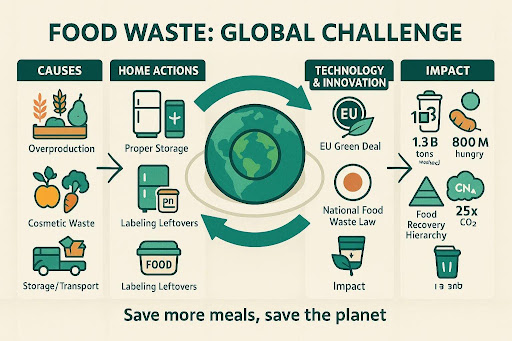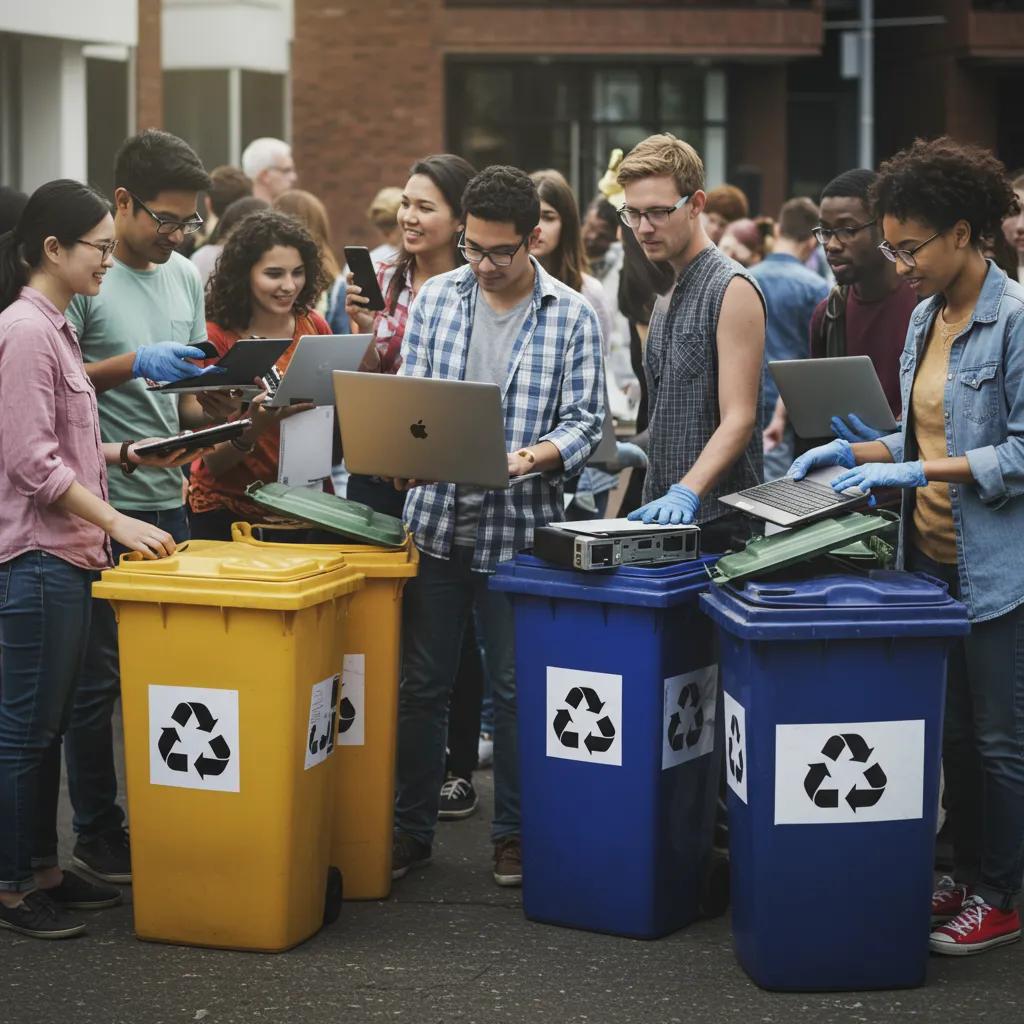
Food waste erodes profit and strains operations — and it carries real environmental costs. Practical, enterprise-grade food waste reduction programs help multi-location businesses save money, simplify operations, and meet regulatory requirements. This article walks through how an organized approach to food waste management delivers tangible cost savings, operational improvements, and compliance certainty. You’ll also find the program components, technology that makes it scalable, and real-world examples that prove the results.
What Are Enterprise Food Waste Recycling Programs and How Do They Work?
Enterprise food waste recycling programs are organized systems that reduce the organic waste a business generates across sites. They collect, process, and redirect food residuals into useful outputs—like compost or energy—while lowering disposal bills and supporting sustainability goals.
Key Components of Food Waste Recycling Programs for Multi-Location Businesses
Effective programs combine a few core elements:
- Types of Waste Included : Programs typically accept all organics — fruits, vegetables, prepared foods and other compostable items — to maximize diversion.
- Logistics of Collection : Reliable collection routes and schedules make sure material moves from site to processing on time and at predictable cost.
- Partnerships with Recycling Facilities : Working with local composters, anaerobic digesters, or specialized haulers ensures the waste is processed responsibly and creates local impact.
These pieces form a repeatable system that reduces landfill volume, lowers costs, and supports corporate sustainability targets.
How Customized Waste Audits Improve Recycling Efficiency
Customized waste audits are the starting point for sharper recycling performance. Audits map what each location throws away and identify specific opportunities where waste can be cut . With detailed data on types and quantities of waste, teams can implement targeted changes that raise diversion rates and reduce costs. Well-executed audits often unlock measurable improvements in both recycling and expense reduction.
How Can Food Waste Reduction Drive Significant Cost Savings for Your Business?
Lowering food waste directly reduces disposal fees, frees up labor and storage, and tightens inventory control — all of which improve your financial performance. When rolled out across multiple sites, those gains add up.
Strategies for Waste Diversion That Lower Disposal Costs
Several practical strategies reliably cut disposal costs:
- Donation Programs : Partner with local food banks to redirect safe, surplus food — reducing waste and supporting the community.
- Composting : On-site or off-site composting turns organics into soil amendments and cuts landfill tonnage.
- Employee Training : Staff education on portioning, prep methods, and sorting drives behavioral change and lower waste generation.
These approaches reduce disposal spend while supporting a more efficient, sustainable operation.
Measuring Financial Benefits: Case Examples and Statistics
Putting numbers behind programs proves their value. Studies show businesses can reduce disposal costs by roughly 10% to 30% depending on industry and scale. For example, a multi-location restaurant chain that implemented a full recycling program reported more than $100,000 in annual savings. Those case results highlight the meaningful impact food waste programs can have on the bottom line.
The financial and environmental wins from food waste reduction are consistently documented across cost-effectiveness studies and program evaluations.
Food Waste Reduction: Cost Savings & Environmental Benefits
Food waste reduction delivers both budget and environmental benefits. The study outlines how to gather cost and effectiveness data, scale estimates nationally, and quantify environmental gains from reduced food waste.
Cost-effectiveness of four food waste interventions: Is food waste reduction a “win–win?”, QD Read, 2021
What Are the Compliance and Regulatory Requirements for Food Waste Management?
Compliance is a central part of any enterprise program. Environmental rules govern how organic waste must be handled, and missing requirements can mean fines or reputational harm.
Understanding Environmental Regulations Affecting Multi-Location Enterprises
Multi-site operators navigate a patchwork of regional regulations. Common requirements include organic diversion mandates — for example, frameworks like the U.S. EPA’s Food Recovery Hierarchy and state laws such as California’s SB 1383 that require significant reductions in landfill disposal. Some jurisdictions also require reporting on waste practices. Staying current with local rules is essential to avoid penalties and maintain consistent program operation across locations.
Research shows regulatory compliance is a primary driver for enterprise attention to food waste policy and programs.
Food Service Waste: Enterprise Compliance & Policy
In a study with 51 representatives from 19 enterprises and organizations, most respondents (86%) reported that regulations and policy are a key concern when addressing food service waste — underscoring how central compliance is to enterprise decisions.
Drivers and reduction solutions of food waste in the Chinese food service business, C Wu, 2021
How Compliance Ensures Sustainable and Legal Waste Practices
Following environmental rules protects your business and reinforces sustainable, legal operations. Compliance also strengthens brand trust — customers and partners increasingly expect responsible waste practices, and consistent adherence can boost reputation and customer loyalty.
Which Technology and Tracking Solutions Enhance Food Waste Management?
Technology is a force multiplier for enterprise programs. Tracking tools and analytics make it easier to measure waste, pinpoint problems, and scale solutions across sites.
Innovative Tools for Monitoring and Reducing Food Waste
![High-tech kitchen with tools for tracking and reducing food waste][image3]
Useful tools include:
- Waste Tracking Software : Track waste volumes and types in real time to spot trends and guide interventions.
- Smart Bins : Sensor-equipped bins monitor fill levels and optimize collection, cutting unnecessary pickups and cost.
- Data Analytics Platforms : Aggregate waste data across locations to identify high-impact opportunities and measure improvements.
Combining these technologies gives operations the visibility needed to improve diversion and lower costs.
Recent research highlights how AI and advanced tracking can strengthen waste monitoring, especially for multi-location operations.
AI Food Waste Tracking for Multi-Location Kitchens
The study describes a food-waste tracking system with versions for single kitchens and for multi-location chains. The system helps reveal high-impact waste events that staff sometimes fail to record, improving accuracy and targeting of interventions.
Using artificial intelligence to reduce food waste, Y Nu, 2024
Integrating Technology with Enterprise Recycling Programs
Layering technology onto recycling programs amplifies results. For example, pairing waste tracking software with targeted employee training turns data into action, improving recycling rates and operational decisions. Successful integrations show technology provides the measurement and feedback loop needed for continuous improvement.
What Are Real-World Success Stories of Food Waste Reduction in Multi-Location Businesses?
Practical case studies show how programs translate into measurable gains. These stories provide playbooks for rollout, adoption, and scaling across sites.
Case Studies Demonstrating Cost Savings and Sustainability Outcomes
Many enterprises have reduced waste and cut costs. For example, a national grocery chain introduced a company-wide program that produced a 25% drop in disposal costs and a 15% rise in donated food to local charities. Those results improved both the bottom line and community impact.
Testimonials from Sustainability Officers and Facility Managers
Sustainability officers and facility managers consistently point to employee engagement and training as critical to success. Their testimonials often highlight improved efficiency, clearer metrics, and a stronger culture of sustainability across sites.
Frequently Asked Questions
What are the environmental benefits of reducing food waste?
Reducing food waste cuts greenhouse gas emissions, eases landfill demand, and conserves the water, energy, and labor invested in food production. Food that decomposes in landfills produces methane, a potent greenhouse gas — diverting organics to composting or digestion reduces that impact and supports a healthier ecosystem.
How can businesses measure the effectiveness of their food waste reduction strategies?
Measure progress with waste audits, disposal-cost tracking, and donation volume tracking. Waste tracking software provides real-time data to reveal trends and improvement areas. Comparing baseline waste levels to post-implementation results gives a clear picture of progress and ROI.
What role do employees play in successful food waste management?
Employees are essential. Training on portion control, handling, and sorting plus clear procedures empower staff to reduce waste day to day. A culture that rewards sustainable practices helps employees take ownership and sustain long-term improvements.
Are there financial incentives for businesses to reduce food waste?
Yes. Cutting food waste lowers disposal bills and often improves operational efficiency, with many businesses seeing 10%–30% reductions in disposal costs after effective programs. In some cases, tax incentives, grants, or cost offsets are available for donations and investments in sustainable practices.
How can technology improve food waste management in businesses?
Technology gives visibility and scale. Waste tracking systems, smart bins, and analytics help identify where and why waste happens so teams can act. Combined with staff training and routine audits, technology speeds decision-making and supports measurable reductions.
What are some common challenges businesses face in implementing food waste reduction programs?
Common challenges include staff resistance to change, limited awareness, and logistical complexity across multiple locations. Overcoming these requires clear leadership, practical training, consistent processes, and the right partners to handle collection and processing.
Conclusion
Reducing food waste is both a financial opportunity and a sustainability imperative. Enterprise food waste management solutions deliver measurable savings, streamline operations, and ensure regulatory compliance — and they scale when built on audits, technology, and engaged teams. If you’re ready to improve margins and meet your sustainability goals, consider a structured program that fits your operations and locations.
About the author