How to Accurately Calculate Waste Management Costs for Multi-Location Operations — Practical Strategies to Cut Costs and Boost Efficiency
By BKThemes
Managing waste costs across multiple locations is rarely simple. Different sites, local rules, and hidden charges can quietly inflate your spend. This guide breaks down how to evaluate those costs accurately and shows practical steps to reduce expenses while improving service. We’ll cover the main cost drivers, why continuous invoice auditing matters, ways to optimize collection and vendors, how data and technology give visibility, and the role of compliance and sustainability in your calculations.
What Are the Key Factors Influencing Waste Management Costs Across Multiple Facilities?
Knowing which levers affect your waste spend is the first step to controlling it. For multi-site organizations, cost drivers typically include variable service needs, site-specific fees, routing and haul distances, and differences in local disposal and recycling markets.
Which Variable Expenses and Hidden Fees Impact Multi-Location Waste Costs?
Variable costs show up as changes in collection frequency, disposal methods (landfill vs. recycling/organics), container sizes, and service levels. Hidden or intermittent fees — administrative charges, fuel surcharges, missed-pickup penalties, and price escalations — can also add up. Clear, line-item pricing and regular invoice reviews are essential to stop surprise charges from eroding your savings.
Why Do Traditional Waste Management Approaches Fail Multi-Site Businesses?
Legacy, site-by-site approaches typically produce fragmented vendor lists, inconsistent billing, and limited centralized oversight. That fragmentation makes it hard to negotiate volume pricing, standardize service levels, or spot billing errors — all of which drive up total cost of ownership for multi-location portfolios.
How Does Continuous Invoice Auditing Improve Waste Cost Accuracy for Enterprises?
Continuous invoice auditing gives you a persistent check against billing mistakes, contract mismatches, and improper charges. Instead of occasional audits, ongoing review catches discrepancies quickly, recovers overcharges, and helps enforce contracted rates across all locations.
What Is the Six-Step Waste Invoice Auditing Process?

- Data Collection: Compile invoices, service agreements, and related contract documents from every site.
- Verification: Match billed charges to contracted rates, service dates, and site-level agreements.
- Analysis: Identify recurring errors, unusual charges, and opportunities for consolidation.
- Reporting: Produce clear reports that show discrepancies, savings opportunities, and trends.
- Resolution: Engage vendors to correct errors and recover any overpayments.
- Monitoring: Put continuous monitoring in place to prevent repeat mistakes.
Following this sequence improves billing accuracy and strengthens your vendor relationships by establishing clear expectations and accountability.
How Does Gap Analysis Drive Waste Cost Optimization?
A gap analysis compares your current waste program to industry best practices and internal targets. It highlights mismatched service levels, sites paying for unused capacity, and contract terms ripe for renegotiation. Addressing those gaps — with right-sized services and improved routing — often delivers the deepest, quickest savings.
What Strategies Optimize Waste Collection and Vendor Management for Multi-Location Operations?
Optimizing collection and vendors requires a mix of operational changes and strategic sourcing. The right combination reduces pickups, lowers fees, and consolidates administrative effort across your portfolio.
How Can Right-Sizing Services and Equipment Reduce Waste Disposal Expenses?
Right-sizing means matching container types, capacities, and pickup frequency to actual waste volumes. That prevents overpaying for unused space and reduces unnecessary hauls. When sites are billed for the services they truly need, your overall spend drops without sacrificing cleanliness or compliance.
Why Is Strategic Vendor Management and Contract Consolidation Essential?
Consolidating vendors and standardizing contracts gives you leverage to secure better pricing, consistent service SLAs, and simpler billing. Fewer vendors also mean fewer points of contact and easier enforcement of sustainability and compliance requirements across all locations.
How Can Data and Technology Enhance Waste Cost Transparency and Efficiency?

Data and digital tools turn fragmented invoices and site reports into actionable insights. Dashboards, real-time reporting, and benchmarking make it simple to spot outliers, track diversion, and prioritize the highest-impact cost-savings projects across your footprint.
What Features Does the NWA360 Client Portal Offer for Waste Data Analytics?
The NWA360 Client Portal centralizes waste data with real-time reporting, consolidated cost tracking, and performance benchmarks. Those capabilities help teams spot trends, measure savings, and make targeted decisions to lower costs and improve diversion rates.
Recent studies also show predictive analytics and smarter forecasting can tighten operational control and reduce both costs and environmental impact.
Smart Waste Cost Optimization with Predictive Analytics
This 2024 study examines how predictive analytics improves sustainability, cost control, and operational efficiency for healthcare waste systems — demonstrating the value of data-driven forecasting in smart waste programs. Smart Waste Cost Optimization in Healthcare through Predictive Analytics, 2024
How Does Centralized Waste Management Improve Multi-Site Operational Control?
Centralizing waste management gives you a single view of waste generation, spend, and supplier performance. That visibility supports better routing, standardized processes, and faster decision-making — which in turn reduces costs and administrative burden across all sites.
How Do Regulatory Compliance and Sustainability Goals Affect Waste Cost Calculations?
Compliance requirements and sustainability targets both change how you price and manage waste. Regulatory fees, required handling for certain waste streams, and investments in diversion all factor into the total cost of your program.
What Are the Regulatory Requirements for Multi-Location Waste Management?
Multi-site organizations must meet local, state, and federal rules for disposal, recycling, and special waste streams. Staying current with those regulations avoids fines and ensures sites operate safely and consistently. Regular training and centralized oversight make compliance easier to manage.
How Can Businesses Achieve Zero Waste and ESG Objectives?
Reaching zero waste or meeting ESG goals requires a structured plan: reduce at the source, increase recycling and organics diversion, and choose suppliers who align with your sustainability commitments. Those changes can lower long-term costs while improving brand reputation and stakeholder confidence.
What Are the Benefits of Partnering with National Waste Associates for Waste Cost Reduction?
Partnering with National Waste Associates (NWA) gives multi-location businesses a single, experienced partner focused on reducing cost and improving consistency. As a family-owned company with deep experience, we tailor programs that simplify management, increase transparency, and drive measurable savings.
How Does NWA Deliver Significant Savings and Operational Excellence?
NWA combines continuous invoice auditing, data analytics, and strategic vendor management to find and capture savings. Our approach standardizes service levels, enforces contract pricing, and uses ongoing monitoring to keep costs down while maintaining operational reliability.
What Steps Should Multi-Location Businesses Take to Start Optimizing Waste Costs?
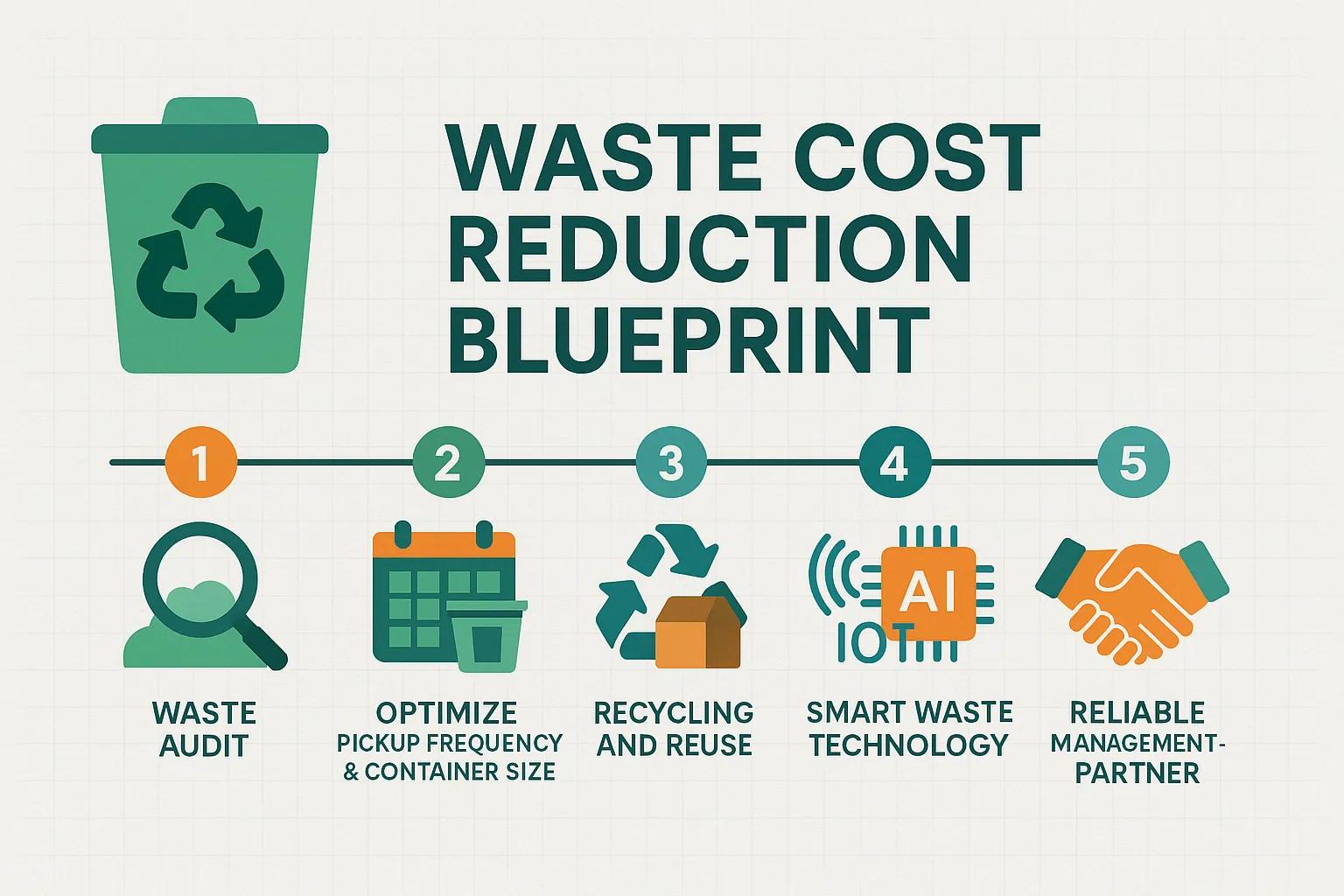
- Conduct a Waste Audit: Inventory current services, invoices, and site-level waste profiles.
- Engage with NWA: Work with NWA to evaluate opportunities and design a consolidated program.
- Implement Data Analytics: Use analytics to track volumes, costs, and diversion across sites.
- Review Vendor Contracts: Identify renegotiation and consolidation opportunities to reduce fees.
- Establish Sustainability Goals: Set measurable diversion and ESG targets to guide program decisions.
Those five steps create a repeatable path to lower waste costs and more consistent operations across your portfolio.
Frequently Asked Questions
What are the common challenges faced by multi-location businesses in waste management?
Common challenges include inconsistent service levels across sites, varying local regulations, fragmented vendor lists, and difficulty consolidating billing and performance data. These issues make it hard to control costs and ensure compliance without a centralized program.
How can businesses ensure compliance with local waste management regulations?
Maintain site-level audits, deliver regular staff training, and centralize tracking of permits and disposal documentation. Partnering with an experienced waste management provider also helps you keep pace with local regulatory changes.
What role does employee training play in effective waste management?
Training ensures staff handle waste correctly, follow diversion procedures, and avoid contamination that can undermine recycling efforts. Practical, role-specific training is one of the most reliable ways to improve diversion and reduce contamination-related costs.
How can technology improve waste tracking and reporting?
Technology provides consolidated dashboards, automated reporting, and real-time alerts. That visibility shortens response times, highlights high-cost locations, and helps you measure the impact of reduction initiatives across the entire portfolio.
What are the benefits of implementing a zero-waste strategy?
Zero-waste strategies reduce disposal costs, improve resource efficiency, and strengthen brand reputation. They also support ESG goals, increase employee engagement, and can create operational savings through reduced procurement and disposal needs.
How can businesses measure the success of their waste management initiatives?
Track KPIs such as diversion rate, cost per site, total spend, and compliance incidents. Regular audits, stakeholder feedback, and consistent reporting let you see progress and refine programs for better results.
Conclusion
Accurately calculating waste costs across multiple locations starts with visibility and a disciplined approach: audit invoices continuously, right-size services, consolidate vendors, and use data to guide decisions. Working with a partner like National Waste Associates can accelerate those efforts and deliver measurable savings while keeping operations compliant and sustainable. Explore tailored solutions that match your portfolio and priorities to start capturing value today.
About the author