Projected Savings from Customized Waste Management: A Practical Guide to Cost Savings & ROI
By BKThemes
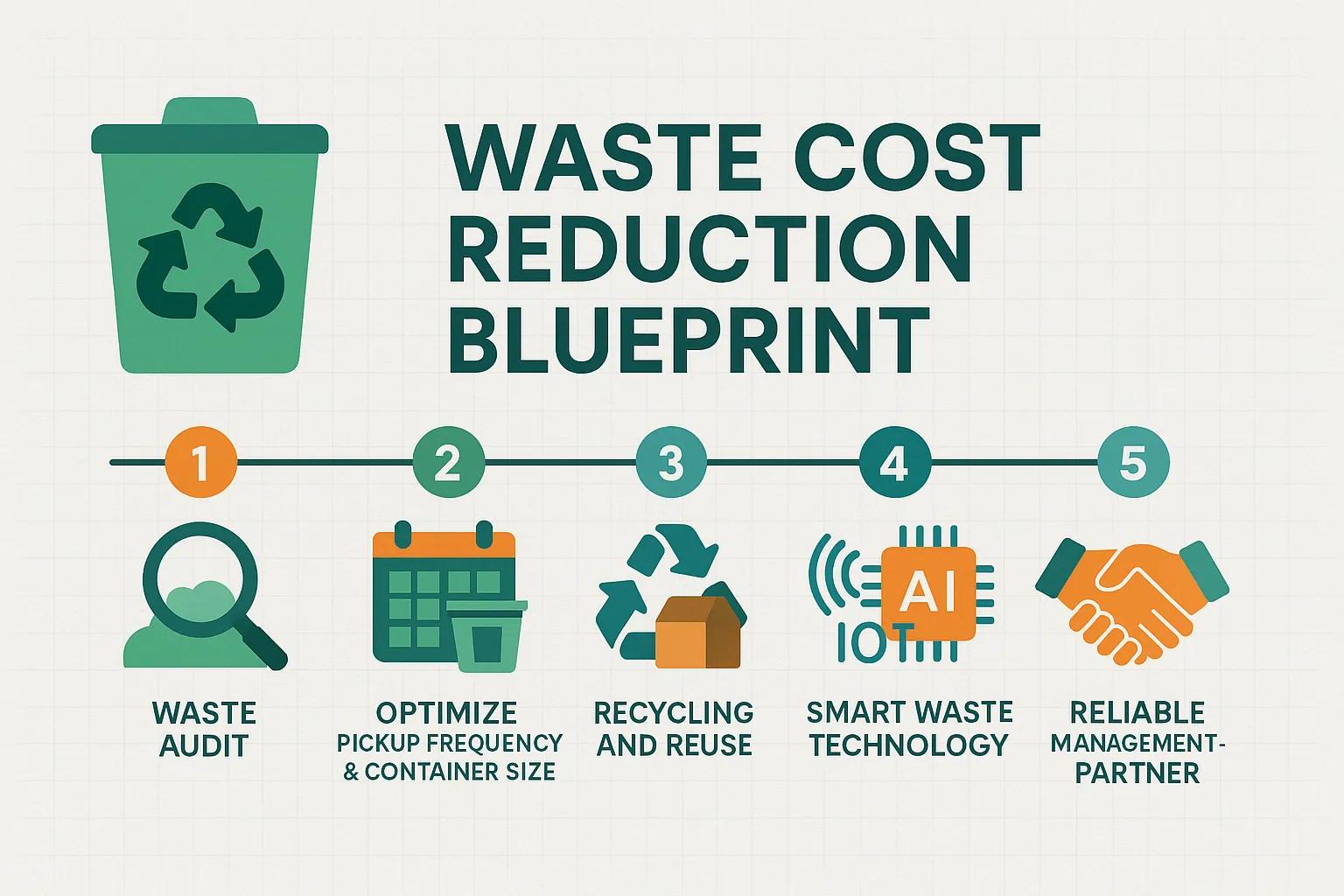
Understanding how to project savings from customized waste management is essential for multi‑location businesses trying to protect margins and meet sustainability goals. This guide walks you through how to audit current spend, spot savings opportunities, and build a clear ROI case. Tailored waste programs cut costs, tighten operations, and reduce environmental impact—especially when hidden fees and inefficient disposal practices are brought to light. Below, we cover the core benefits, how to set a waste‑spend baseline, the metrics and formulas to calculate ROI, optimization tactics, and real-world outcomes from effective waste management.
What is customized waste management, and why does it matter for multi‑location businesses
Customized waste management means designing disposal and recycling programs around the needs of each site while coordinating across your entire footprint. For businesses with multiple locations, that approach slashes unnecessary costs, improves service consistency, and helps you meet corporate sustainability targets. By profiling waste streams and applying site‑specific tactics, companies can uncover quick wins and sustained savings.
How tailored waste stream analysis reduces costs
A focused waste stream analysis reveals where costs and waste volumes are concentrated and where materials can be diverted or reduced. When you map types and quantities of waste, you can redirect recyclables, lower landfill charges, and sometimes capture revenue from recyclable commodities. That data‑driven, proactive approach trims disposal expense and supports your sustainability commitments.
Key benefits of customized waste management services
Customized waste management delivers measurable advantages for multi‑location operations :
- Cost savings: Smart routing, right‑sized containers, and diversion strategies lower disposal fees and pickup costs.
- Operational efficiency: Streamlined processes reduce labor and site disruption so teams can focus on core work.
- Sustainability gains: Better recycling and diversion improve ESG performance and public perception.
Together, those improvements strengthen both your bottom line and brand reputation.
How to establish your current waste spend baseline for accurate savings estimates
Building an accurate baseline is the first step to forecasting savings. That baseline combines invoice review, site observations, and data on volumes, container sizes, pickup frequency, and any fees or surcharges. With a reliable baseline, you can model the impact of changes and quantify likely savings.
What the waste audit process looks like and why it matters
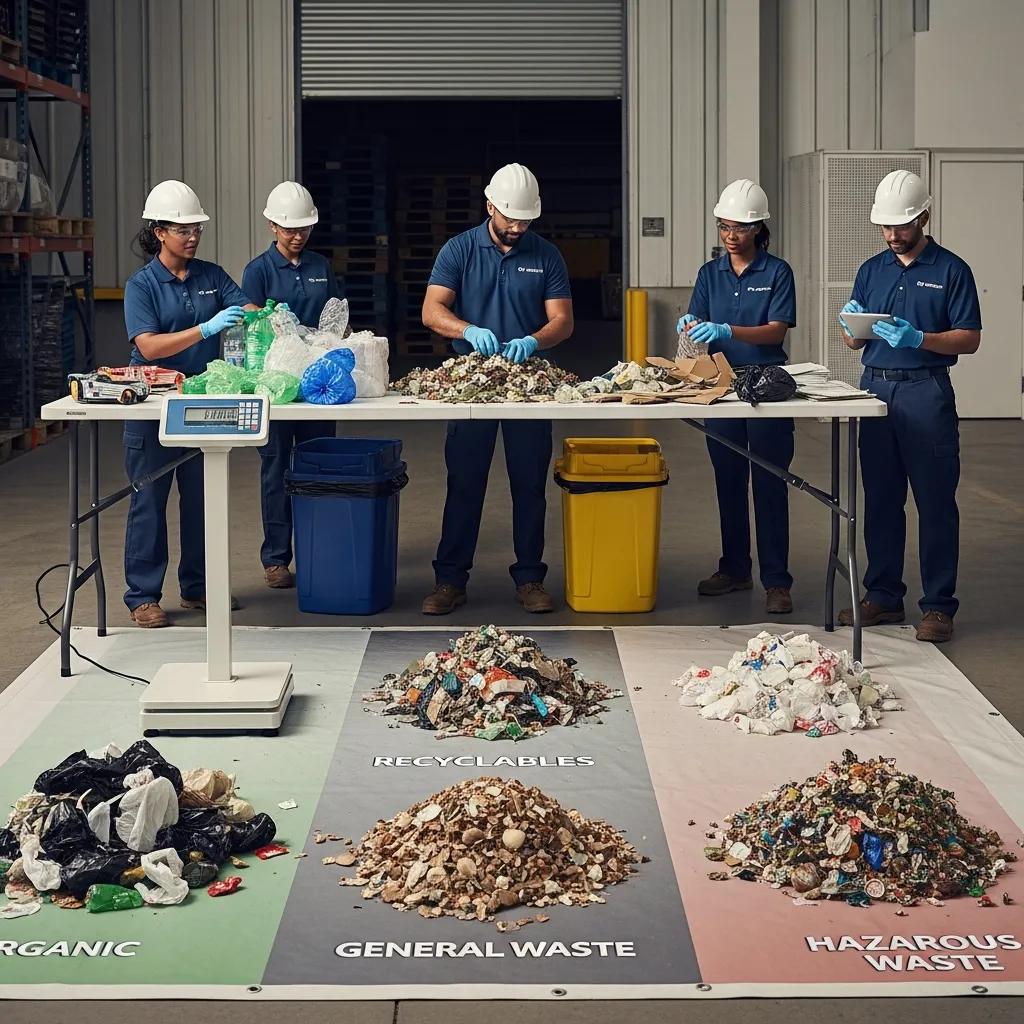
A waste audit systematically measures what each site throws away: material types, weight or volume, and how items are placed and handled. Audits expose inefficiencies, reveal contamination, and identify opportunities to reduce pickups, downsize containers, or route materials to recycling streams. The outcome is a prioritized list of interventions and a clearer cost picture.
Finding hidden fees and separating direct vs. indirect costs
Hidden fees—like fuel surcharges, administrative charges, or overage penalties—can inflate budgets without showing up in routine reports. Direct costs include disposal and hauling fees; indirect costs cover labor, lost productivity, and downtime tied to poor waste handling. Identifying both types of cost is critical to building a full savings case and negotiating better contracts.
Which metrics and formulas do you need to calculate waste management ROI
To quantify ROI, you need consistent metrics and a reproducible formula. That lets you compare scenarios and show leadership the financial upside of changes.
Proven studies show that better waste and energy practices reliably reduce operating expenses and often produce strong returns.
Waste management’s role in lowering operating costs and improving ROI demonstrates how improved waste practices and energy efficiency can lower operational costs and produce a measurable return on investment. V‑CALC: A Comprehensive Carbon Footprint Assessment Tool for US‑Based Veterinary Clinics, T. Kirui
Step‑by‑step ROI calculation for waste services

Use a straightforward ROI formula to quantify the benefit of any initiative:
Net savings = the cost reductions and incremental revenue (e.g., commodity sales) realized after you subtract implementation and program costs. That percentage shows the efficiency of your investment and helps prioritize projects.
Metrics that best track waste reduction and projected savings
Track a few key metrics to measure progress and forecast savings :
- Waste diversion rate: Percentage of materials redirected from landfill through recycling or composting.
- Cost per ton: Total waste cost divided by total tons handled—useful for benchmarking sites.
- Recycling savings: Net financial benefit from recycling versus disposal, including avoided landfill fees and any commodity value.
These indicators give a clear view of both environmental and financial performance.
How optimization strategies maximize your disposal savings
Optimization focuses on three things: reducing volume, redirecting valuable streams, and lowering service costs. Done right, it delivers immediate savings and ongoing improvements.
Optimizing hauler contracts and collection schedules
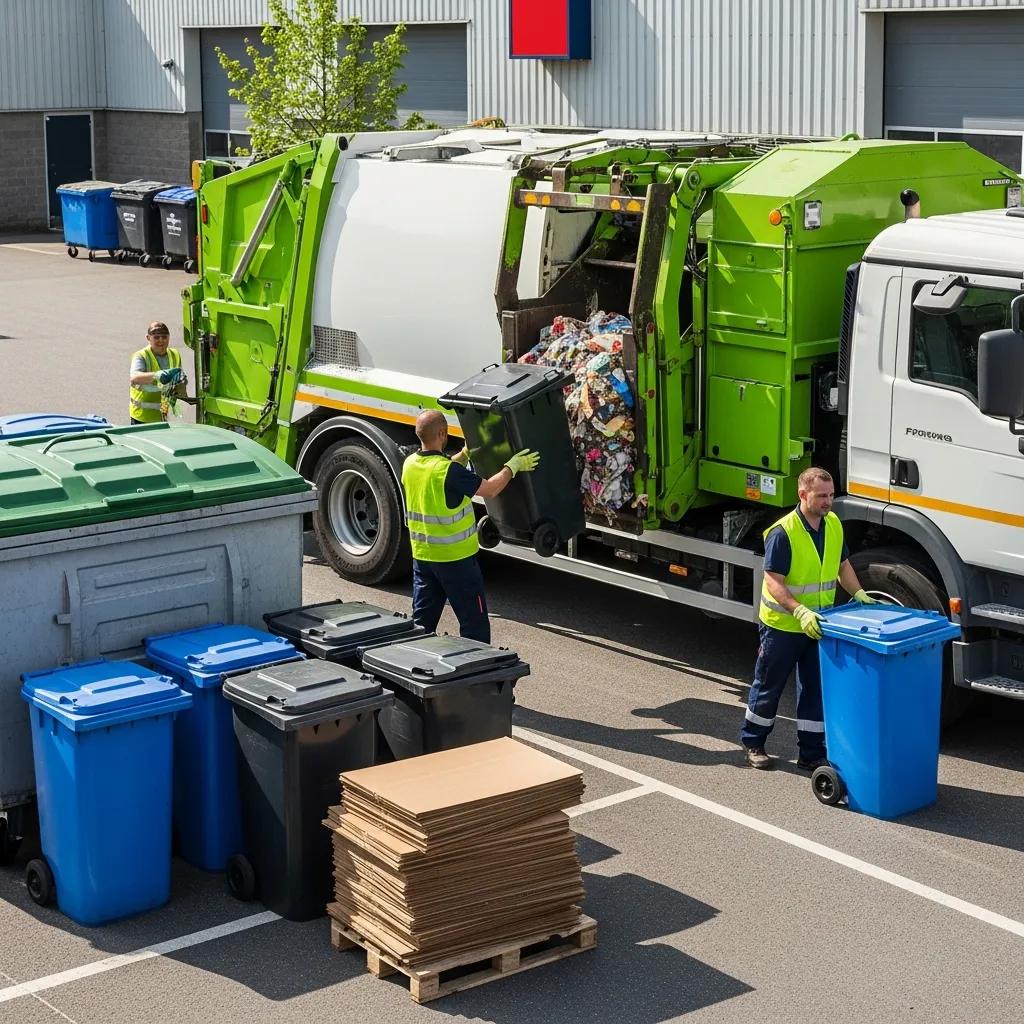
Regularly reviewing hauler agreements and aligning pickup frequency with actual waste generation avoids overpaying for unnecessary service. Negotiate for transparent pricing, eliminate redundant fees, and consolidate services across locations when possible. Small changes to the schedule and container sizing often generate the fastest savings.
The impact of advanced recycling and diversion programs
Advanced recycling and diversion programs reclaim value from materials that would otherwise be landfilled. A comprehensive program can reduce disposal volumes, cut landfill fees, and, in some cases, generate revenue from recyclables. Beyond the dollars, diversion programs support sustainability commitments and lower long‑term risk.
When you run a thorough cost‑benefit analysis, diversion strategies frequently outperform simple landfill disposal on both economic and environmental grounds.
Economic benefits of waste diversion over landfill disposal: A cost–benefit analysis comparing landfill disposal and waste diversion programs, showing the economic performance advantages of diversion. Evaluation of waste reduction and diversion as alternatives to landfill disposal, 2014
How technology and industry expertise improve transparency and compliance
Combining technology with experienced consulting increases visibility across sites, enforces regulatory compliance, and uncovers opportunities that manual processes miss. Data from sensors, routing software, and dashboards turns operational complexity into actionable insight.
Research underscores that IoT and business intelligence materially improve waste reduction outcomes and ROI across multi‑location operations.
IoT and BI for multi‑location waste reduction and ROI explores how IoT and business intelligence provide visibility across complex logistics networks and multi‑site footprints, helping teams improve waste reduction and measure ROI. Sustainable Business Intelligence through IoT Data — T. Hassan, 2025
What the NWA360° Client Portal gives you for real‑time savings reporting
The NWA360° portal delivers live visibility into spend and performance so you can act quickly. Core features include:
- Real‑time data access : Instant visibility to key waste metrics and trends.
- Custom reporting : Reports tailored to show savings, exceptions, and opportunities.
- Alerts and notifications : Automated flags for anomalies, fee risks, or optimization opportunities.
Those tools turn raw data into decision‑ready insights that help you drive savings across locations.
How regulatory compliance affects cost reduction
Staying compliant avoids fines and costly remediation. Compliance also reduces operational risk and protects your public reputation. Implementing best practices and consistent audits keeps costs predictable and supports long‑term savings.
Real‑world examples of projected savings with National Waste Associates
National Waste Associates has helped clients across sectors capture measurable savings through tailored programs. Our approach combines audit data, contract optimization, and diversion strategies to deliver results that compound over time.
Case studies that show measurable waste management ROI
Clients often see substantial reductions in disposal spend after we implement targeted changes. For example, a multi‑location retail chain reduced overall waste costs by roughly 30% after a coordinated program of waste stream analysis, schedule adjustments, and enhanced recycling—proving that small, data‑driven changes scale quickly across locations .
How working with a waste management consultant creates long‑term value
Engaging a consultant like NWA gives you dedicated expertise to identify inefficiencies, eliminate hidden fees, and standardize best practices. That partnership delivers immediate savings and builds the systems and behaviors that sustain continuous improvement and stronger ESG performance.
Frequently Asked Questions
Which businesses benefit most from customized waste management?
Any organization with multiple locations or significant waste volumes benefits most— retail , manufacturing, hospitality, healthcare, and foodservice are common examples. Tailored programs fit each site’s needs while delivering consistent savings and sustainability outcomes across the enterprise.
How can businesses measure whether their waste program is working?
Track core KPIs: diversion rate, cost per ton, container utilization, and recycling revenue or avoided landfill fees. Regular waste audits and month‑over‑month reporting will show trends and the impact of specific interventions .
What role does employee training play in success?
Training is essential. When staff understand sorting rules, contamination risks, and the reasons behind changes, compliance improves and program results follow. Ongoing education turns processes into habits and helps sustain savings .
How can technology improve waste management efficiency?
Technology brings clarity: IoT sensors, routing software, and analytics show where you can reduce pickups, right‑size containers, and measure diversion. Automated reporting also speeds decision‑making and reveals opportunities that are hard to spot manually.
What risks come from not adopting customized waste solutions?
Risks include higher operating costs from hidden fees and inefficient services, compliance exposure, and missed recycling revenue. Poor waste practices can also damage reputation as customers increasingly expect responsible operations.
How do businesses stay compliant with waste regulations?
Maintain up‑to‑date knowledge of local and federal rules, run periodic audits, and train staff. Partnering with a specialized waste consultant helps you interpret regulations and implement compliant, efficient processes.
Conclusion
Customized waste management delivers clear financial and operational benefits for multi‑location businesses. By establishing a solid baseline, using data to drive decisions, and applying targeted optimization, you can remove hidden costs, improve sustainability, and demonstrate measurable ROI. If you’re ready to translate waste data into predictable savings, our team can help you build a tailored program that scales across your footprint.
About the author