Industrial Wood Recycling: Scalable, Sustainable Solutions for Multi‑Location Businesses
By BKThemes
Industrial wood recycling is a practical pillar of sustainability for companies with multiple sites. This guide breaks down the common types of wood waste, the recycling hurdles each presents, and the operational benefits of a well-run program. You’ll learn how to lower disposal costs, meet regulatory expectations, and improve diversion rates — plus how National Waste Associates (NWA) helps coordinate these efforts across locations.
Key Types of Industrial Wood Waste and the Challenges They Present
Wood waste covers a broad range of materials, and each requires a tailored approach. Recognizing those differences is the first step toward better recovery and fewer tons to landfill.
How do pallets, sawdust, and construction debris differ in recycling methods?
Pallets, sawdust, and construction wood are common streams, but they’re handled very differently in practice.
- Pallets: Usually hardwood or softwood, pallets are often repaired and reused. When recycling is needed, they’re dismantled, sorted, and the usable lumber is redirected into new products or engineered wood.
- Sawdust: Fine particles make sawdust harder to process, but it’s valuable when repurposed as animal bedding, mulch, or compressed into biomass fuel.
- Construction debris: Leftover site wood can be a mix of treated and untreated material. Effective recycling requires on-site sorting and careful handling of treated wood to stay compliant with regulations.
Research on construction-sector wood shows how standards, separation practices, and market development have driven better reuse and recycling outcomes.
Wood Recycling in Construction: Challenges, Best Practices, and Legislation Over roughly two decades, to 2015, the construction sector in the UK saw steady progress in wood reuse and recycling. Key drivers included early quality standards for recycled material used in particleboard, clearer segregation of waste by origin and contamination risk, and the emergence of biomass markets. While reclaiming timber still presents site-level challenges, legislation, targeted initiatives, and the growth of waste transfer operations helped raise recovery rates. The chapter also highlights areas for further research and technology adoption. The opportunities and challenges for re-use and recycling of timber and wood products within the construction sector, GA Ormondroyd, 2016
Because each stream behaves differently, programs that sort and route material correctly capture more value and reduce landfill volumes. Professional services are excellent for optimizing waste management.
Additional studies emphasize both the technical obstacles and the untapped potential for turning wood waste into higher‑value outputs.
Wood Waste Utilization: Challenges, Opportunities, and Sustainable Management Wood waste can feed a range of products — from engineered board to energy feedstocks — but it’s underused. Barriers include limited adoption of advanced processing technologies and uneven organizational focus on wood as a resource. When technology, markets, and clear management guidelines align, wood waste becomes a predictable feedstock that delivers environmental and economic benefits. The review recommends stronger policy frameworks and investment to realize that potential. Challenges and opportunities in wood waste utilization, NH Abu Bakar, 2023
How National Waste Associates Optimizes Sustainable Wood Waste Management
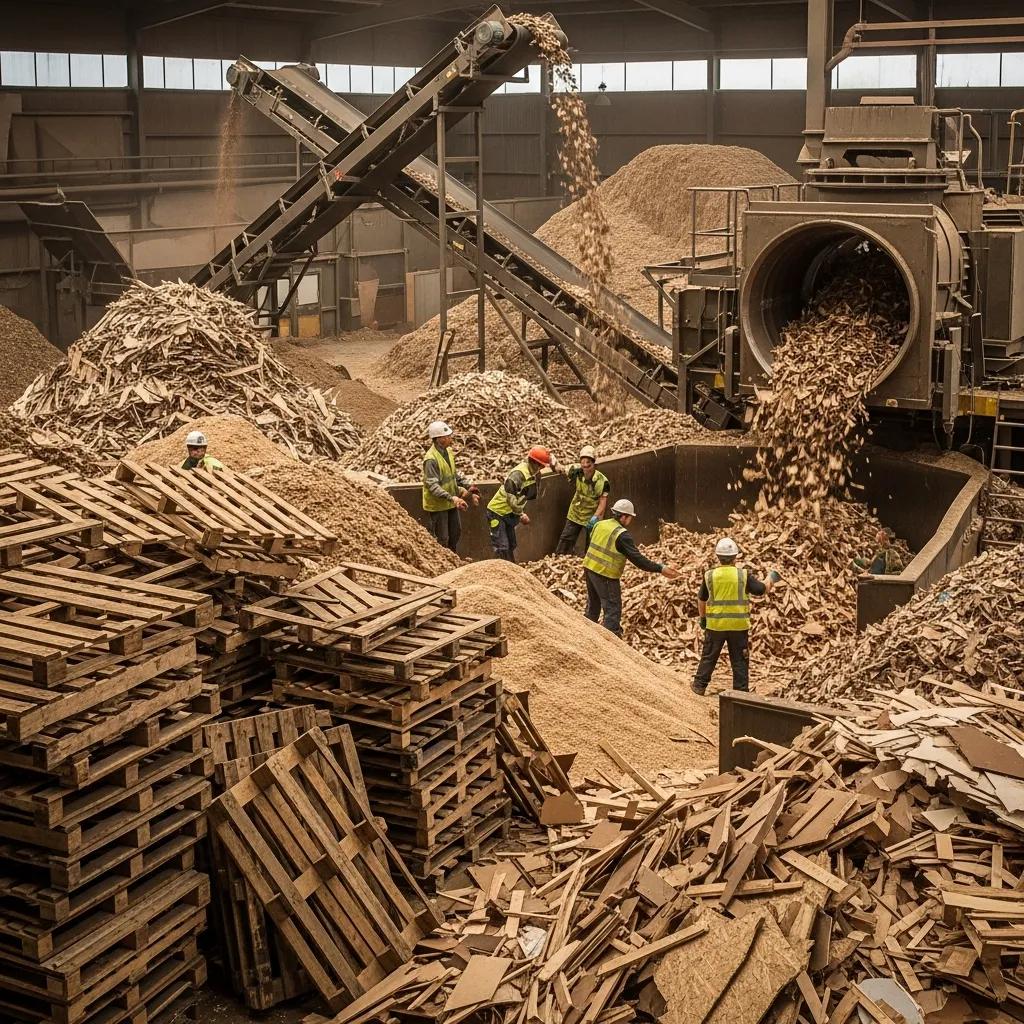
NWA applies a consistent, site-aware approach to wood recycling that keeps operations efficient and compliance straightforward.
- Collection and sorting : We gather wood from each location and separate streams by type and condition so materials go to the right end‑use.
- Processing: Sorted wood is prepared with equipment suited to its route — repair and reuse, chipping for engineered products, or conditioning for biomass.
- Reporting and optimization: We deliver clear performance reports that identify opportunities to cut costs, boost diversion, and tighten compliance.
That repeatable process helps businesses meet sustainability targets while reducing the administrative overhead of multi‑site waste programs.
Benefits of Industrial Wood Recycling for Businesses
Turning wood waste into a managed resource delivers measurable benefits: lower waste spend, easier compliance, and progress toward corporate sustainability goals.
How does wood recycling reduce costs and improve compliance?
Recycling reduces landfill volumes and disposal fees, and recycled materials can create secondary revenue streams. At the same time, structured recycling programs simplify adherence to local and federal waste rules.
- Cost savings: Diverting wood from landfill lowers hauling and disposal expenses and can generate recoverable material value.
- Compliance: A documented recycling program reduces regulatory risk and helps demonstrate due diligence during audits.
How does recycling support sustainability and zero‑waste goals?
Wood recycling supports circular-economy objectives by keeping materials in productive use and reducing new timber demand.
- Landfill diversion: Targeted recycling can significantly cut the quantity of wood sent to landfill, supporting municipal diversion targets.
- Resource conservation: Reusing and recycling wood reduces pressure on forests and lowers the embodied environmental impacts.
These operational and environmental returns make wood recycling an essential element of corporate sustainability strategies.
How is Wood Waste Converted to Energy and Engineered Products?
With the right sorting and processing, wood waste becomes feedstock for energy systems or input for engineered materials.
What role does biomass energy play in industrial wood recycling?
Biomass systems use wood waste to produce heat and power, offering a renewable alternative to fossil fuels while providing a use for lower‑grade material.
- Energy generation: Converted wood can fuel boilers or be processed into pellets for electricity and heat production.
- Environmental impact: Biomass can lower net greenhouse gas intensity versus fossil fuels, though combustion still releases CO2 and requires responsible sourcing and reporting.
Which engineered wood products are made from recycled materials?
Recycled wood commonly becomes components used across construction and manufacturing.
- Particleboard: Made from chips and sawdust, particleboard is widely used in cabinetry and furniture.
- Oriented Strand Board (OSB): Strands of recycled wood are bonded into structural panels for building and flooring.
- Wood pellets: Compressed wood waste produces pellets for heating and energy applications.
These product pathways show how recycled wood supports both manufacturing and energy markets.
Why multi‑location businesses choose National Waste Associates for wood recycling
Coordinating waste across many sites is complex. NWA brings the systems, reporting, and vendor oversight that simplify multi‑site programs and improve outcomes.
How does NWA ensure efficiency and vendor management across locations?
We combine centralized oversight with local execution to keep service consistent and performance transparent.
- Centralized management: Our platform consolidates service orders, billing, and diversion targets so corporate teams spend less time on administration.
- Performance monitoring: Ongoing vendor oversight and data tracking make it easy to spot issues and optimize service levels.
This structure reduces variability between sites and supports measurable sustainability gains.
What case studies demonstrate NWA’s success in industrial wood recycling?
NWA’s programs have delivered both cost and diversion wins for national clients.
- Case study 1: A national retailer cut wood waste disposal costs by roughly 30% after implementing NWA’s program.
- Case study 2: A construction client achieved regulatory compliance while diverting up to 80% of its wood waste from landfill.
| Waste Type | Recycling Method | Common Challenges |
|---|---|---|
| Pallets | Repair, reuse, or process into engineered products | Dismantling and sorting |
| Sawdust | Repurposed for bedding, mulch, or biomass fuel | Fine particle size and dust control |
| Construction debris | On‑site sorting and separation; special handling for treated wood | Contamination and regulatory compliance |
When businesses treat wood as a managed stream instead of waste, they reduce costs, meet compliance expectations, and advance sustainability targets. Partnering with a specialist like National Waste Associates brings the operational discipline and scale needed to make that happen across multiple locations.
Frequently Asked Questions
What are the environmental benefits of industrial wood recycling?
Recycling wood reduces landfill volume, conserves raw timber, and supports a circular economy. Fewer tons to landfill means lower methane potential from decomposition and reduced demand for new lumber — both of which help shrink a company’s environmental footprint.
How can businesses measure the success of their wood recycling programs?
Common metrics include tons diverted, cost savings on hauling and disposal, revenue from recovered material, and compliance incident rates. Regular reporting and trend analysis make it easy to track progress and identify improvement opportunities.
What technologies are emerging in the wood recycling industry?
Advances include automated sorting, optical and AI‑assisted contamination detection, and improved biomass conversion techniques. These tools increase recovery rates and reduce manual sorting costs. Learn more about strategic waste diversion.
How can companies ensure compliance with wood recycling regulations?
Stay current with local, state, and federal rules, train staff on material handling, and document your processes. Working with experienced providers like NWA helps ensure proper routing and recordkeeping for regulated materials, such as treated wood.
What role do partnerships play in enhancing wood recycling efforts?
Partnerships give access to specialized processing, local market channels, and technical know‑how. Collaborating with waste providers, recyclers, and industry groups helps scale programs and share best practices.
What are common misconceptions about wood recycling?
Two frequent myths: that all wood can be recycled the same way, and that recycling isn’t cost-effective. In truth, treated wood often needs special handling, and while programs require setup, many organizations see net savings and operational benefits once systems are in place.
Conclusion
A focused industrial wood recycling program reduces cost, improves compliance, and advances corporate sustainability goals. By understanding each wood stream and applying consistent collection, processing, and reporting practices, multi‑location businesses can turn waste into value. National Waste Associates offers the systems and expertise to centralize management and scale results — discover how our tailored solutions can strengthen your recycling program and support a greener operational model.
About the author