From the convenience it offers residents to the complex machinery processing it at material recovery facilities (MRFs), single-stream recycling is a cornerstone of modern sustainable waste management. Our goal here is to equip you with a holistic understanding, enabling you to appreciate its role in fostering a greener future, mitigate its drawbacks, and advocate for best practices in your community. Prepare to explore the past, present, and future of this pivotal recycling method.
What is Single Stream Waste Management?
At its core, single-stream waste management is a recycling system where all designated recyclable materials—paper, cardboard, plastics, glass, and metal containers—are placed together into a single collection bin. Unlike traditional multi-stream or source separation systems that require consumers to sort materials into separate containers (e.g., one bin for paper, another for plastic, another for glass), single stream allows for the effortless co-mingled recycling of all accepted items. This operational simplicity has been its primary driver for widespread adoption.
Historically, recycling programs required significant effort from consumers, often leading to low participation rates. Residents would need multiple bins, understand complex sorting rules, and store various material types separately before collection. This created a barrier to entry, limiting the overall impact of recycling initiatives. Single stream fundamentally addresses this by minimizing the perceived burden on the individual. The sorting process, instead of being performed by the household, is shifted to a specialized industrial facility known as a material recovery facility (MRF).
Once collected, the mixed recyclables are transported to these MRFs, where advanced machinery and human sorters work in concert to separate, clean, and bale the materials into individual commodities ready for sale to manufacturers. This system represents a significant logistical and technological leap from older models, prioritizing convenience and scale. The concept is straightforward: make recycling as easy as throwing something into the trash, thereby encouraging greater participation and diverting more waste from landfills. It’s a pragmatic approach to increasing recycling rates by simplifying the front-end process for the public.
The Evolution and Adoption of Single Stream Recycling
The journey towards widespread single-stream waste management began in the late 20th century, gaining significant traction in the early 2000s. Its emergence was driven by several factors, including the desire to increase participation, improve collection efficiency, and adapt to evolving waste streams. Traditional dual-stream or multi-stream systems, while effective in reducing contamination at the source, often suffer from low community engagement due to their perceived inconvenience. Municipalities and waste management companies sought a solution that could bridge the gap between environmental goals and practical consumer behavior.
Early adopters of single-stream recycling, primarily in North America and parts of Europe, observed a notable increase in material collected. This surge in volume, however, came with its own set of challenges, particularly concerning the quality of the collected materials. The technological advancements in material recovery facilities (MRFs) played a critical role in making single-stream feasible. Without the sophisticated sorting equipment developed over the past few decades, processing commingled recyclables efficiently would be impossible.
The adoption rate of single-stream recycling has been phenomenal. By the mid-2010s, a majority of municipal recycling programs in the United States had transitioned to single-stream. This trend was fueled by the promise of lower collection costs—as collection vehicles could pick up more diverse materials in one pass—and the significant boost in resident participation. The move was often seen as a win-win: increased recycling tonnage for municipalities and a simpler process for residents. However, this rapid adoption also highlighted the need for continuous improvement in both public education and processing technologies to manage the inevitable increase in waste stream contamination.
Advantages of Single-Stream Waste Management
The widespread adoption of single-stream waste management is not without strong justification. This system offers a compelling suite of benefits that address both the logistical challenges of waste collection and the behavioral aspects of public participation. Understanding these advantages is crucial for any community considering its implementation or seeking to optimize an existing program.
- Enhanced Consumer Convenience: This is arguably the most significant advantage. By eliminating the need for residents to sort materials, single-stream makes recycling as easy as disposing of regular trash. This simplicity reduces barriers to participation, encouraging more households to recycle more materials. The “one bin for all” approach is highly intuitive and user-friendly.
- Increased Recycling Participation Rates: Directly stemming from convenience, single-stream programs consistently report higher participation rates and greater tonnage of recycled materials compared to multi-stream systems. When recycling is easier, more people do it, leading to a substantial increase in the overall volume of diverted waste.
- Lower Collection Costs: With single stream, collection vehicles can be designed to handle all types of recyclables simultaneously. This often means fewer trucks, fewer routes, and more efficient collection operations. The ability to collect mixed materials in a single compartment can lead to reductions in labor, fuel consumption, and vehicle maintenance, translating into cost savings for municipalities and private haulers.
- Greater Route Efficiency: Consolidated collection simplifies logistics. Drivers don’t need to make multiple stops for different types of materials or empty specialized compartments. This streamlines collection routes, reducing collection times and overall operational costs.
- Potential for Larger Collection Bins: The single-bin approach often allows for larger capacity recycling carts, which can accommodate more materials and reduce the frequency of needing to empty bins, further enhancing convenience for residents and efficiency for collectors.
- Adaptability to Modern Lifestyles: In an increasingly busy world, systems that save time and effort are highly valued. Single stream aligns perfectly with modern urban and suburban lifestyles, making environmental responsibility an achievable goal for a broader demographic.
- Wider Acceptance of Materials: Many single-stream programs are designed to accept a broader range of plastic types (e.g., #1-7 plastics) and other materials that might be excluded from more restrictive dual-stream programs, further increasing the amount of material diverted from landfills.
These advantages collectively paint a picture of a recycling system designed for scale and public engagement. While challenges exist, the fundamental benefits of increased convenience and participation are powerful drivers for the continued prominence of single-stream waste management in many communities worldwide, significantly contributing to higher recycling rates.
Challenges and Disadvantages of Single Stream Recycling
While single-stream waste management offers undeniable benefits in convenience and participation, it is not without its significant drawbacks. These challenges primarily revolve around the quality of the collected materials and the subsequent processing required. Addressing these disadvantages is critical for optimizing single-stream systems and ensuring their long-term viability.
The primary concern associated with single-stream is waste stream contamination. When all recyclables are mixed, there’s an increased likelihood of non-recyclable items (known as “wishcycling”) being included, or valuable recyclables being spoiled by food waste, liquids, or broken glass. This contamination significantly impacts the efficiency and profitability of the recycling process.
| Challenge Aspect | Description | Impact on the Recycling System |
|---|---|---|
| Increased Contamination Rates | Mixing all materials can lead to food residue spoiling paper and cardboard, broken glass embedding in other materials, and non-recyclable items entering the stream. | Reduces the quality and market value of sorted materials; increases processing costs; and results in higher volumes of residue sent to landfills. |
| Higher Processing Costs at MRFs | Material Recovery Facilities (MRFs) require more sophisticated, expensive machinery and greater energy consumption to sort mixed materials compared to pre-sorted streams. | Increases operational expenses for MRFs; can reduce profit margins or necessitate higher service fees for municipalities. |
| Lower Market Value of Sorted Materials | Contaminated or poorly sorted materials fetch lower prices in the commodities market. Buyers demand high-quality, clean feedstocks. | Reduces revenue for MRFs and municipalities, making the recycling process less economically viable. |
| Safety Risks for MRF Workers | The presence of hazardous materials (e.g., batteries, sharps), plastic bags tangling machinery, or heavy items creates a more dangerous work environment. | Increases workplace accidents; requires more rigorous safety protocols and equipment. |
| "Wishcycling" Phenomenon | Because recycling is easy, consumers often mistakenly put non-recyclable items into the bin, hoping they can be recycled ("wishcycling"). | Exacerbates contamination, adding to the volume of materials that ultimately cannot be recycled and must be landfilled. |
| Processing Challenges for Certain Materials | Thin plastics (like grocery bags) and small items can clog machinery or easily pass through sorting screens, ending up as residual waste. Glass often breaks, contaminating other streams. | Increases equipment downtime; leads to valuable materials being lost to landfill as "residuals." |
The economic viability of single-stream recycling is heavily influenced by global commodity markets. When prices for recycled materials are low, the high processing costs combined with reduced revenue can put significant strain on the system. This sometimes leads to municipalities having to pay to have their recyclables processed, rather than generating revenue from them. The emphasis on convenience must, therefore, be balanced with robust public education campaigns to minimize contamination and ensure the quality of materials entering the system. Without addressing these challenges, the environmental benefits of increased participation can be significantly diluted by inefficiencies and material loss.
The Role of Material Recovery Facilities (MRFs)
The backbone of any effective single-stream waste management system is the Material Recovery Facility (MRF). These highly specialized industrial plants are where the magic—or rather, the meticulous science—of sorting mixed recyclables happens. Without MRFs, the convenience offered by single stream would be logistically impossible. Their role is to transform a diverse, commingled stream of materials into segregated, clean bales of commodities ready for reprocessing.
Upon arrival at an MRF, collected recyclables embark on a complex journey through various stages of mechanical and manual sorting. This process is designed to separate different types of materials based on their size, shape, weight, and composition. The general flow typically involves:
- Pre-sorting/Tipping Floor: Materials are initially dumped onto a tipping floor. Workers perform a quick visual inspection to remove large contaminants (e.g., plastic bags, large non-recyclables, hazardous items) that could damage machinery.
- Screens and Sifters: Recyclables then pass over a series of screens and disc separators. These vibrating or rotating screens are designed to separate materials by size and shape. For instance, flat materials like paper and cardboard tend to “walk” over the screens, while heavier, rigid containers (plastics, glass, metals) fall through.
- Optical Sorters: This is where high-tech automated sorting technology truly shines. Optical sorters use near-infrared light to identify different types of plastics, paper, and other materials based on their unique chemical composition. Air jets then precisely eject desired materials from the main stream onto separate conveyor belts.
- Magnets and Eddy Current Separators: As materials continue through the MRF, powerful magnets are used to extract ferrous metals (steel, tin cans). Further down the line, eddy current separators induce an electromagnetic field that repels non-ferrous metals (aluminum cans), causing them to jump off the conveyor belt into a separate collection area.
- Glass Breakers and Clean-up: Glass, often a source of contamination due to breakage, is usually separated early in the process. It may then go through its own crushing and cleaning stages to remove labels and fine particulates.
- Manual Sorting Stations: Despite the advanced machinery, human intervention remains crucial. Workers stationed along conveyor belts perform quality control, removing items missed by machines, separating different grades of paper, or ensuring specific plastics are correctly sorted. This manual oversight helps reduce waste stream contamination and improves the purity of the final product.
- Baling: Once materials are sorted into their distinct categories (e.g., OCC - Old Corrugated Cardboard, PET plastic, HDPE plastic, aluminum), they are compacted into large, dense bales. These bales are then stored and shipped to manufacturers who will use them as raw materials for new products.
The efficiency and effectiveness of an MRF directly impact the viability of single-stream recycling. Investments in cutting-edge sorting technologies, ongoing maintenance, and skilled labor are essential to maximize material recovery and produce high-quality commodities that are desirable in the global market. Without these sophisticated facilities, the convenience offered by single stream would ironically lead to more waste, not less, ending up in landfills due to unsorted, unusable materials.
Economic and Environmental Impact
The economic and environmental implications of single-stream waste management are multifaceted, representing both significant opportunities and notable challenges. From an economic standpoint, the system’s impact on municipal budgets, the recycling industry, and global commodity markets is substantial. Environmentally, its success hinges on its ability to genuinely divert waste and foster a more sustainable approach to resource consumption.
Economic Impact:
- Collection Cost Savings: As previously noted, single stream can reduce collection costs for municipalities and haulers by requiring fewer trucks, less fuel, and more efficient routes. This can translate into savings that benefit taxpayers or allow for reinvestment in other waste management services.
- Infrastructure Investment: The transition to single stream necessitates significant upfront investment in Material Recovery Facilities (MRFs) and automated sorting technology. While these are substantial costs, they also stimulate economic activity and create jobs in the waste management sector.
- Revenue from Recyclables: Ideally, MRFs generate revenue by selling sorted and baled commodities (paper, plastic, metals, glass) to manufacturers. This revenue can offset operational costs and, in some cases, provide a profit for the facility or municipality. However, this is highly dependent on fluctuating global commodity prices and the quality of the sorted materials.
- Market Volatility: The economic viability of recycling markets can be unpredictable. When commodity prices drop (as seen during various periods, including China’s National Sword policy), the revenue generated from recyclables can plummet, sometimes to the point where it costs more to process and market the materials than they are worth. This creates financial instability for single-stream programs.
Environmental Impact:
- Waste Diversion: The most immediate environmental benefit is the increased diversion of waste from landfills and incinerators. Higher participation rates lead to more materials being collected for recycling, reducing the need for virgin resources and lessening landfill burden.
- Resource Conservation: Recycling saves natural resources. For instance, recycling paper reduces the need to cut down trees, and recycling metals reduces the need for mining raw ores. This conservation is a cornerstone of circular economy principles.
- Energy Savings: Producing new products from recycled materials almost always requires less energy than producing them from virgin raw materials. For example, recycling aluminum saves approximately 95% of the energy needed to produce it from scratch, while recycling plastic can save around 70%.
- Reduction in Greenhouse Gas Emissions: By conserving energy and reducing the demand for resource extraction and manufacturing from scratch, recycling helps lower greenhouse gas emissions associated with these activities. This contributes to combating climate change.
- Pollution Reduction: Recycling also reduces air and water pollution associated with manufacturing processes using virgin materials. Fewer landfills mean less methane gas generation (a potent greenhouse gas) and reduced potential for groundwater contamination.
- Challenges with Contamination: The environmental benefits are diminished if high levels of waste stream contamination lead to significant amounts of collected “recyclables” ultimately being landfilled. This can negate some of the energy and resource savings and create an inefficient system.
“The true environmental dividend of single stream recycling is only realized when the material collected is genuinely recovered and processed into new products. Contamination is the silent saboteur of this noble intent, turning potential resources into expensive landfill waste.” - A seasoned waste management consultant, 2023
In summary, while single stream offers a pathway to increased recycling and resource conservation, its ultimate success in delivering these environmental benefits is inextricably linked to effective contamination control, strong commodity markets, and continuous investment in MRF technology. A well-managed single stream program can be a powerful tool for environmental stewardship and economic efficiency.
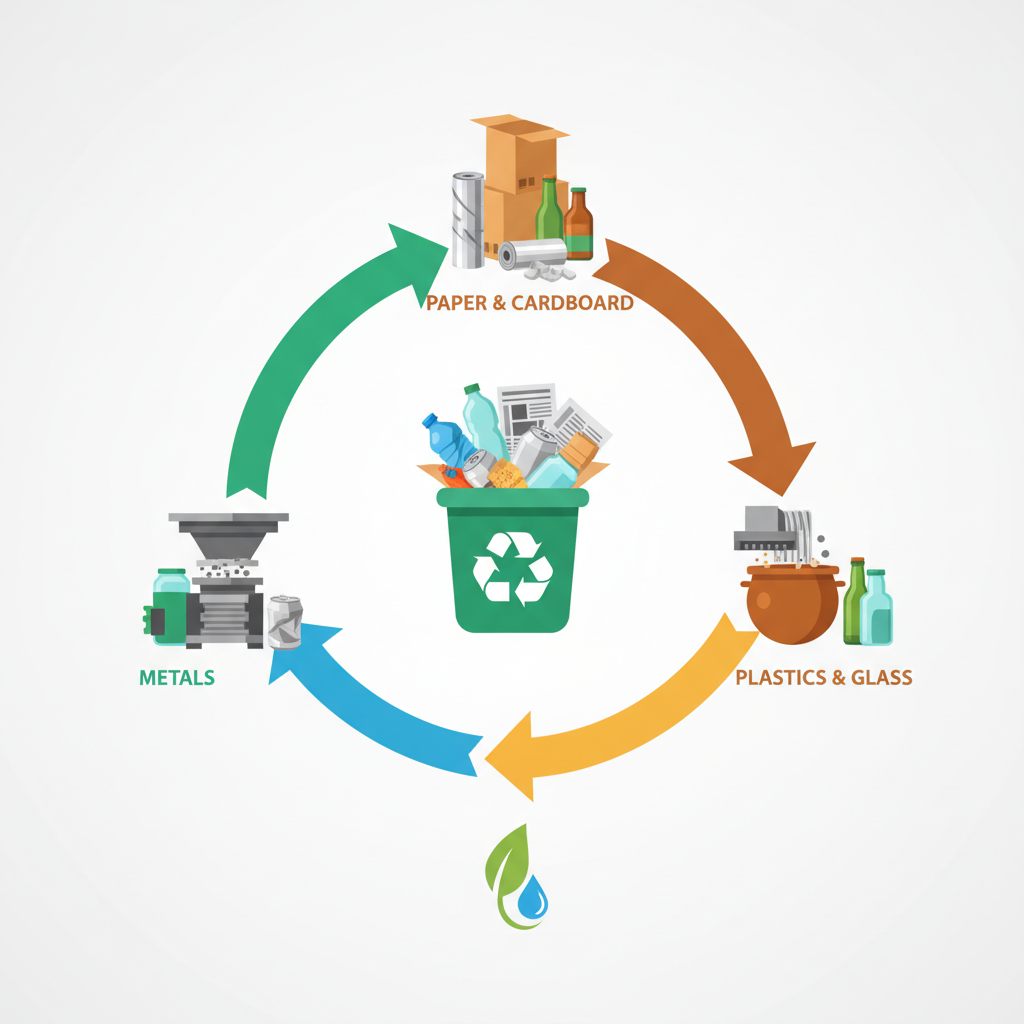
 Image: Illustrating the concept of a circular economy, where resources are kept in use for as long as possible.
Best Practices for Effective Single Stream Recycling
Maximizing the benefits and mitigating the challenges of single-stream waste management requires a concerted effort from all stakeholders: residents, municipalities, and recycling facilities. Implementing best practices is crucial for ensuring that increased convenience truly translates into higher-quality, economically viable recycling outcomes. Here’s a detailed look at key strategies:
1. Robust Public Education and Outreach:
- Clear “What’s In / What’s Out” Messaging: Provide simple, unambiguous guidelines on what can and cannot be recycled. Use visual aids, consistent branding, and multiple communication channels (websites, social media, mailers, bin stickers).
- Explain Why: Educate residents on the impact of contamination (e.g., “greasy pizza boxes spoil other paper,” “plastic bags jam machines”). Understanding the “why” fosters greater compliance.
- Targeted Campaigns: Address common contaminants identified at local MRFs through specific educational campaigns.
- Multilingual Resources: Ensure information is accessible to all demographics within the community.
2. Effective Container Management:
- Rinse and Empty: Advise residents to quickly rinse food and beverage containers and empty them of liquids to prevent contamination.
- No Plastic Bags: Emphasize that plastic bags (and other “tanglers” like hoses, wires) should never go into the single stream bin, as they wrap around machinery and cause costly breakdowns. Offer alternative drop-off locations for plastic bags.
- Keep Items Loose: Recyclables should be placed loosely in the bin, not bagged, so MRF equipment can effectively sort them.
- Know Local Rules: Highlight that acceptable materials can vary by municipality and even by MRF, reinforcing the importance of local guidelines.
3. Municipal and Facility-Level Innovations:
- Advanced MRF Technology: Invest in or advocate for MRFs equipped with state-of-the-art automated sorting technology, including optical sorters, ballistic separators, and advanced magnets, to improve separation efficiency and purity.
- Continuous Improvement: MRFs should regularly assess their contamination rates and adjust sorting processes or update machinery as needed.
- Cart Audits: Some municipalities conduct periodic “cart audits” or use “tag and flag” systems to provide direct feedback to residents whose bins contain significant contaminants. This direct educational approach can be highly effective.
- Partnerships: Foster strong partnerships between municipalities, haulers, MRFs, and end-markets to ensure a cohesive and efficient recycling value chain.
4. Policy and Market Development:
- Extended Producer Responsibility (EPR): Advocate for EPR policies that hold manufacturers responsible for the end-of-life management of their products, incentivizing better packaging design and robust recycling infrastructure.
- Support for End Markets: Promote policies and initiatives that support the development and stability of domestic markets for recycled materials, reducing reliance on volatile international markets.
- Standardization: Work towards greater standardization of accepted recyclable materials across regions, where feasible, to reduce consumer confusion.
By implementing these best practices, communities can transform single-stream recycling from a system prone to waste stream contamination into a highly effective tool for resource recovery and environmental stewardship. It’s a continuous process of education, technological adaptation, and collaborative effort.
The Future of Single Stream Waste Management
The landscape of single-stream waste management is dynamic, continually evolving in response to technological advancements, shifting consumer habits, and global market forces. As we look to the future, several key trends and innovations are poised to shape how we manage our commingled recyclables, pushing towards greater efficiency, reduced contamination, and enhanced resource recovery.
1. Smarter Sorting Technologies:
- AI and Robotics: The next generation of automated sorting technology in MRFs will increasingly integrate Artificial Intelligence (AI) and robotics. AI-powered vision systems can more accurately identify and separate complex materials, including different grades of plastics and even items with labels or varying colors. Robotic arms can then precisely pick and sort these materials at high speeds, improving purity and reducing reliance on manual labor for hazardous tasks.
- Spectroscopic Analysis: Advanced sensors using various spectroscopic techniques (beyond near-infrared) will allow for even more granular identification of materials, potentially separating different polymer types or grades of paper with unprecedented accuracy.
2. Enhanced Data Analytics and Transparency:
- Waste Auditing with AI: AI systems could be deployed at various points in the collection and sorting process to continuously monitor the composition of the waste stream, providing real-time data on contamination levels and material types. This data can inform targeted public education campaigns and optimize MRF operations.
- Blockchain for Traceability: Distributed ledger technologies like blockchain could offer greater transparency in the recycling supply chain, tracking materials from collection to reprocessing, verifying their origin and quality, and potentially boosting market confidence in recycled content.
3. Focus on Advanced Recycling Technologies:
- Chemical Recycling: For plastics that are difficult to mechanically recycle (e.g., mixed plastics, multi-layer films), chemical recycling offers a promising alternative. This technology breaks down plastics into their basic chemical components, which can then be used to create new, virgin-quality plastics. This could unlock a significant portion of currently unrecyclable plastic waste.
- Pyrolysis and Gasification: These processes convert mixed waste, including hard-to-recycle plastics and other organic materials, into fuels or chemical feedstocks, offering alternatives to landfilling.
4. Producer Responsibility and Packaging Innovation:
- Design for Recyclability: Growing pressure from consumers and regulations will drive manufacturers to adopt “design for recyclability” principles, creating products and packaging that are easier to recycle within existing single-stream waste management systems. This includes reducing multi-material packaging and standardizing plastic types.
- Extended Producer Responsibility (EPR): Expansion of EPR schemes globally will shift the financial and operational burden of managing end-of-life products to producers, providing a strong incentive for them to invest in recycling infrastructure and sustainable design.
5. Stronger Public Engagement and Education:
- Personalized Feedback: Future systems may integrate technologies that provide personalized feedback to households on their recycling habits, promoting better sorting and reducing “wishcycling.”
- Digital Tools: Mobile apps and online platforms will continue to play a crucial role in providing accessible, up-to-date information on local recycling guidelines.
The future of single-stream waste management is one of continuous improvement and adaptation. While the core convenience factor will remain, the system will become increasingly sophisticated, driven by smart technologies and a renewed focus on product circularity. The goal is to move beyond simply collecting materials to ensuring genuine resource recovery, minimizing waste, and truly embedding circular economy principles into our daily lives.
Frequently Asked Questions (FAQs)
What is the biggest challenge for single-stream recycling?
The biggest challenge for single-stream waste management is waste stream contamination. When non-recyclable items, food waste, or liquids are mixed with clean recyclables, they can degrade the quality of the entire batch, making materials harder or impossible to recycle, and increasing processing costs at Material Recovery Facilities (MRFs). This leads to higher rates of “residuals” being sent to landfills.
Does single-stream recycling actually work?
Yes, single-stream recycling can work effectively when properly managed. It significantly boosts recycling rates due to its convenience. However, its success depends heavily on a combination of factors: strong public education to minimize contamination, advanced automated sorting technology at MRFs, and stable markets for recycled commodities. Without these elements, its efficiency can be compromised.
What kind of materials can be recycled in a single-stream system?
Typically, a single stream waste management system accepts a broad range of materials commingled in one bin. This usually includes paper (newspapers, magazines, junk mail, office paper), cardboard (flattened boxes), plastic containers (bottles, jugs, tubs, often #1-7 depending on local programs), metal cans (aluminum, steel/tin), and glass bottles and jars (all colors). It’s crucial to always check your local municipality’s specific guidelines, as accepted materials can vary.
What should NOT go into single-stream recycling?
Items that generally should NOT go into single-stream recycling include plastic bags and film (they jam machinery), Styrofoam, electronics, batteries, clothing/textiles, garden hoses, ceramics, food waste, hazardous waste, medical waste, diapers, and often shredded paper (unless specifically instructed). These items are major sources of waste stream contamination and can damage equipment or pose safety risks.
How do they sort single-stream recycling?
Single-stream waste management is sorted at specialized Material Recovery Facilities (MRFs) using a combination of advanced machinery and manual labor. This involves multiple stages: initial manual pre-sorting, screens and disc separators for size and shape, powerful magnets for ferrous metals, eddy current separators for non-ferrous metals, optical sorters for plastics and paper, and final manual quality control. Each machine and human touchpoint helps separate materials into clean, marketable commodities.
Is single-stream recycling more environmentally friendly?
The environmental friendliness of single-stream waste management is a nuanced topic. On one hand, it increases participation and waste diversion from landfills, which saves resources and energy, and reduces greenhouse gas emissions. On the other hand, the higher potential for waste stream contamination means that a portion of collected materials might still end up in landfills, negating some of the environmental benefits. Its net environmental impact is positive when contamination is kept low, and efficient processing ensures resource recovery.
What is source separation recycling?
Source separation recycling (also known as multi-stream or dual-stream recycling) requires individuals to separate their recyclable materials into different categories (e.g., paper in one bin, plastics/metals in another, glass in a separate bin) at the point of generation, typically their home or business. This contrasts with single-stream waste management, where all recyclables are co-mingled in one container. Source separation generally results in cleaner, higher-quality materials with less contamination, which can command higher market prices.
What is sustainable waste management?
Sustainable waste management is an approach that aims to minimize the negative environmental impact of waste while maximizing resource efficiency and promoting circular economy principles. It emphasizes the “reduce, reuse, recycle” hierarchy, prioritizing waste prevention, then reuse, and then recycling. It also includes the responsible disposal of non-recyclable waste and aims to recover valuable resources from waste streams, rather than simply discarding them. Single-stream waste management is one component of a broader sustainable waste strategy.
What are recycling rates?
Recycling rates refer to the percentage of waste materials that are collected and processed for recycling, rather than being sent to landfills or incinerators. It’s typically calculated as the weight of recycled materials divided by the total weight of waste generated. Higher recycling rates indicate more effective waste diversion and better resource management, often influenced by factors like public participation, convenience (as offered by single-stream waste management), and market demand for recycled commodities.
What is a Material Recovery Facility (MRF)?
A Material Recovery Facility (MRF) is a specialized plant that processes commingled or sorted recyclable materials. Its primary function is to receive, sort, separate, and prepare recyclable materials (like paper, plastics, metals, and glass) for shipment to end-user manufacturers. MRFs utilize a combination of manual sorting and automated sorting technology, including screens, magnets, eddy current separators, and optical sorters, to achieve this. They are critical to the success of single-stream waste management systems.
What is automated sorting technology in MRFs?
Automated sorting technology in Material Recovery Facilities (MRFs) refers to the use of machines and systems that automatically identify and separate different types of recyclable materials. Key technologies include optical sorters (which use light to identify material types and air jets to separate them), magnets (for ferrous metals), eddy current separators (for non-ferrous metals), and various screens and disc separators (for separating by size and shape). These technologies significantly increase the speed and efficiency of the sorting process, crucial for handling large volumes of co-mingled recycling from single-stream waste management programs.
What are circular economy principles?
Circular economy principles aim to keep resources in use for as long as possible, extract the maximum value from them whilst in use, then recover and regenerate products and materials at the end of each service life. It’s an alternative to the traditional linear “take-make-dispose” economy. Key tenets include designing out waste and pollution, keeping products and materials in use, and regenerating natural systems. Recycling, particularly efficient resource recovery through systems like optimized single-stream waste management, is a vital component of a circular economy.
What are advanced recycling technologies?
Advanced recycling technologies, often referred to as chemical recycling, are innovative processes that break down plastics and other materials into their fundamental chemical components or molecular building blocks. Unlike mechanical recycling, which melts and reshapes plastics, advanced recycling can process mixed, contaminated, or difficult-to-recycle plastics (e.g., films, multi-layer packaging) into virgin-quality feedstocks. These technologies, such as pyrolysis, gasification, and depolymerization, are seen as crucial for expanding the range of materials that can be truly recycled and increasing resource recovery, complementing traditional single-stream waste management.
What is the environmental impact of waste management?
The environmental impact of waste management encompasses various aspects, including landfill gas emissions (methane), potential groundwater contamination from landfills, air pollution from incinerators, resource depletion from extracting virgin materials, and energy consumption in manufacturing. Effective waste management, including robust recycling systems like single-stream waste management, aims to mitigate these negative impacts by reducing waste sent to landfills, conserving natural resources, saving energy, and reducing greenhouse gas emissions. Poor waste management, conversely, exacerbates these environmental challenges.
What is resource recovery?
Resource recovery refers to the process of extracting valuable materials or energy from waste. This includes traditional recycling (e.g., sorting paper, plastics, and metals from single-stream waste management), composting organic waste, and waste-to-energy processes. The goal of resource recovery is to divert waste from landfills and incinerators by transforming it into new products, energy, or raw materials, thereby conserving natural resources and reducing environmental impact. It’s a key component of sustainable waste management and circular economy principles.
What is waste diversion?
Waste diversion refers to any process that reduces the amount of waste sent to landfills or incinerators. This primarily includes recycling, composting, and reuse initiatives. The higher the waste diversion rate, the less material ends up in final disposal facilities. Single-stream waste management is often implemented precisely because it is effective at increasing waste diversion by making recycling more accessible and convenient for the public, thus contributing to higher recycling rates.
Conclusion: Navigating the Future of Sustainable Recycling
Single-stream waste management has undeniably reshaped the landscape of residential recycling, making it more convenient and accessible than ever before. Its ability to dramatically increase participation and divert significant tonnage from landfills is a testament to its effectiveness as a system for front-end collection. However, as an SEO expert observing the industry for three decades, I can confidently state that the story of single stream is one of continuous evolution and refinement. Its success is not guaranteed by convenience alone; it demands vigilance against contamination, robust investment in processing infrastructure, and persistent public education.
The challenges of waste stream contamination and the fluctuating economics of recycled commodities are real, and they underscore the critical importance of a holistic approach. The future of single stream lies in smarter Material Recovery Facilities (MRFs) powered by AI and robotics, coupled with a renewed commitment to responsible consumption and design for recyclability. Policy innovations like Extended Producer Responsibility will further empower manufacturers to create materials that seamlessly fit into the recycling loop, reducing the burden on consumers and facilities alike.
Ultimately, single-stream waste management is a powerful tool within the broader framework of sustainable waste management and circular economy principles. When communities embrace best practices—from vigilant consumer sorting to cutting-edge MRF technology—single stream becomes a highly effective pathway to resource recovery, significantly reducing our environmental footprint and conserving precious natural resources. It is a testament to human ingenuity that we can transform mixed waste into valuable commodities, but it is our collective responsibility to ensure that this system operates at its peak potential for generations to come.
About the author