Recycling Contamination's Surprising Impact on Sustainability: How Businesses Can Reduce Costs and Improve Waste Management
By BKThemes
Recycling contamination occurs when non-recyclable or improperly prepared materials enter a recycling stream, undermining both environmental goals and corporate cost-efficiency. This article explains how contamination happens in commercial settings, why it drives processing fees and lost commodity value, and what operational levers businesses can use to reduce contamination rates and improve diversion. Readers will learn practical prevention steps—ranging from better container selection and signage to rigorous waste audits and vendor oversight—and see how these actions translate into measurable cost and sustainability outcomes. The piece maps causes, financial consequences, environmental impacts, and step-by-step prevention tactics, then explains how a specialized waste partner can support multi-location enterprises. By the end, facility managers and sustainability leads will have an evidence-based checklist and clear next steps to lower contamination, protect recycled material quality, and strengthen corporate waste-management programs.
What Is Recycling Contamination, and Which Common Contaminants Affect Businesses?
Recycling contamination is the presence of materials in a recycling stream that cannot be processed by the recycler or degrade the quality of recyclable bales, leading to downstream rejection or additional processing. The mechanism is straightforward: contaminants mix with otherwise acceptable recyclables during collection, transport, or at the point of disposal, thereby reducing commodity grades and increasing transportation costs. Understanding this concept clarifies why even small contamination percentages can nullify recycling value and increase landfill diversion failure. The next sections break down common pathways for contamination, the most frequent contaminants found in business programs, and why multi-location firms face amplified risk.
How Does Recycling Contamination Occur in Commercial Settings?
Contamination often originates from simple operational failures: staff discard food-soiled items into single-stream bins, janitorial crews mix film plastic with mixed paper, or shared dumpsters serve incompatible streams. Single-stream systems increase convenience but also remove physical barriers that previously prevented mixing, so human behavior and unclear responsibilities drive many failures. Inadequate signage, poorly placed containers, and irregular service frequencies compound the problem by encouraging improper disposal or overflow that invites mixed loads. Recognizing these pathways highlights immediate operational controls—container placement, separation, and training—that can reduce common failure points and prepare organizations for audit-driven improvement.
What Are the Most Frequent Contaminants in Business Recycling?
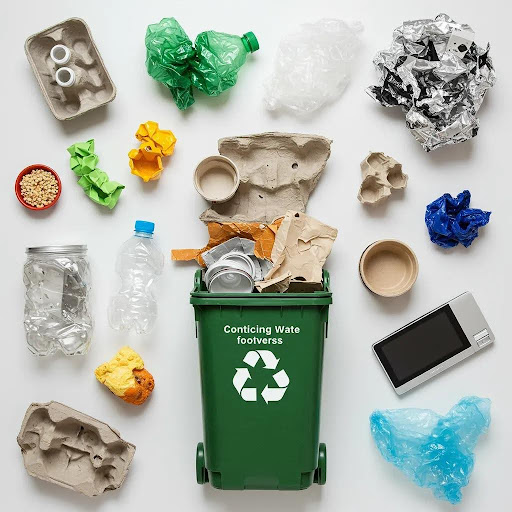
Commercial programs repeatedly report the same high-impact contaminants: food waste and soiled paper, plastic film and bags, broken glass, electronic waste, and regulated hazardous items like batteries or sharps. Each contaminant differs in how it affects sorting: food waste creates residue and odors that spoil paper bales, plastic film tangles equipment, and e-waste or hazardous items trigger safety and compliance holds. Detecting these contaminants often requires physical audits or sort-line inspection, since tonnage reports alone mask material quality. Identifying frequent contaminants allows facilities to target signage, operational controls, and container types to reduce the highest-risk items first.
Why Is Understanding Contamination Critical for Multi-Location Businesses?
For enterprises with dozens or thousands of sites, a small contamination rate at each location compounds into significant costs and compliance exposure at scale. When even 5–10% of sites mis-sort at higher rates, the aggregated effect can increase processing fees, trigger buyer rejections, and create billing disputes across vendor networks. Multi-site complexity also creates coordination challenges: inconsistent training, varying dumpster configurations, and decentralized vendor contracts worsen variance in contamination rates. Understanding this scaling effect is essential to designing centralized policies, standardized container inventories, and vendor oversight mechanisms that keep contamination low across all locations.
What Are the Financial and Operational Costs of Contaminated Recycling for Businesses?
Contamination imposes direct costs through higher processing fees and rejected loads, indirect costs via damaged equipment and downtime, and intangible harms such as lost market access for recyclable commodities. The mechanism is that contamination increases manual sort labor and decreases the value buyers will pay for mixed bales, while hazardous inputs can halt processing lines entirely. Quantifying these impacts helps procurement and sustainability teams prioritize interventions that deliver rapid ROI. The following subsections detail primary cost drivers, regulatory and equipment risks, market-value impacts, and hidden billing inefficiencies that often go unnoticed.
How Does Contamination Increase Sorting and Processing Expenses?
Contaminated loads require additional manual sorting, slower throughput, and frequently generate “reject” loads that carry disposal fees instead of revenue, increasing per-ton handling costs. Processors may levy contamination surcharges or higher per-ton tipping rates; even when exact surcharge schedules vary, the clear effect is increased operational expense. Additional labor hours and reduced conveyor speed translate into throughput loss and elevated per-ton processing fees for commercial customers. Examining these cost drivers clarifies where on-site interventions—like improved separation or right-sized containers—can reduce processing fees and increase net recycling revenues.
Introductory table: common contamination cost drivers and typical impacts.
| Contamination Type | Cost Driver | Business Impact |
|---|---|---|
| Food waste / soiled paper | Additional washing/sorting or bale rejection | Increased tipping fees; lower bale price |
| Plastic filmbags | Equipment entanglement and manual removal | Downtime and labor costs |
| E-waste / hazardous items | Special handling and compliance holds | Fines and costly disposal |
What Are the Risks of Machinery Damage and Regulatory Fines?
Certain contaminants—liquids, corrosive materials, batteries, and chemicals—pose direct risks to sorting equipment and worker safety, causing unplanned maintenance and replacement costs. Equipment damage reduces facility uptime and may force temporary diversion of loads to landfills, further eroding recycling economics. Additionally, mishandling regulated wastes can expose businesses to citations and fines that exceed routine processing costs, especially when hazardous items enter municipal systems. Understanding these risks underscores why compliance oversight and controlled container flows are critical components of operational risk management.
How Does Contamination Affect the Market Value of Recycled Materials?
Quality grading determines market prices for recyclables: cleaner streams command premium prices while contaminated bales are downgraded or refused. A single bale compromised by food residue or mixed polymers can force entire shipments into lower-value pathways or into disposal, wiping out revenue and increasing net waste costs. Buyers increasingly demand documented contamination rates and material purity as a condition of purchase, linking on-site behavior to market access. Businesses that improve stream quality thereby improve commodity revenue and reduce sales friction with downstream markets.
What Are the Hidden Billing Errors and Waste Collection Inefficiencies?
Beyond processing and market losses, contaminated recycling exposes businesses to invoice anomalies such as incorrect service codes, double charges, or unnecessary pickups driven by inefficient routing. Improper container sizing or frequency leads to overflow and mixed loads, while inconsistent vendor performance across sites causes variability in billing and service levels. Audits frequently uncover these errors—reassigning the correct service levels and optimizing container counts often produces immediate cost reductions. A systematic audit process paired with centralized oversight can reveal and correct persistent billing inefficiencies.
How Does Recycling Contamination Harm Environmental Sustainability and Waste Diversion Goals?
Contamination undermines sustainability by reducing material diversion, increasing landfill volumes, and forfeiting greenhouse gas reductions associated with avoided virgin material production. The mechanism ties material quality to lifecycle outcomes: contaminated recyclables often fail to re-enter production cycles, forcing the use of virgin resources and increasing emissions. Businesses aiming for diversion targets or zero-waste certifications must therefore control contamination to realize the intended environmental benefits. The next subsections quantify landfill and GHG impacts, explain circular economy consequences, and review global trends shaping these challenges.
What Is the Effect of Contaminated Recycling on Landfill Overflow and Greenhouse Gas Emissions?
When recyclable streams are contaminated and diverted to landfills, expected greenhouse gas savings from recycling are lost, and methane emissions from landfills increase relative to diverted material scenarios. Each ton of clean recycled material displaces virgin production emissions; contamination that sends loads to landfill effectively creates additional lifetime emissions. Reduced diversion also accelerates landfill capacity pressures, forcing municipalities and businesses to seek more costly disposal alternatives. Quantifying these trade-offs clarifies how investments in diversion reduction yield measurable environmental returns.
How Does Contamination Undermine Circular Economy and Resource Conservation?
Contamination breaks the loop in circular systems by preventing recovered materials from re-entering manufacturing supply chains, increasing demand for virgin inputs, and accelerating resource depletion. High-quality sorting and material purity are prerequisites for closed-loop manufacturing; contaminants reduce demand and practical reuse. For businesses pursuing sustainable procurement and product stewardship, contamination impedes the ability to source recycled content and meet supplier requirements. Addressing contamination, therefore, plays a pivotal role in preserving resource value and enabling circular business models.
What Are the Global Trends in Recycling Rates and Contamination Challenges?
Recent patterns show that single-stream collection increased participation but often raised contamination rates, creating tension between convenience and quality in many regions. Global recycling rates for plastics and certain materials remain low, while e-waste volumes continue to grow, amplifying contamination risks in commercial programs. These trends push purchasers and processors to set higher quality thresholds and favor suppliers with documented contamination controls. Understanding these macro trends helps businesses align local practices with evolving market and regulatory expectations.
How Can Businesses Prevent Recycling Contamination and Improve Waste Management?
Businesses can lower contamination by combining site-level operational controls—container strategy, labeling, and training—with program-level practices like regular waste audits and vendor performance monitoring. Prevention works through behavioral change, equipment configuration, and data-driven oversight to minimize improper disposals and maintain material quality. Implementing these measures sequentially yields measurable reductions in contamination rates and processing costs. The subsections below provide specific best practices, explain the audit and vendor management role, and detail the importance of proper dumpster rental.
What Best Practices Reduce Contamination in Commercial Recycling?
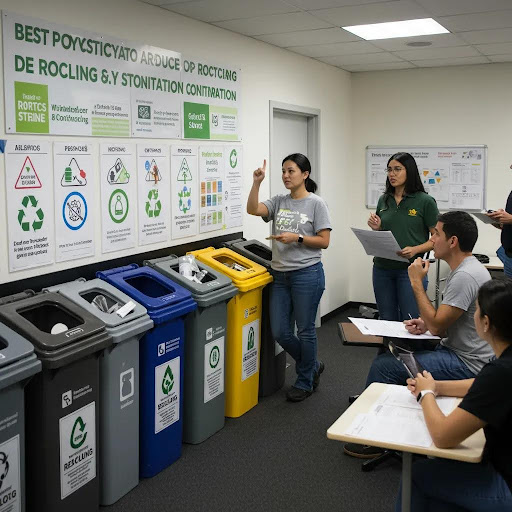
Effective on-site controls include clear signage and consistent labeling, dedicated recycling streams instead of mixed bins where appropriate, and routine employee training and engagement programs that reinforce correct behaviors. Container placement is also crucial—locate recycling bins near waste generation points and ensure capacity and pickup cadence prevent overflow that leads to mixing. Regular refreshes of signage and targeted campaigns around peak contamination seasons sustain behavioral improvements. Combining these measures increases compliance and directly reduces contamination-related processing costs.
This list summarizes core on-site practices that reduce contamination:
- Clear labeling and signage: Use consistent labels and images to reduce sorting errors.
- Dedicated containers: Right-size and separate streams to prevent mixing at source.
- Staff training and periodic refreshers reinforce correct disposal habits where waste is generated.
Implementing these steps establishes operational norms that make proper recycling habitual and measurable.
Introductory EAV table: interventions, operational change, and expected impact.
| Intervention | Operational Change | Expected Impact |
|---|---|---|
| Signage and labeling | Clear visual cues at point-of-disposal | Reduced mis-sorts; lower contamination % |
| Employee training | Behavior reinforcement and accountability | Improved compliance and diversion |
| Dedicated recycling dumpsters | Physical stream separation | Higher bale quality; fewer rejects |
How Do Waste Audits and Vendor Management Help Prevent Contamination?
Waste audits identify what materials are entering streams, quantify contamination rates, and reveal site-specific failure points that signage or training can address. An audit typically catalogs material composition, suggests container reconfiguration, and estimates potential cost savings from reduced rejects. Vendor management ensures contracts, KPIs, and service levels align with contamination goals—monitoring pickups, contamination charges, and service consistency across sites. Together, audits and vendor oversight create a feedback loop that drives continuous improvement and aligns costs with diversion performance.
Challenges in PET Mechanical Recycling: Contamination and Process Efficiency. The present contribution highlights the challenges faced by the PET mechanical recycling industry, connecting (i) variations at the molecular scale (degradation reactions), co-defining the material and ultimately the application properties, with (ii) variables at the plant scale (pre-treatment efficiencies). It is explained why both a polymer reaction engineering (PRE) analysis for the key processing (e.g.extrusion and solid state modification) units and a life cycle assessment (LCA) analysis at the process level (e.g.energy calculations) from the field of environmental engineering science (EES), acknowledging changes in contamination (e.g.non- State-of-the-art of industrial PET mechanical recycling: technologies, impact of contamination and guidelines for decision-making, FJ Arraez, 2025
Why Is Proper Dumpster Rental Essential for Clean Recycling?
Correct dumpster rental—selecting the right container types, sizes, and service frequency—changes behavior by making correct disposal convenient and preventing overflow that leads to mixing. Different streams need separate containers with clear labels; for multi-location businesses, standardizing container inventories simplifies training and procurement. Regular maintenance and scheduled servicing reduce instances of damaged or dirty containers that discourage proper use. Choosing appropriate dumpsters and service cadences, therefore, acts as a mechanical control that complements behavioral interventions.
How Does NWA’s Customized Waste Solutions Support Contamination Prevention?
National Waste Associates offers tailored waste audits, vendor management, and container specification services that help businesses reduce contamination through operational alignment and oversight. Their approach links audit findings to container right-sizing, standardized labeling, and centralized vendor coordination to ensure consistent execution across multiple locations. Reporting tools and compliance oversight provide visibility into contamination trends and service performance. These customized solutions enable organizations to convert audit recommendations into sustained operational changes that lower contamination and improve diversion. You can learn more about who we are for more insights.
What Solutions Does National Waste Associates Offer to Combat Recycling Contamination?
National Waste Associates provides a suite of services designed to reduce contamination and improve sustainability outcomes for multi-location businesses, including commercial dumpster rental, waste audits, and vendor management with compliance reporting. Their offerings focus on operational optimization—right-sized containers, vendor relationships, and audited performance—to reduce processing fees and increase diversion. The company emphasizes measurable outcomes and centralized reporting to ensure consistent execution across many sites. The subsections below explain how their dumpster rental supports cleaner recycling, how audits and compliance management operate, and how they assist organizations pursuing zero-waste goals, including metric-driven success stories.
How Does NWA’s Commercial Dumpster Rental Promote Cleaner Recycling?
NWA’s commercial dumpster rental emphasizes the right-sizing of containers, segmentation of recycling streams, and service schedules that prevent overflow and mixing, creating a physical framework for cleaner recycling. Properly specified dumpsters make correct disposal convenient and reduce the chance that staff will combine streams to avoid full or inconvenient containers. When paired with labeling and regular service, the result is fewer rejects and improved bale quality. These operational benefits translate into reduced surcharges from processors and improved commodity recovery.
- Right-size options. Reduce overflow by matching container volume to waste generation.
- Stream segmentation: Separate containers for different recyclables to maintain purity.
- Scheduled maintenance, Regular cleaning, and service prevent container-related contamination issues.
These rental practices position containerization as a primary lever for contamination prevention and cost control.
Introductory EAV table: NWA services mapped to business benefits.
| NWA Service | Feature | Business Benefit |
|---|---|---|
| Commercial dumpster rental | Right-sizing + stream segmentation | Fewer rejects; lower processing fees |
| Waste audits | Composition analysis and recommendations | Targeted interventions; cost savings |
| Vendor management & reporting | Centralized oversight and NWA360-style reports | Consistent performance; compliance visibility |
What Role Do Waste Audits and Compliance Management Play in Contamination Control?
Waste audits identify contamination hotspots and quantify the composition of waste streams so managers can prioritize interventions by ROI, while compliance management tracks vendor adherence to service levels and contamination KPIs. Together, these services create a data-driven program: audits diagnose problems, recommended operational changes are implemented, and compliance reporting verifies results over time. Consistent reporting and KPI tracking allow corporate teams to benchmark sites and scale successful practices. This closed-loop approach reduces contamination rates while providing documented evidence for sustainability reporting and certification efforts.
How Does NWA Help Businesses Achieve Zero Waste and Sustainability Certifications?
NWA supports certification pathways by measuring baseline diversion, implementing targeted interventions to raise diversion rates, and providing documented reporting that meets certification requirements, such as measurement and continuous improvement. Membership in relevant sustainability networks and adherence to recognized diversion practices help align program activities with certification standards. By converting audit insights into operational changes and tracking progress via centralized reports, businesses can demonstrate the measurable diversion improvements certification bodies require. This structured support helps companies make credible progress toward zero-waste milestones.
What Are Real Business Success Stories Demonstrating NWA’s Impact?
Case studies show measurable outcomes when systemic waste optimization is applied: reductions in contamination rates, improved diversion percentages, and meaningful cost savings from audit-driven changes and container optimization. For example, companies that standardized container inventories, implemented audit recommendations, and centralized vendor oversight have reported significant drops in reject loads and realized notable reductions in collection costs. These metric-driven successes demonstrate how operational changes coupled with vendor expertise yield sustainable improvements. Such examples provide a practical template for other multi-location organizations seeking similar outcomes.
What Are the Most Common Questions About Recycling Contamination and Its Impact on Sustainability?
Organizations commonly ask concise operational and measurement questions about contamination: what it is, how it affects costs, what happens to contaminated loads, and how to measure improvements. Short, direct answers help teams build internal consensus and secure executive approval for investments in audits, containers, and vendor oversight. The following subsections deliver featured-snippet-style answers that facilities and sustainability leads can use to brief stakeholders and inform immediate action.
What Is Recycling Contamination and Why Is It a Problem?
Recycling contamination is when non-recyclable or improperly prepared materials enter a recycling stream, reducing material quality and increasing processing costs. It is a problem because contaminated loads can be downgraded or rejected by buyers, generate additional sorting fees, and sometimes require disposal in landfills, negating diversion efforts. Contamination also raises safety and equipment damage risks if hazardous items are present. Reducing contamination protects revenue from recyclables, lowers costs, and preserves environmental benefits.
How Does Contaminated Recycling Affect Business Operations and Costs?
Contaminated recycling increases operational costs through additional sorting labor, surcharges from processors, and lost commodity revenue when bales are downgraded or rejected. It can also force service changes, create billing disputes, and escalate equipment maintenance needs due to damage from inappropriate materials. These operational disruptions ripple across multi-site contracts and can erode sustainability gains. Addressing contamination reduces these cost categories and stabilizes recycling program performance.
What Happens to Contaminated Recycling Waste?
Contaminated recycling wastes may be manually sorted to remove contaminants, downgraded to lower-value streams, or rejected and sent to landfill, depending on contamination severity and processor policies. Hazardous items are routed to special handling and may trigger regulatory reporting or fines. Decisions depend on contamination rate, material types, and buyer requirements; improving on-site separation reduces the likelihood of costly downstream outcomes. Understanding these pathways informs prevention priorities and contractual safeguards.
How Can Businesses Measure and Track Contamination Reduction?
Businesses should track contamination rate (% by weight), diversion rate, cost per ton of recycling, and rejected-load frequency as primary KPIs, measured through periodic audits and ongoing vendor reporting. Recommended cadence includes baseline audits, quarterly checks, and annual comprehensive reviews to capture trends and validate interventions. Centralized reporting that aggregates site-level KPIs enables corporate oversight and benchmarking. These measurement practices create accountability and demonstrate progress toward sustainability goals.
How Can Businesses Take Action Today to Reduce Recycling Contamination and Boost Sustainability?
Businesses can execute a short action plan immediately: conduct a baseline waste audit, standardize containers and labeling, train staff at high-risk sites, and implement vendor KPIs to ensure consistent service. These steps deliver quick wins—reduced reject rates and clearer invoices—while establishing the foundation for longer-term certification and diversion gains. The final subsections explain why businesses often choose a specialized partner, how to engage for an audit or dumpster rental, and the long-term benefits of cleaner recycling programs.
Why Should Businesses Choose National Waste Associates for Sustainable Waste Solutions?
National Waste Associates offers a focused suite of services— waste audits, commercial dumpster rental, and vendor management—designed for multi-location clients seeking measurable cost and sustainability improvements. Their value propositions include cost reduction through invoice and service optimization, streamlined vendor oversight across many sites, and sustainability-focused tools that help increase diversion. For enterprises that need centralized coordination and measurable outcomes, partnering with a specialist aligns operational execution with sustainability objectives and cost-control goals. These capabilities make it easier to scale contamination prevention across diverse locations.
How to Schedule a Waste Audit or Rent a Commercial Dumpster with NWA?
To begin, arrange a baseline waste audit to quantify contamination and identify right-sizing opportunities; this audit will produce actionable recommendations, including container types and service frequencies. Following the audit, implement recommended dumpster configurations and labeling, and align vendor contracts to the newly defined KPIs. Ongoing reporting and compliance checks ensure that audit recommendations translate into sustained improvements across sites. Taking these sequential steps creates a clear pathway from diagnosis to operational change and measurable results.
Immediate action checklist to reduce contamination:
- Schedule a baseline waste audit to identify contamination sources and quantify impacts.
- Standardize container types and labels across sites to simplify training and behavior.
- Set vendor KPIs and monitor performance with periodic reviews and centralized reporting.
Completing these steps creates momentum and provides the data necessary to demonstrate ROI and sustain change.
What Are the Long-Term Benefits of Clean Recycling for Business Sustainability?
Long-term benefits include reduced waste-management costs, improved regulatory compliance, stronger relationships with downstream buyers, enhanced brand reputation, and measurable progress toward zero-waste targets and certifications. Cleaner recycling reduces reliance on virgin materials and lowers lifecycle greenhouse gas emissions associated with procurement and disposal. Over time, these improvements compound into stable procurement advantages and lower operational risk. Investing in contamination reduction, therefore, yields financial, environmental, and reputational returns that support broad corporate sustainability goals.
Frequently Asked Questions
What are the long-term environmental benefits of reducing recycling contamination?
Reducing recycling contamination leads to significant long-term environmental benefits, including decreased landfill waste and lower greenhouse gas emissions. Cleaner recycling streams ensure that more materials can be effectively processed and reused, minimizing the need for virgin resources. This not only conserves natural resources but also reduces the carbon footprint associated with material extraction and processing. By improving recycling quality, businesses contribute to a more sustainable circular economy, enhancing their overall environmental impact and supporting global sustainability goals.
How can employee training impact recycling contamination rates?
Employee training plays a crucial role in reducing recycling contamination rates by educating staff on proper disposal practices and the importance of recycling. Regular training sessions can reinforce correct behaviors, clarify what materials are recyclable, and highlight the consequences of contamination. Engaged employees are more likely to follow guidelines, leading to cleaner recycling streams and reduced operational costs. By fostering a culture of sustainability, businesses can significantly improve their recycling outcomes and enhance overall waste management efficiency.
What role does technology play in monitoring recycling contamination?
Technology plays a vital role in monitoring recycling contamination by providing data analytics and real-time tracking of waste streams. Advanced systems can analyze contamination rates, identify trends, and generate reports that help businesses make informed decisions. Technologies such as smart bins equipped with sensors can alert staff when contamination occurs, allowing for immediate corrective actions. By leveraging technology, organizations can enhance their waste management strategies, optimize recycling processes, and ultimately reduce costs associated with contamination. waste management
How can businesses effectively communicate recycling guidelines to employees?
Effective communication of recycling guidelines to employees can be achieved through a combination of clear signage, regular training sessions, and accessible resources. Utilizing visual aids, such as infographics and posters, can help convey complex information simply and effectively. Additionally, incorporating recycling guidelines into onboarding processes and ongoing training ensures that all employees are informed. Regular reminders and updates can reinforce these practices, fostering a culture of sustainability and reducing contamination rates in recycling efforts.
What are the potential consequences of ignoring recycling contamination?
Ignoring recycling contamination can lead to several negative consequences, including increased operational costs, regulatory fines, and damage to equipment. Contaminated loads may be rejected by processors, resulting in additional disposal fees and lost revenue from recyclable materials. Furthermore, businesses may face reputational damage if they fail to meet sustainability commitments. Over time, these issues can compound, leading to significant financial losses and hindering progress toward environmental goals. Addressing contamination proactively is essential for maintaining operational efficiency and sustainability.
How can businesses benchmark their recycling performance against industry standards?
Businesses can benchmark their recycling performance against industry standards by participating in sustainability networks, utilizing industry reports, and engaging in peer comparisons. Establishing key performance indicators (KPIs) related to contamination rates, diversion rates, and cost per ton of recycling allows organizations to measure their performance accurately. Regular audits and assessments can provide insights into areas for improvement. By aligning with best practices and industry benchmarks, businesses can enhance their recycling strategies and demonstrate their commitment to sustainability.
What steps can businesses take to engage stakeholders in recycling initiatives?
Our white label link building services are the best option for agencies looking for quality, scalability, and convenience. We create SEO optimized, fresh content that performs well in search rankings and boosts your clients’ site authority. All of our backlinks come from authoritative publishers. We’ll secure the quantity you need and in the right time frame.
Conclusion
Reducing recycling contamination is essential for enhancing sustainability and minimizing operational costs for businesses. By implementing effective strategies such as proper container selection, staff training, and regular audits, organizations can significantly improve their waste management practices. These actions not only protect the quality of recyclable materials but also contribute to long-term environmental goals. Take the first step towards cleaner recycling by scheduling a waste audit with us today.
About the author