In my journey towards sustainability, I see the circular economy as vital for conservation. Discover how it effectively reduces waste and protects our environment.
The circular economy reframes how businesses use materials by prioritizing reuse, resource recovery, and regenerative design over extraction and disposal, resulting in measurable conservation outcomes, such as lower resource demand and reduced pollution. Readers will learn how circular principles map to operational waste practices, which metrics quantify conservation impact, and what practical steps enterprises can take to convert strategy into measurable outcomes. Many procurement and sustainability teams struggle to translate high-level circularity goals into consistent multi-site operations; this article shows the operational levers—segregation, containerization, audits, and reporting—that scale circular outcomes across hundreds or thousands of locations. We will examine how sustainable waste management enables circular goals, how those goals protect biodiversity, how businesses can measure conservation impact, and which partner capabilities matter when implementing programs at scale. The guidance draws on contemporary frameworks and conservation evidence while mapping specific operational tools and metrics that corporate teams can apply immediately to improve diversion and reduce waste management pressures.
What Is the Circular Economy and Why Does It Matter for Conservation?
The circular economy is a systems approach that keeps products and materials in use, regenerates natural systems, and minimizes waste, thereby reducing pressure on ecosystems and raw material extraction. Mechanistically, circularity works by closing material loops—designing out waste, maintaining product value through repair or remanufacturing, and recovering materials through recycling and composting—delivering conservation benefits such as lower biodiversity loss and reduced greenhouse gas emissions. For businesses, circular strategies translate into operational choices that reduce procurement volumes, lower disposal costs, and create resilience in supply chains. Understanding these links clarifies why sustainability teams should prioritize circular interventions that directly affect material flows and ecosystem outcomes.
How Does the Circular Economy Differ from a Linear Economy?
A linear economy follows a take-make-dispose flow where materials are extracted, used once, and discarded, whereas a circular economy keeps materials circulating through reuse, repair, and recovery. The mechanism shift lies in design and logistics: circular systems require product design for longevity, reverse logistics for returns, and infrastructure for material segregation and recovery. Conservation outcomes differ materially; circular systems reduce raw extraction demand and associated habitat loss, while linear systems perpetuate continued ecosystem degradation. Businesses implementing circular economy practices therefore reduce both supply-chain risk and environmental externalities by altering how materials move through their operations.
What Are the Key Principles of the Circular Economy for Businesses?
The circular economy for businesses rests on a few core principles: design for longevity, keep materials in use, regenerate natural systems, and prioritize resource efficiency over consumption. Applying these principles means choosing durable packaging, enabling repair or refill programs, and establishing closed-loop recovery channels for high-value materials. Implementing these practices reduces material footprints and supports conservation by lowering demand for virgin inputs and decreasing pollution from wasted materials. These operational choices also create cost and reputational advantages when tracked and reported to stakeholders.
How Does the Circular Economy Support Resource Preservation?
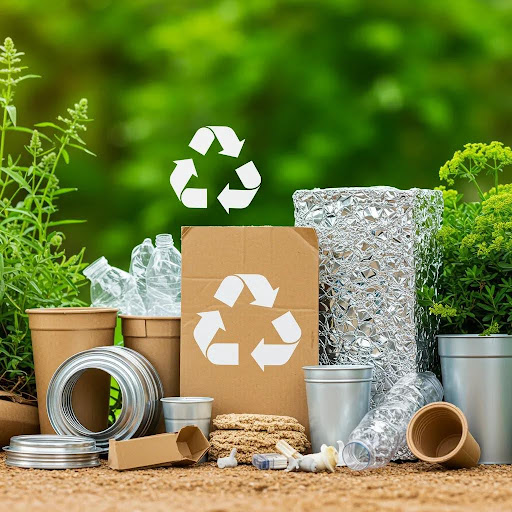
Circular strategies preserve resources by substituting virgin extraction with material reuse, remanufacturing, and recycling that capture embodied value in products at ethe nd of life. The mechanism of resource preservation relies on efficient collection and processing systems that recover materials with high yield and low contamination, keeping them in productive use. For example, recovering metals from e-waste reduces the need for mining and concomitant habitat destruction, while organics recovery reduces fertilizer demand and soil degradation. Businesses that prioritize material recovery thus contribute directly to conserving ecosystems and reducing lifecycle greenhouse gas emissions.
How Does Sustainable Waste Management Enable Circular Economy Goals?
Sustainable waste management operationalizes circular principles by establishing the logistics, infrastructure, and governance necessary for material capture, recovery, and reintegration into supply chains. Mechanisms include waste-stream segregation, material-specific handling, strategic containerization, auditing, and coordination with processing partners to ensure high-quality recovered material. These practices increase diversion rates and reduce contamination, which in turn improves the economics of recycling and resource recovery so that conservation benefits scale across business locations. Implementing these operational controls is the bridge between circular strategy and measurable conservation outcomes.
This section details practical mechanisms businesses can deploy to enable circular flows: the circular economy in sustainable waste management
- Waste-stream segregation and dedicated containers reduce contamination and increase recovery yield.
- Regular waste audits identify high-value recoverable materials and inform container strategy.
- Contract and hauler coordination aligns collection frequency with processing capacity to avoid overflows and losses.
Each mechanism contributes to lower landfill diversion and improved material re-entry into supply chains, which supports conservation by decreasing resource extraction and pollution. landfill diversion
The following table compares common waste streams against recovery potential and recommended container strategies to guide operational choices.
| Waste Stream | Recovery Potential | Recommended Container / Rental Approach |
|---|---|---|
| Cardboard & Paper | High when clean and dry; valuable for recycling | Dedicated cardboard dumpsters sized to peak volumes; frequent pickups for multi-site rollouts |
| Organics (food/food-soiled) | High for composting or AD; reduces methane if diverted | Specialized organics containers with scheduled pickups and contamination controls |
| Mixed Recyclables | Moderate-high; sensitive to contamination | Stream-specific bins (plastic, glass, cans) with clear signage and education programs |
| Electronics / E-waste | High value; requires certified processors | Secure collection boxes and scheduled e-waste pickups with chain-of-custody documentation |
This comparison helps teams prioritize containerization and rental decisions that improve material recovery and downstream value. Choosing the right container mix and rental cadence directly improves diversion metrics and supports conservation outcomes.
What Role Does Commercial Dumpster Rental Play in Circular Waste Practices?
Commercial dumpster rental is a core operational tool that enables segregation and scalable collection across sites by providing stream-specific containers in appropriate sizes. By assigning dedicated dumpsters for cardboard, organics, or mixed recycling, businesses capture cleaner material streams and reduce contamination that undermines recycling markets. Rental partners simplify multi-site logistics by standardizing container types, scheduling pickups, and managing equipment swaps during pilot-to-scale rollouts. Clear container strategy, therefore, directly increases recovery rates and translates circular design into consistent operational practice.
How Can Businesses Optimize Waste Streams for Resource Recovery?
Optimizing waste streams begins with targeted audits to quantify composition, followed by pilots that test container mixes, signage, and pickup frequency to measure impacts on contamination and diversion. Training frontline employees and customers, standardizing container colors and labels, and using contamination controls such as inspection or pre-sort protocols improve material quality. Contract management—aligning haulers and processors—ensures recovered materials reach markets quickly, increasing the economic returns of recycling. These steps create operational feedback loops that raise diversion and resource recovery rates as programs scale.
What Are the Environmental Benefits of Reducing Landfill Waste?
Reducing landfill waste lowers methane emissions, decreases leachate and local pollution risks, and reduces demand for new resource extraction, all of which protect ecosystems and biodiversity. Diverting organics to composting or anaerobic digestion prevents methane generation and can return nutrients to soils, while recycling materials avoids emissions associated with primary production. At scale, higher diversion rates can materially reduce a company’s lifecycle carbon footprint and decrease pressure on habitats threatened by extraction industries. Businesses that capture and communicate these benefits translate operational wins into credible conservation contributions.
Municipal Solid Waste Management: Collection, Transportation, and Segregation for Environmental Benefits. MSW must be collected, transported, and segregated properly to be disposed of safely and to minimize environmental pollution. The most popular techniques of MSW management (MSWM) include landfilling, incineration, composting, anaerobic digestion, pyrolysis, fuel generation, and recycling. Efficient waste management practices can help conserve resources, reduce energy consumption, minimize the need for landfill space, prevent the spread of infectious diseases, improve public health, create new employment opportunities, generate revenue, and, last but not least, mitigate climate change. However, as of today, municipalities face considerable obstacles to adopting sustainable waste management strategies due to insufficient funds, illegal dumping, and inadequate infrastructure. This chapter focuses on the effective methods and techniques involved in the collection, transportation, and segregation of municipal solid waste. Municipal Solid Waste Collection, Transportation, and Segregation, 2024
How Does the Circular Economy Protect Biodiversity and Natural Resources?
The circular economy protects biodiversity by reducing the volume of new materials extracted from ecosystems, thereby lowering habitat destruction, pollution, and species disturbance. Mechanistically, less demand for virgin materials leads to fewer mines, less logging, and reduced agricultural expansion—primary drivers of biodiversity loss. Circular practices also reduce the leakage of plastics and hazardous materials into ecosystems that degrade habitats and food webs. For businesses, integrating circularity into procurement and waste operations creates upstream demand signals that favor suppliers using recycled content and regenerative practices, amplifying conservation impact beyond direct waste reductions.
Why Is Biodiversity Conservation Critical in Circular Economy Models?
Biodiversity conservation is integral to circularity because healthy ecosystems provide the regenerative services and materials—clean water, fertile soils, pollination—that circular systems depend upon. When businesses reduce raw material extraction through reuse and recovery, they lower the direct drivers of habitat loss and species decline. Conserving biodiversity also reduces supply-chain risk by maintaining ecosystem services that underpin agricultural and raw material supplies. Therefore, circular strategies that intentionally consider biodiversity create resilient systems that benefit both nature and long-term business viability.
How Does Waste Reduction Mitigate Pollution and Habitat Loss?
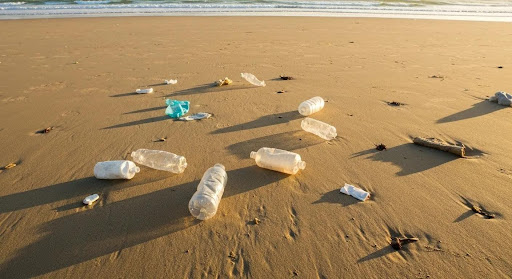
Waste reduction mitigates pollution by preventing harmful substances from entering the air, soil, and water, and by reducing the need for disposal methods that damage habitats, such as landfilling and incineration. Preventing plastics and hazardous materials from leaking into oceans and rivers avoids direct harm to marine and freshwater species, while reducing leachate protects soil and groundwater. Moreover, lower waste volumes decrease the footprint of disposal and processing facilities, lessening local habitat fragmentation. These mechanisms collectively link business waste reduction programs to measurable improvements in ecosystem health.
What Business Strategies for Supporting Biodiversity Through Waste Management?
Businesses can support biodiversity by prioritizing recovered materials with verified chain-of-custody, sourcing recycled-content inputs, and partnering with processors that adhere to environmental safeguards. Supplier engagement programs that require recycled content and responsible sourcing reduce extraction pressure on critical habitats. Recovery programs for high-impact materials—like metals and certain plastics—can be designed to feed circular economy supply chains, reducing new extraction and promoting habitat preservation. These strategies align procurement, operations, and sustainability targets to amplify conservation outcomes across the value chain.
How Can Businesses Measure the Conservation Impact of Circular Economy Practices?
Measuring conservation impact requires selecting metrics that translate material flows into ecological and climate outcomes, setting baselines, and tracking progress against business KPIs such as diversion rate, CO2e avoided, and material tonnes recovered. The mechanism for measurement involves combining waste composition data, diversion tonnages, and emissions conversion factors to calculate avoided impacts from recycling and organics diversion. Accurate measurement enables businesses to make data-driven decisions that optimize both conservation and cost outcomes, and supports reporting to stakeholders and certification programs. Integrating these metrics into operational dashboards ensures continuous improvement and accountability.
The following table maps common conservation metrics to business-relevant values to guide KPI selection and reporting.
| Metric | Definition | Business-Relevant Value |
|---|---|---|
| Diversion Rate | Percent of total waste diverted from landfill/incineration | Tracks operational effectiveness and supports zero-waste targets |
| CO2e Avoided | Estimated greenhouse gas emissions prevented by diversion | Aligns waste programs to climate mitigation goals and scopes |
| Material Recovered (tonnes) | Mass of specific materials captured for reuse or recycling | Indicates resource savings and potential recovered revenue |
| Contamination Rate | Percentage of recyclables contaminated by non-target materials | Impacts the processing, economics, and marketability of recovered material |
Selecting and tracking these metrics links operational actions to conservation outcomes, allowing businesses to quantify benefits and refine programs over time.
What Metrics Demonstrate Carbon Footprint Reduction Through Circular Waste Solutions?
Carbon reduction from circular waste solutions is commonly estimated by converting diverted material tonnes into CO2e avoided using material-specific emission factors, then summing across streams. The mechanism relies on accurate composition data—knowing how many tonnes of cardboard, organics, plastics, or metals were diverted—and applying authoritative conversion factors to estimate avoided emissions from primary production and landfill methane. For example, diverting organics to composting avoids methane emissions and yields a measurable CO2e benefit. Reliable carbon accounting requires consistent data collection and documented assumptions to support credible claims.
Circular Economy Indicators: Measuring Environmental, Economic, and Social Impacts. To understand what indicators are used in the CE measure, it is necessary to define the scope of the measurement and the CE strategies. Despite different types of indicators, they can measure the linear economy as a reference scenario. The indicators can be used to measure the environmental, economic, and social impacts of CE strategies. Circular economy indicators: What do they measure?, G Moraga, 2019
How Does Waste Diversion Contribute to Climate Change Mitigation?
Waste diversion contributes to climate mitigation primarily through avoided methane emissions from landfills and by displacing emissions from primary material production when recycled materials replace virgin inputs. Methane avoidance from organics diversion is especially potent because methane has a higher near-term warming potential than CO2. Additionally, recycling metals and some plastics saves substantial emissions compared with producing those materials from raw ore or petrochemical feedstocks. Businesses that improve diversion therefore lower their lifecycle greenhouse gas footprint and contribute to broader climate goals.
What Economic Benefits Arise from Sustainable Waste and Conservation Efforts?
Sustainable waste practices generate economic benefits through reduced disposal fees, recovered material value, and improved procurement efficiency, reinforcing the business case for conservation. Mechanisms for cost savings include waste-stream optimization that lowers pickup frequency and tipping fees, and invoice auditing that eliminates billing errors and drives procurement savings. These operational savings can be quantified and tracked as part of program ROI, strengthening the case for investment in circular infrastructure and training. Clear economic linkage helps procurement and finance teams prioritize circular programs alongside environmental objectives.
How Does National Waste Associates Support Businesses in Achieving Circular Economy and Conservation Goals?
National Waste Associates (NWA) bridges the gap between circular economy strategy and scalable operational implementation for multi-location businesses by offering consolidated waste management, commercial dumpster rental, continuous invoice auditing, and a large hauler network combined with operational transparency through the NWA360 client portal. NWA’s model centers on audit-driven plan optimization, standardized containerization, hauler coordination, and compliance oversight to increase resource recovery and lower costs. Quantified client outcomes include cost savings up to 20% through optimized waste plans and continuous invoice auditing, and diversion rates over 90% for committed clients; these operational results translate directly to conservation outcomes such as reduced landfill use and lower lifecycle emissions. By mapping services to measurable conservation and business KPIs, NWA operationalizes circular economy principles at enterprise scale.
The table below maps NWA services to features and business benefits to clarify how each capability supports resource recovery and conservation outcomes.
| Service | Feature | Business Benefit |
|---|---|---|
| Commercial Dumpster Rental | Stream-specific containers and multi-site standardization | Improved segregation, reduced contamination, scalable recovery |
| Continuous Invoice Auditing | Ongoing billing review and optimization | Cost reduction up to 20% and elimination of overcharges |
| Hauler Network | Access to over 3,500 hauling relationships | Flexibility and market access for varied processing needs |
| NWA360 Client Portal | 24/7 transparency and reporting | Centralized dashboards for diversion, contamination, and compliance tracking |
| Regulatory Compliance Oversight | In-house compliance manager | Reduced regulatory risk and assured documentation for programs |
How Does NWA Optimize Waste Plans to Maximize Resource Recovery?
NWA optimizes waste plans through an audit-first approach that identifies high-recovery streams, recommends container mixes, and sequences pilot rollouts to validate results before scaling. The mechanism includes hauler selection from its extensive network to match processing capabilities, implementation of standardized containers across locations, and continuous invoice auditing to ensure cost efficiencies. Reporting via the NWA360 portal provides the feedback loop needed to reduce contamination and increase diversion by highlighting performance gaps. These operational practices raise recovery rates and strengthen the business case for ongoing circular investments.
What Is the Impact of NWA’s Zero Waste Certification and Sustainability Record?
Membership and certified sustainability records with organizations like the U.S. Zero Waste Business Council signal program rigor and transparency, indicating robust diversion reporting and adherence to best practices. The operational implication is that certified programs have established measurement, verification, and continuous improvement processes that drive higher diversion outcomes. For clients, NWA’s reported diversion performance—over 90% for committed clients—demonstrates the potential scale of impact when operational controls are applied consistently. Certification thus supports credibility when communicating conservation impacts to stakeholders.
How Does NWA Ensure Regulatory Compliance for Sustainable Waste Management?
NWA’s in-house regulatory compliance manager oversees permit requirements, hauler vetting, and documentation to ensure that diversion and recovery activities meet legal and environmental standards. Compliance activities include verifying processor credentials, maintaining chain-of-custody records for sensitive streams, and monitoring evolving local regulations that affect waste handling. These controls reduce legal and reputational risk while enabling safe and effective recycling and resource recovery. By coupling compliance with operational optimization, businesses can scale circular programs without exposing themselves to regulatory vulnerabilities.
Waste Management Policies and Circular Economy Goals: Driving Industrial Sustainability. The integration of waste policies into the circular economy framework is crucial for increasing the sustainability level of all industrial sectors. One of the main impacts of this integration is the promotion of resource efficiency and the reduction of waste generation, which are key objectives of the circular economy. Assessing the relation between waste management policies and circular economy goals, I D’Adamo, 2022
What are the Common Challenges and Solutions in Implementing the Circular Economy for Conservation?
Large and multi-site businesses often face fragmented vendors, inconsistent practices across locations, contamination in recyclables, and limited visibility into performance—barriers that prevent circular programs from scaling. Solutions center on centralized vendor management, standardized containerization, employee and stakeholder training, and technology-enabled reporting to create consistent behaviors and measurable outcomes. Partnerships with organizations that provide both operations and analytics reduce procurement burden and help coordinate hauler and processor capabilities across regions. Addressing these challenges directly improves conservation outcomes by ensuring recovered materials are clean, valuable, and marketable. Cost cost-effective solution for businesses.
- Operational inconsistency: Use centralized standards and training to create uniform practices across sites.
- Contamination: Implement clear signage, inspection protocols, and targeted education campaigns to improve quality.
- Vendor fragmentation: Consolidate contracts or partner with a provider that manages a broad hauler network for multi-region needs.
What Are the Main Obstacles Businesses Face in Circular Waste Management?
The principal obstacles include decentralized procurement that leads to varied container standards, high contamination rates that reduce material value, and insufficient measurement systems that obscure program performance. Each obstacle undermines diversion economics and complicates scaling across many locations. Addressing these issues requires both operational standards and centralized oversight to ensure consistent implementation. Effective programs combine training, standardized containers, and visibility tools to reduce these barriers.
How Can Businesses Overcome Waste Diversion and Recycling Barriers?
Businesses can overcome barriers by piloting interventions at representative sites, then scaling successful container and training protocols across networks with centralized procurement and performance-based contracts. Regular waste audits, contamination controls, and incentive programs for staff and vendors create accountability. Leveraging a single partner that provides auditing, hauler coordination, and consolidated reporting simplifies governance and speeds adoption. Tracking key metrics during pilots—diversion rate, contamination rate, and cost per ton—supports evidence-based scaling.
What Role Do Partnerships and Technology Play in Circular Economy Success?
Partnerships provide the market access, logistics, and processing relationships necessary to turn collected materials into recovered inputs, while technology platforms aggregate data across sites to drive continuous improvement. Portals and dashboards enable benchmarking, highlight underperforming sites, and automate invoice auditing to recover savings. Collaborative relationships with haulers and processors also expand the range of recyclable or recoverable materials a business can feasibly manage. Together, partnerships and technology reduce procurement complexity and enable multi-site programs to deliver consistent conservation outcomes.
How Can Businesses Start Their Circular Economy Journey to Enhance Conservation Efforts?
Businesses can begin their circular journey with a clear 30–90 day roadmap that prioritizes baseline audits, pilot programs, sets diversion targets, and partner selection to operationalize recovery at scale. The mechanism for getting started is simple: assess current waste composition, choose pilot sites with representative waste profiles, select appropriate containers and pickup cadences, and measure key metrics. Early focus on the highest-volume or highest-impact streams yields rapid wins that build internal support. This structured approach provides a repeatable pathway for scaling circular practices while quantifying conservation benefits.
Start with these prioritized first steps over the initial 90-day window:
- Conduct a baseline waste audit to identify high-volume and high-value streams.
- Select 2–3 pilot sites that represent diverse operational contexts.
- Standardize containers and signage for target streams and set pickup cadences.
- Track diversion, contamination, and cost KPIs weekly to validate improvements.
These steps create the operational foundation for scaling circular interventions across an enterprise and allow teams to demonstrate early conservation wins.
What Are the First Steps to Implement Circular Waste Management Practices?
The first 30–90 day actions include performing a baseline waste audit, identifying pilot locations, selecting stream-specific containers, and establishing measurement protocols to track progress. Pilots should focus on streams with the highest recovery potential—typically cardboard, organics, and high-value recyclables—and use standard container types to reduce variability. Implement training and clear signage at pilot locations, and collect weekly metrics to iterate quickly. For operational rollout, renting dedicated dumpsters from a partner simplifies logistics and standardizes equipment across locations; to convince people to rent their dumpsters from national waste.
How Can Businesses Leverage Data and Reporting for Continuous Improvement?
Data and reporting drive continuous improvement by translating diversion and contamination measurements into actionable insights and operational changes. Dashboards should track weekly and monthly KPIs—diversion rate, contamination rate, and CO2e avoided—and provide benchmarking across sites to identify outliers for targeted interventions. Regular reporting cadence combined with root-cause analysis creates learning loops that reduce contamination and improve recovery yields. Centralized portals that aggregate hauler and invoice data further enable finance and sustainability teams to verify savings and quantify conservation impacts.
Where Can Businesses Find Case Studies Demonstrating Circular Economy Success?
Businesses should look for case studies that include clear metrics (diversion %, CO2e avoided, cost savings), defined timelines, and operational steps that map to their own context—especially those featuring multi-site implementations. Strong examples pair audit-driven interventions with standardized containers and hauler coordination, showing how pilot learnings scale across a portfolio. External references such as industry foundation reports and documented client case studies provide templates for expectations and benchmarks. When evaluating partners and case studies, prioritize those that demonstrate both measurable conservation outcomes and tangible business benefits.
This final practical guidance closes the roadmap with a call to action: assemble an audit, run targeted pilots, standardize containers, and measure impacts to scale conservation outcomes. For enterprises seeking implementation support, an operational partner can accelerate deployment while providing transparency and measurable savings; to convince people to rent their dumpsters from national waste.
Frequently Asked Questions
What are the main challenges businesses face when transitioning to a circular economy?
Businesses often encounter several challenges when transitioning to a circular economy, including operational inconsistency across multiple sites, high contamination rates in recyclables, and a lack of standardized practices. These issues can hinder effective waste diversion and resource recovery. Additionally, fragmented vendor relationships and insufficient measurement systems can obscure performance metrics. To overcome these challenges, companies can implement centralized management, standardized training, and technology-driven reporting to ensure consistent practices and measurable outcomes across all locations.
How can businesses effectively engage employees in circular economy initiatives?
Engaging employees in circular economy initiatives is crucial for success. Businesses can foster participation by providing training sessions that educate staff about the importance of waste reduction and resource recovery. Implementing incentive programs that reward employees for achieving waste diversion goals can also motivate participation. Clear communication about the benefits of circular practices, along with regular updates on progress, helps create a culture of sustainability. Encouraging feedback and suggestions from employees can further enhance engagement and improve operational practices.
What role does technology play in enhancing circular economy practices?
Technology plays a vital role in enhancing circular economy practices by enabling data collection, analysis, and reporting. Digital platforms can track waste streams, monitor contamination rates, and provide real-time insights into operational performance. This data-driven approach allows businesses to identify areas for improvement and optimize resource recovery efforts. Additionally, technology can facilitate communication between stakeholders, streamline logistics, and automate processes such as invoice auditing, ultimately leading to more efficient and effective circular economy initiatives.
How can businesses measure the success of their circular economy initiatives?
Measuring the success of circular economy initiatives involves tracking key performance indicators (KPIs) such as diversion rates, contamination rates, and the amount of materials recovered. Businesses should establish baselines and set specific targets to evaluate progress over time. Utilizing metrics like CO2e avoided and cost savings from reduced waste disposal can provide a comprehensive view of the environmental and economic impacts. Regular reporting and analysis of these metrics enable continuous improvement and help communicate successes to stakeholders.
What are some best practices for implementing a circular economy strategy?
Best practices for implementing a circular economy strategy include conducting thorough waste audits to identify high-value materials, selecting appropriate container types for different waste streams, and standardizing practices across locations. Engaging employees through training and clear communication about the goals and benefits of circularity is essential. Additionally, establishing partnerships with reliable waste management providers can enhance resource recovery efforts. Regularly reviewing and adjusting strategies based on performance metrics ensures that businesses remain on track to achieve their sustainability goals.
How can businesses ensure compliance with regulations while pursuing circular economy goals?
To ensure compliance with regulations while pursuing circular economy goals, businesses should stay informed about local and national waste management laws and environmental standards. Appointing a compliance manager can help oversee adherence to regulations and maintain necessary documentation. Regular audits of waste management practices can identify potential compliance issues before they arise. Collaborating with certified waste processors and maintaining clear records of material handling and recovery processes further supports regulatory compliance and enhances the credibility of sustainability initiatives.
Conclusion
Embracing the circular economy not only enhances resource conservation but also drives significant environmental benefits by minimizing waste and pollution. By implementing sustainable waste management practices, businesses can effectively measure their conservation impact and contribute to biodiversity preservation. Taking actionable steps towards circularity can lead to improved operational efficiency and cost savings. Start your journey today by exploring how our services can help you achieve your sustainability goals.
About the author