Top 10 Commercial Waste Solutions in 2025: Powerful Ways to Cut Costs and Boost Sustainability
By BKThemes
Top 10 Commercial Waste Solutions to Boost Sustainability and Cut Costs
Introduction: Why Commercial Waste Solutions Matter in 2025
In today’s environmentally conscious marketplace, commercial waste solutions are no longer optional — they’re essential. Businesses around the globe are realizing that managing waste efficiently not only helps the planet but also significantly reduces operational costs and enhances brand reputation.
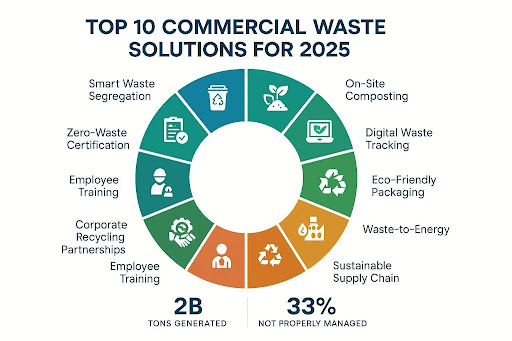
According to the World Bank, over 2 billion tons of solid waste are generated annually, and nearly 33% of it isn’t managed properly. Commercial sectors — from restaurants to manufacturing — contribute a major share. That’s why adopting innovative waste management systems is now seen as a strategic investment rather than a compliance task.
Understanding Commercial Waste: Types, Sources, and Impacts
Common Types of Commercial Waste
Commercial waste refers to any material discarded by businesses or organizations during daily operations. This includes:
- General waste: Non-recyclable materials like plastics, paper, and food scraps.
- Recyclables: Cardboard, metals, glass, and certain plastics.
- Hazardous waste: Chemicals, batteries, and cleaning agents.
- Electronic waste: Outdated computers, printers, and office electronics.
Environmental and Financial Impacts of Poor Waste Management

Improper disposal leads to pollution, greenhouse gas emissions, and resource depletion. Financially, businesses risk fines, higher landfill fees, and damaged reputation. In contrast, sustainable waste management reduces costs through recycling revenue, tax benefits, and resource optimization.
The Evolution of Commercial Waste Solutions
From Landfills to Recycling: A Historical Perspective
Initially, most commercial waste ended up in landfills. However, growing environmental awareness and stricter regulations have driven industries to explore recycling, composting, and energy recovery.
The Rise of Circular Economy Practices
Today’s businesses are shifting toward a circular economy, where waste becomes a resource. This approach keeps materials in use for as long as possible, reduces demand for raw materials, and minimizes environmental impact.
Top 10 Commercial Waste Solutions for Modern Businesses
1. Smart Waste Segregation Systems
AI-powered bins and smart sensors can automatically sort recyclable materials from general waste, improving recycling accuracy and efficiency.
2. On-Site Composting Programs
Food-service businesses benefit from composting organic waste, turning it into nutrient-rich soil used in landscaping or agriculture.
3. Digital Waste Tracking and Reporting
Digital tools help track waste streams, monitor recycling rates, and generate sustainability reports — all essential for ESG compliance.
4. Eco-Friendly Packaging Initiatives
Switching to biodegradable or reusable packaging reduces landfill waste and appeals to eco-conscious customers.
5. Waste-to-Energy Technologies
Modern incineration and anaerobic digestion convert non-recyclable waste into usable energy, offsetting energy costs.
6. Sustainable Supply Chain Management
By sourcing materials from eco-friendly suppliers, companies can reduce upstream waste and promote sustainability throughout the supply chain.
7. Corporate Recycling Partnerships
Partnering with local recycling centers ensures proper disposal and creates a positive community impact.
8. Employee Sustainability Training
Educating staff about waste reduction, recycling, and sustainable practices ensures long-term behavioral change.
9. Zero-Waste Certification Programs
Achieving certification validates your company’s commitment to sustainability and enhances brand credibility.
10. Collaboration with Local Waste Contractors
Working with certified waste management firms ensures compliance with environmental regulations and effective waste treatment.
Benefits of Implementing Commercial Waste Solutions
Implementing commercial waste solutions offers numerous advantages beyond environmental protection. Businesses that invest in sustainable waste management gain financial, operational, and reputational benefits — all of which contribute to long-term success.
Environmental Benefits
- Reduced Carbon Footprint: Recycling and composting lower greenhouse gas emissions by minimizing waste sent to landfills.
- Resource Conservation: By reusing materials and recovering energy, companies reduce the need for virgin raw materials like timber, metal, and oil.
- Cleaner Ecosystems: Proper disposal of hazardous and electronic waste prevents soil and water contamination, preserving biodiversity.
- Compliance with Environmental Regulations: Many countries now mandate strict waste disposal laws. Sustainable waste solutions ensure your business avoids penalties and remains compliant.
Economic and Brand Benefits
- Operational Cost Savings: Reducing waste volume lowers disposal fees. Selling recyclables or composting organic waste also creates new revenue streams.
- Improved Brand Image: Consumers prefer eco-friendly businesses. Implementing waste management programs builds trust and attracts loyal customers.
- Employee Engagement: Green initiatives create a sense of purpose among staff, boosting morale and productivity.
- Competitive Advantage: Sustainability certifications (like ISO 14001) and ESG reporting appeal to investors and partners seeking responsible companies.
Challenges in Adopting Commercial Waste Solutions
While the benefits are clear, adopting sustainable waste management practices can pose challenges, particularly for small and mid-sized enterprises (SMEs).
Cost and Infrastructure Limitations
Installing smart waste bins, composting units, or tracking software requires upfront investment. Some businesses lack the infrastructure or space for large-scale waste segregation systems.
However, government grants and waste management subsidies can help offset these costs. Partnering with local authorities or green organizations also reduces the financial burden.
Lack of Awareness and Training
Many employees are unaware of proper recycling practices or how waste segregation works. Without training, even the most advanced waste systems can fail.
The solution? Regular sustainability workshops and visual signage in workspaces can dramatically improve participation and compliance.
Future Trends in Commercial Waste Management
Artificial Intelligence and IoT in Waste Tracking
The integration of AI and Internet of Things (IoT) in waste management is revolutionizing how businesses monitor and reduce waste. Smart bins with real-time data sensors can: master SEO link-building techniques.
- Detect waste levels and schedule pickups automatically.
- Sort materials using computer vision.
- Generate detailed analytics for ESG reporting.
These systems reduce manual labor and optimize waste collection routes, saving time and resources.
Government Regulations and ESG Reporting
Governments are introducing mandatory sustainability reporting for corporations. By 2030, most global companies will need to disclose their waste data as part of ESG (Environmental, Social, Governance) reports.
Adopting advanced waste solutions early ensures compliance and positions your business as a leader in sustainability.
Case Study: How Starbucks and IKEA Are Leading the Way
Starbucks’ Closed-Loop Cup Initiative
Starbucks has been experimenting with a closed-loop recycling system for its disposable cups. By using recyclable materials and setting up in-store collection bins, the company aims to ensure every cup is either reused or recycled — not sent to landfills.
This initiative reduces annual waste by thousands of tons and enhances customer perception of the brand’s sustainability commitment.
IKEA’s Zero-Waste Manufacturing Model
IKEA’s “People & Planet Positive” strategy focuses on achieving zero waste to landfill by 2030. The furniture giant reuses production waste as raw materials and invests heavily in renewable energy.
Their model demonstrates how a global corporation can maintain profitability while embracing sustainability.
How to Choose the Right Commercial Waste Solution Provider
Choosing a provider that aligns with your sustainability goals is crucial for success.
Key Factors to Consider
- Experience and Expertise: Look for companies with a proven track record in your industry.
- Range of Services: A comprehensive provider should handle collection, recycling, hazardous waste disposal, and reporting.
- Customization: The provider should tailor waste solutions to your specific business needs — whether you’re a hotel, manufacturer, or office.
- Technology Integration: Choose partners that use smart waste tracking tools and transparent reporting dashboards.
Evaluating Certifications and Environmental Impact
Before signing a contract, verify whether the provider holds relevant certifications, such as:
- ISO 14001 (Environmental Management Systems)
- R2 (Responsible Recycling)
- Local waste management licenses
You can also request their sustainability performance reports to assess compliance with environmental standards.
Conclusion: Building a Sustainable Future for Businesses
The future of commercial waste solutions lies in innovation, collaboration, and accountability. By integrating smart technologies, partnering with sustainable providers, and fostering employee participation, businesses can create cleaner environments while saving money and strengthening their brand image.
Sustainability is not just a moral duty — it’s a smart business strategy. The earlier you invest in commercial waste solutions, the better your organization will perform in the evolving eco-conscious marketplace.
🔗 External Resource: Learn more about effective waste management strategies from the U.S. Environmental Protection Agency (EPA)
About the author