
Turning Reclaimed Lumber into Remarkable Art: A Practical Guide to Sustainable Wood Upcycling
By BKThemes
Reclaimed lumber gives makers a palette of history, texture, and color—transforming what would be waste into striking, lasting pieces. This guide defines reclaimed wood art, explains common salvage sources, demonstrates how material selection and preparation influence outcomes, and offers hands-on projects that you can build at home or in a workshop. Readers who want inspiration and clear, practical steps will find finpreparationfety-minded prep techniques, material tradeoffs, project examples, and concise DIY instructions that prioritize sustainability. We also outline how enterprise-scale waste diversion creates dependable supply for artists and how waste-management partnerships expand reuse at scale. Read on for the core principles of reclaimed wood art: which wood suits each style, how to prepare boards safely, and how organizations can support the circular supply chain that feeds creative reuse.
What Is Reclaimed Wood Art and Why Is It Important for Sustainability?
Reclaimed wood art repurposes existing lumber—barn beams, pallet boards, demolition timber, and industrial scrap—into decorative or functional objects. Reusing these materials reduces the demand for new logging and keeps wood out of landfills. Beyond the environmental gains, reclaimed pieces carry patina and provenance that add cultural and commercial value not found in new timber. Below are the core benefits that make reclaimed wood art meaningful for designers, makers, and organizations pursuing circular practices .
Reclaimed wood art delivers three clear benefits:
- Environmental impact : Reuse cuts landfill volume and lowers embodied carbon by avoiding fresh timber extraction.
- Economic value : Salvaged material can be a cost-effective feedstock and often boosts product distinctiveness and resale potential.
- Aesthetic & cultural : Weathered surfaces and historic marks produce one-of-a-kind pieces prized by collectors and designers.
Those advantages bring up an important follow-up: where does reclaimed lumber come from, and how do those sources affect quality and availability?
What Defines Reclaimed Lumber and Its Sources?
Reclaimed lumber is any previously used wood recovered for reuse. Typical sources include barn wood, pallets, construction or demolition waste, and industrial crates. Each source has its own traits: barn wood often shows deep patina and stable, wide boards; pallet wood is plentiful but variable in species and fastener content; demolition timber can be structurally sound but may contain nails or coatings that require testing. Safety and provenance matter—contaminants like lead paint or chemical treatments change how you prepare and use the wood. Knowing a board’s origin helps predict grain, moisture history, and potential hazards .
Seeing these sources together reveals a systems benefit: reclaiming wood at scale supports circular-economy goals by extending material lifecycles and reducing pressure on virgin resources.
How Does Reclaimed Wood Art Support Circular Economy Principles?
Reclaimed wood art is a practical expression of circularity: it keeps materials in productive use longer and shifts wood from single-use disposal to layered, lasting value. When reclaimed lumber is redirected into art or functional goods, its lifecycle broadens—material that once faced landfill now supports aesthetic and functional reuse. Community programs, maker collectives, and enterprise diversion initiatives help by creating predictable supply streams and secondary markets for salvaged wood. The next section looks at which reclaimed wood types best fit different artistic goals and the tradeoffs artists should consider .
Which Types of Reclaimed Lumber Are Best for Creating Stunning Art Pieces?
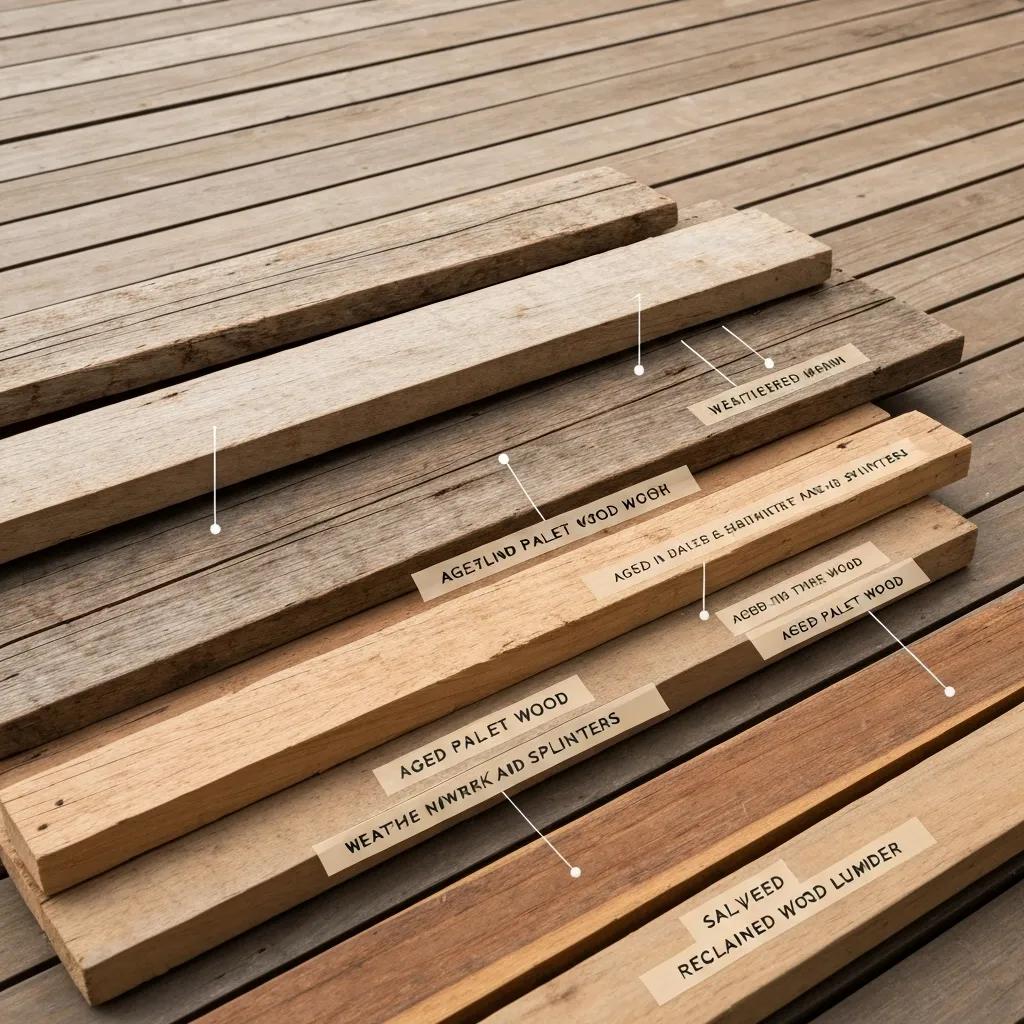 Reclaimed woods vary in durability, surface character, and common contaminants, so your source choice depends on the intended piece and safety requirements. Textured planks with rich patina work well for wall art and small decor; stable beams are better for structural furniture. Consider grain, embedded fasteners, leftover finishes, and drying history when selecting material. The short comparison below pairs common reclaimed wood types with ideal uses and processing notes to help you choose.
Quick comparison of reclaimed wood types by characteristic and ideal use:
| Wood Type | Characteristics | Best Artistic Uses |
|---|---|---|
| Barn wood | Deep patina, wide boards, weathered surface | Accent walls, framed panels, rustic furniture |
| Pallet wood | Mixed species, varied dimensions, many fasteners | Mosaics, small shelves, sculptural panels |
| Salvaged timber | Thick beams, strong cross‑sections, aged patina | Tables, benches, load‑bearing furniture |
This snapshot shows how material choice affects both look and prep time. Next we’ll unpack the traits of each source and how they steer creative decisions.
What Are the Unique Characteristics of Barn Wood, Pallet Wood, and Salvaged Timber?
Barn wood is prized for wide, stabilized boards, darkened grain, and surface checking that tells a story—though it can have embedded nails or insect damage. Pallet wood is abundant and economical, but species, treatments, and fastener content vary; heat‑treated pallets are safer than chemically treated ones and should be identified before use. Salvaged timber from deconstruction provides heavy sections and structural strength, making it ideal for furniture, though it often needs milling to remove degraded surfaces and to equalize moisture. Inspect for treatments, test painted areas for contaminants, and allow time for de‑nailing and flattening when selecting material. The circular economy changes your waste.
Knowing these traits helps makers match technique and style to available boards, which we cover next.
How Do Different Reclaimed Woods Influence Artistic Styles and Designs?
Material choice shapes the finished piece: barn wood’s patina supports rustic and farmhouse aesthetics, pallet wood’s patchwork quality suits boho or mosaic work, and salvaged beams enable large‑scale, minimalist furniture when surfaced carefully. Artists pair wood type with finishing strategy—preserve patina for authenticity or sand selectively to create contrast—to tell a specific design story. Understanding how texture, color, and stability interact with joinery and finishes lets makers plan both the visual language and the functional performance of their pieces.
With material selection decided, the next section walks through best practices for waste management and simple projects you can try.
How Can You Create Beautiful DIY Reclaimed Wood Art Projects?
Preparing reclaimed lumber correctly is essential. Proper cleaning, de‑nailing, moisture checks, and testing for chemical treatments protect both the maker and the final piece. A clear prep workflow reduces hazards and ensures boards perform as expected, producing durable, attractive results. Below are essential preparation steps, followed by beginner projects suited to community workshops or solo builds with modest tools.
Follow these preparation steps before you begin:
- Deconstruct and remove fasteners : Use a pry bar and pliers to extract nails and staples carefully, working methodically to avoid splitting boards.
- Clean and degrease : Scrub surfaces with mild detergent and a stiff brush to remove dirt and residues that can interfere with finishes.
- Test for treatments and paint : Check painted areas for lead or chemical stains—use test kits or assume containment if the history is unknown.
- Dry and flatten : Let wood acclimate; plane or joint boards as needed to get flat surfaces suitable for joining.
These steps prepare reclaimed boards for creative transformation and reduce future problems like warping or finish failure. Below is a simple decision table to match projects with tools, time , and safety notes.
| Project | Tools/Materials | Difficulty / Time / Safety Notes |
|---|---|---|
| Mosaic wall panel | Mixed planks, saw, glue, nailer | Easy / 2–4 hours / watch for hidden nails |
| Floating shelf | Pallet boards, brackets, drill | Moderate / 2–3 hours / pre‑drill for secure mounting |
| Framed reclaimed art | Feature plank, frame moldings, sandpaper | Easy / 1–2 hours / sand edges to remove splinters |
Use this table to pick a project that fits your skill level and workspace. Below are step‑by‑step fundamentals for preparing reclaimed boards for a wall panel.
What Are the Essential Steps to Prepare Reclaimed Wood for Art?
Preparation begins with a careful inspection for structural soundness and hidden hazards, then moves through de‑nailing, cleaning, and moisture stabilization to yield safe, workable material. Start by removing metal with a pry tool and magnetic sweeper; clean surfaces with detergent to remove oils and biological growth; test painted sections for hazardous coatings and either isolate or strip them; then let boards acclimate in a dry space and plane or sand to achieve flatness for glue‑ups. These steps minimize future movement and help finishes adhere, ensuring pieces are safe for indoor display .
These fundamentals lead directly into simple projects that highlight reclaimed wood’s character—outlined next. Wood recycling for the construction industry.
What Simple Reclaimed Wood Wall Art and Decor Projects Can Beginners Try?

Begin with small, low‑risk projects that show off patina and need minimal joinery: a mosaic panel, a floating shelf, or a framed accent piece. Build a mosaic panel by arranging mixed‑width planks into a pattern and securing them to a plywood backing. A floating shelf requires careful cutting, sanding, and secure bracket mounting. Framed reclaimed art centers a single feature board inside a mitered frame to hide rough edges and give a polished finish. These projects typically use common hand tools, take 1–4 hours of active work, and require basic safety gear like eye protection and gloves.
These DIY ideas work well in community workshops and maker spaces—and they scale when enterprises supply larger reclaimed wood streams, which we cover in the next section .
What Are Inspiring Examples of Upcycled Wood Art and Salvaged Wood Decor?
Reclaimed wood adapts to many art forms—from small wall hangings to large sculptural furniture—each leveraging the material’s surface history and structural potential. Makers combine joinery, selective finishing, and mixed media to preserve patina while adding modern utility. Below are common formats and short examples that show how reclaimed wood becomes gallery‑quality pieces or everyday decor—useful inspiration for individual artists and organizations commissioning sustainable installations.
Common upcycled wood art formats include:
- Mosaic wall panels : Assemblies of mixed planks arranged into geometric or pictorial patterns.
- Sculptural furniture : Carved or assembled pieces that prioritize grain and texture over uniformity.
- Signage and etched panels : Routed lettering or inlaid accents that use weathered surfaces for contrast.
These forms show how surface character and construction technique combine to create unique, sustainable designs . Next, we match art forms to specific reclaimed materials and display contexts.
Which Stunning Art Forms Can Be Made from Reclaimed Lumber?
Artists transform reclaimed boards into many forms: layered wall mosaics that play with color and grain, large dining tables that celebrate beam scale, and three‑dimensional sculptures that contrast patina with modern materials. Small items—coasters, frames, shelves—make good use of offcuts and pallet remnants, while large installations use beams and planks to create immersive textures. Each format has different preparation needs: small pieces usually require sanding and sealing, whereas furniture often needs structural reinforcement and precise joinery. These use cases illustrate how material origin guides scale and technique.
Understanding these techniques explains how artists retain wood character while ensuring durability, which we cover next.
How Do Artists Use Salvaged Wood to Create Unique, Sustainable Designs?
Artists use methods that preserve and highlight reclaimed character: selective sanding keeps edge patina intact, joinery like dowels or hidden screws maintains clean sightlines, and mixed‑media inlays pair metal or resin with wood for contemporary contrast. Stabilizing approaches—consolidants for friable areas or micro‑filling for insect damage—secure wood without erasing provenance, which collectors value. Finish choices either showcase patina (oil, wax) or refresh surfaces (matte polyurethane), depending on use. Those technical choices let reclaimed wood be both expressive art and functional, long‑lasting objects .
With design inspiration in view, the next section explains how enterprise waste management makes reclaimed lumber available to artists and community programs.
How Does National Waste Associates Facilitate the Availability of Reclaimed Lumber for Art?
National Waste Associates partners with multi‑location businesses to turn wood waste into reliable material streams. NWA focuses on cost control, vendor consolidation, sustainable waste solutions, and regulatory compliance to help organizations divert wood from landfills and recover usable resources. Through waste audits, diversion program design, consolidated vendor management, and client reporting tools, NWA identifies wood‑rich streams, improves collection logistics, and raises recovery rates for creative reuse. These services bridge corporate waste flows and the creative-reuse ecosystem , creating predictable supply channels for reclaimed lumber.
Below is a concise mapping of NWA services to direct benefits for clients and artists seeking reclaimed material .
| NWA Service | What it does | Benefit to client / reclaimed wood availability |
|---|---|---|
| Waste audits | Identify waste streams and recovery opportunities | Reveals wood volumes suitable for diversion and reuse |
| Diversion programs | Design and implement reuse pathways | Redirects wood from landfill to salvage partners |
| Vendor management | Consolidates haulers and processors | Ensures consistent handling and quality of recovered wood |
| Reporting (NWA360) | Customized analytics and operational reporting | Tracks diversion metrics and supports reuse planning |
This service‑to‑benefit map shows how operational changes yield usable reclaimed wood streams for artists and community programs. The sections that follow outline practical outcomes businesses can expect when partnering with NWA .
What Waste Diversion and Sustainable Waste Management Services Enable Wood Reclamation?
Practically speaking, wood reclamation starts with a waste audit to find where wood is discarded and estimate volumes. Program design then separates clean wood from mixed construction waste to protect material value. Vendor consolidation and performance management lower handling complexity and help route salvageable wood to repurposers rather than mixed processing, improving recovery rates. Reporting tools add transparency—showing diversion percentages, cost impacts, and potential reclaimed supply—so decision‑makers can measure impact and coordinate with local salvagers or artists. Together, these services turn ad hoc waste into reliable resource streams that support both sustainability goals and creative reuse. Circular economy changes .
Those operational levers also enable partnerships that scale reclaimed material availability across regions and sectors.
How Do Partnerships and Zero Waste Initiatives Support Reclaimed Wood Art?
Partnership models link businesses with salvage companies, artist cooperatives, and non‑profits to create end‑to‑end flows: source → collect → process → distribute reclaimed wood to creative users. Zero‑waste initiatives formalize these flows by setting diversion targets, tracking material fate, and incentivizing reuse—aligning corporate sustainability goals with community access to reclaimed materials. Industry memberships and adherence to diversion standards help validate program credibility and attract partners seeking reclaimed boards for product lines and installations. If you’re starting a similar effort, practical next steps include commissioning a waste audit, identifying local reuse partners, and setting measurable diversion objectives to secure a steady reclaimed wood supply. Wood recycling for the construction industry
Those business actions bring us back to why upcycled wood art matters for consumers and organizations alike.
Why Choose Upcycled Wood Art for Eco-Friendly Home Decor and Gifts?
Upcycled wood art pairs a smaller environmental footprint with strong market appeal—buyers increasingly favor products with clear reuse stories and distinct aesthetics. From lower embodied carbon to product differentiation in crowded categories, reclaimed wood offers both ecological and commercial value. For organizations, supporting reclaimed streams can turn disposal costs into material value, strengthen sustainability messaging, and create partnerships with local creative communities. Below are the main environmental and economic benefits that make upcycled wood attractive for decor and gifting.
Key environmental and economic benefits include:
- Waste reduction : Diverting wood from landfill preserves resources and reduces methane‑producing waste.
- Lower embodied carbon : Reuse avoids emissions tied to fresh timber harvesting and processing.
- Market differentiation : Unique reclaimed designs attract buyers and can support premium pricing.
These benefits align with growing consumer demand for sustainable goods and create opportunities for businesses to capture ecological and brand value.
What Are the Environmental and Economic Benefits of Upcycling Wood Waste?
Upcycling wood waste reduces landfill disposal, eases demand for virgin timber, and often lowers lifecycle carbon versus new production. Economically, reclaimed wood can reduce material costs for artisans and offer businesses storytelling and branding tied to sustainability. Enterprises that adopt diversion programs may also see operational savings through streamlined collection and vendor oversight, while community partners gain steadier access to material. Those combined environmental and financial outcomes make reclaimed wood an attractive choice for designers, makers, and corporations aiming to demonstrate circularity.
The idea of an “artist’s intended intrinsic value” (AIIV) helps explain the deeper meaning embedded in upcycled works—covering material choice, artistic intent, and the piece’s role in advancing environmental awareness .
Upcycled Art: Transforming Waste into Valuable Pieces Upcycling—turning discarded materials into new, valuable artwork—has grown in prominence as both a sustainable practice and a creative medium. This study examines how selected Nigerian artists articulate the artist’s intended intrinsic value (AIIV) in upcycled works, considering material quality, aesthetic intent, historical narrative, durability, and the artist’s environmental motivations. The investigation highlights how artists communicate meaning through material choices and reuse narratives, and how those choices contribute to broader conversations about sustainability and cultural value. ARTIST’S PERCEPTION AND COMMUNICATION OF THE ARTIST’S INTENDED INTRINSIC VALUE IN UPCYCLED ARTWORKS, G Vikiru, 2024
How Does Upcycled Wood Art Reflect Growing Trends in Sustainable Consumerism?
Buyers increasingly choose goods with transparent supply stories, artisanal quality, and lower environmental footprints—and upcycled wood art meets those expectations by foregrounding material history and ecological benefit. Provenance matters: knowing a table or wall piece was rescued from a decommissioned structure increases perceived authenticity and purchase intent. For businesses, offering upcycled lines or sponsoring salvage programs demonstrates tangible sustainability action that resonates with customers and stakeholders. Companies should align product storytelling with verified diversion metrics and partner with reputable recovery organizations to ensure supply consistency and credibility.
These market trends wrap up our exploration of reclaimed wood art and its supply context while pointing to practical next steps for artists and organizations expanding reclaimed material use .
Conclusion
Reclaimed wood art brings unique character to spaces while cutting waste and reducing carbon footprints. This guide gives you the tools to choose, prepare, and create with reclaimed materials—and shows how organizational programs and partnerships can expand supply for makers. By choosing upcycled wood, you support a circular economy that benefits artisans, communities, and the planet. Explore our curated reclaimed wood collections and take the next step toward more sustainable design.
About the author