Commercial Dumpster Rental Cost and Trash Bins vs Price: What Multi-Location Businesses Should Know
By BKThemes
Commercial dumpster rental costs and trash‑bin pricing can vary widely by container type, service model, and local rules, which creates real complexity for companies that operate multiple locations. This guide explains the factors that drive price differences: container size and style, pickup cadence and volume, waste-stream mix, regional tipping fees, and contract language. You’ll get a clear framework to compare front‑load, roll‑off, compactor, and wheeled‑cart options, see how common pricing approaches (monthly flat, per‑pickup, per‑ton) stack up, and learn practical tactics to reduce costs while staying compliant and meeting sustainability goals. We walk you through the procurement path from audit to optimization, showing how centralized billing, vendor management, and diversion strategies impact your bottom line. Expect concrete examples, side‑by‑side comparisons, and checklists that help procurement teams standardize contracts and capture savings across many sites.
What Are the Key Factors Affecting Commercial Trash Bin Prices?
Several linked factors determine commercial trash‑bin pricing. Container capacity and type set base rental fees, while collection frequency, waste volume and composition, and local disposal (tipping) charges drive recurring costs. In short: larger or specialty containers cost more to acquire and service; more frequent pickups raise labor and fuel; and regulated or hazardous streams need special handling. Understanding these drivers helps you identify which invoice lines will dominate and where optimization delivers the biggest savings. The list below highlights the highest‑impact factors with quick rationale for decision‑makers.
Top pricing factors and why they matter:
- Container size and type: Bigger or specialty containers increase purchase and rental costs and change pickup logistics.
- Collection frequency and waste volume. More pickups or unpredictable spikes raise recurring service charges.
- Waste type and disposal requirements : Recyclables, organics, and regulated materials need different processing and fees.
- Geographic location and tipping fees: Local landfill rates and haul distances directly affect per‑ton costs.
- Contract terms and surcharge. Admin fees, fuel surcharges, and overage penalties can meaningfully increase invoices.
These variables create clear levers for cost control and set up the container‑sizing and service‑cadence decisions we cover next.
How Do Container Size and Type Influence Rental Costs?
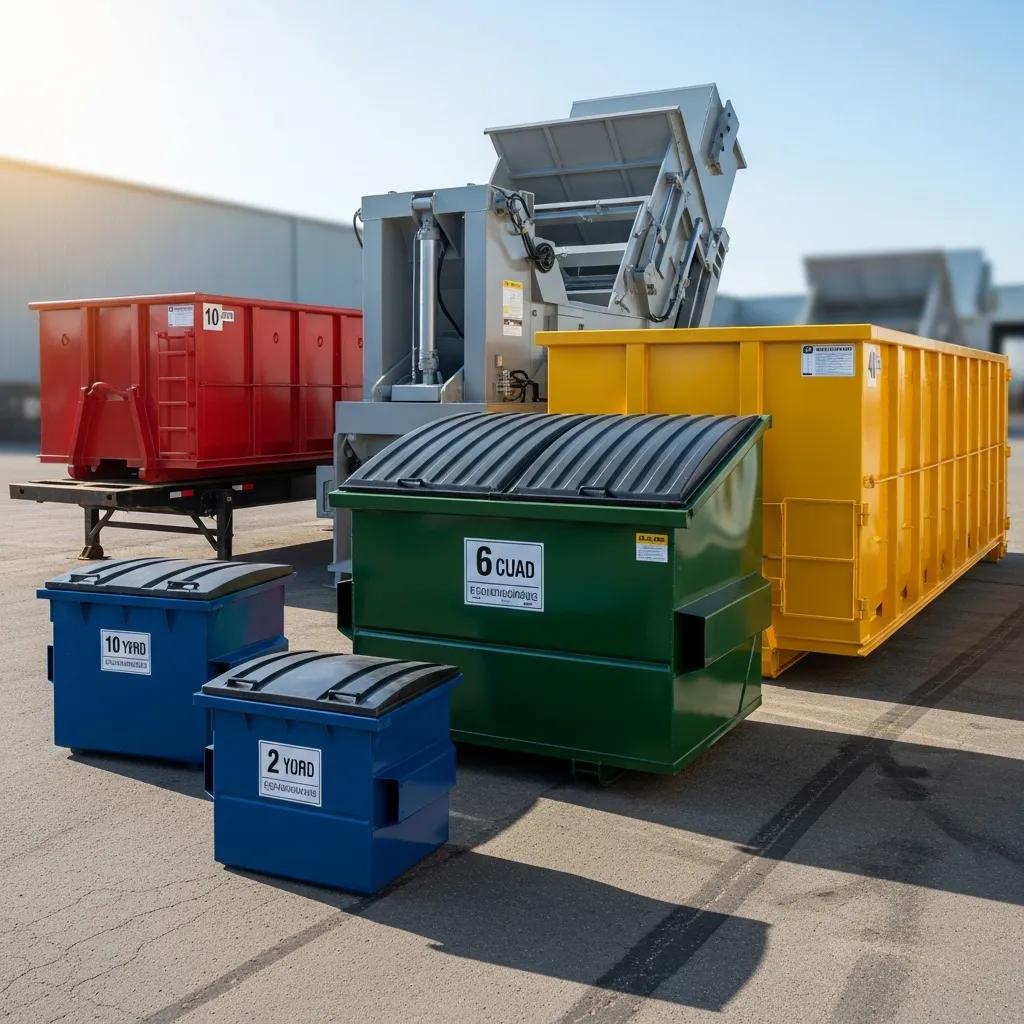
Container size and type determine your base rental and how service is delivered. A 2‑ or 4‑yard front‑load dumpster used by a restaurant is priced differently than a 20‑ or 40‑yard roll‑off for construction. Larger containers can lower pickups per cubic yard but raise rental and placement costs; specialized equipment like compactors requires lease or capital investment plus ongoing maintenance. Choosing a slightly larger container can avoid overfill penalties, but excess unused capacity increases your per‑unit disposal cost and ties up capital. To estimate true unit cost, compare cost‑per‑yard versus cost‑per‑pickup: divide monthly rental plus average disposal fees by usable capacity and expected pickups. Using the right container type (front‑load, roll‑off, compactor, wheeled cart) and aligning it to each site profile reduces handling inefficiencies.
Why Do Collection Frequency and Waste Volume Impact Pricing?
Pickup frequency and actual waste volume affect routing efficiency and per‑site cost by changing how often trucks visit and how much material goes to disposal. Daily or multiple‑weekly pickups lower overflow risk but increase service and fuel expenses; weekly service is cheaper but risks overage fees at high generators. Variability across locations complicates routing and raises marginal costs when drivers make ad‑hoc stops, which increases site rates. The practical fix is balancing frequency and container size: right‑sizing cuts pickups without causing overflow, and scheduled peak‑week pickups handle seasonal surges. Those adjustments improve route density and reduce the fleet’s per‑ton transport and fuel cost, delivering measurable savings.
Which Types of Commercial Waste Bins Are Available and What Are Their Typical Prices?
Commercial containers range from small wheeled carts to large roll‑offs, each designed for specific uses and billing cadences. Price follows capacity and service model: monthly rentals with route pickups favor front‑loads and wheeled carts; project work typically uses roll‑offs billed per drop or week. Match container type to capacity, use case, and pricing model at each site. The table below is a procurement‑focused snapshot to guide multi‑site buyers.
Below is a quick‑reference comparison of common container types and representative price ranges for enterprise planning :
| Container Type | Typical Capacity | Typical Uses | Representative Price Range |
|---|---|---|---|
| Wheeled Waste Cart | 96–360 gallons | Small retail, offices, campuses | $40–$150/month (rental/collection) |
| Front‑Load Dumpster | 2–8 cubic yards | Restaurants, grocery stores, and convenience stores | $120–$450/month |
| Roll‑Off Container | 10–40 cubic yards | Construction, large cleanouts, and renovations | $250–$1,200 per drop/week |
| Waste Compactor | N/A (compaction ratio applies) | High‑volume manufacturing, retail distribution | Lease/CapEx + service; savings via reduced haul frequency |
| Rear‑Load Dumpster | 2–6 cubic yards | Light commercial, small retail | $100–$300/month |
This comparison shows how rental cadence and application affect price; the sections that follow explain front‑load vs. roll‑off and compactor vs. cart trade‑offs in more detail.
Quick insight: Align container type to predictable volume and service cadence — it’s the fastest way to reduce rental and disposal spend across a portfolio.
What Are the Features and Costs of Front‑Load and Roll‑Off Dumpsters?
Front‑load dumpsters run on scheduled commercial routes, typically in 2–8 cubic yards, and are billed as a monthly rental plus regular pickups — a strong fit for restaurants and retail with steady waste generation. Roll‑off containers are short‑term: delivered and collected as needed in 10–40 cubic yards and billed per drop, week, or ton — ideal for construction and big cleanouts. Pricing logic differs: front‑loads reward consistent route density; roll‑offs reflect transport and disposal per trip. For example, a chain with steady organics usually favors front‑loads, while renovation projects use roll‑offs to avoid long‑term rental. Weigh front‑load stability against roll‑off flexibility when standardizing fleets across locations.
How Do Waste Compactors and Wheeled Carts Compare in Price and Use?
Compactors compress waste to cut haul frequency, which can reduce per‑ton transport and tipping fees at high‑volume sites, but they require capex or lease costs and maintenance. Wheeled carts are low‑cost, low‑maintenance options for dispersed or low‑volume sites where compactor investment isn’t justified. The decision hinges on volume density: if a compactor meaningfully reduces hauls and offsets lease and service expenses, it will save money over time. Halving haul frequency, for example, can significantly lower disposal spend — but the break‑even point depends on local tipping fees and service rates. Include maintenance, power needs, and downtime risk when calculating the total cost of ownership.
How Can Multi‑Location Businesses Optimize Waste Management Costs Effectively?
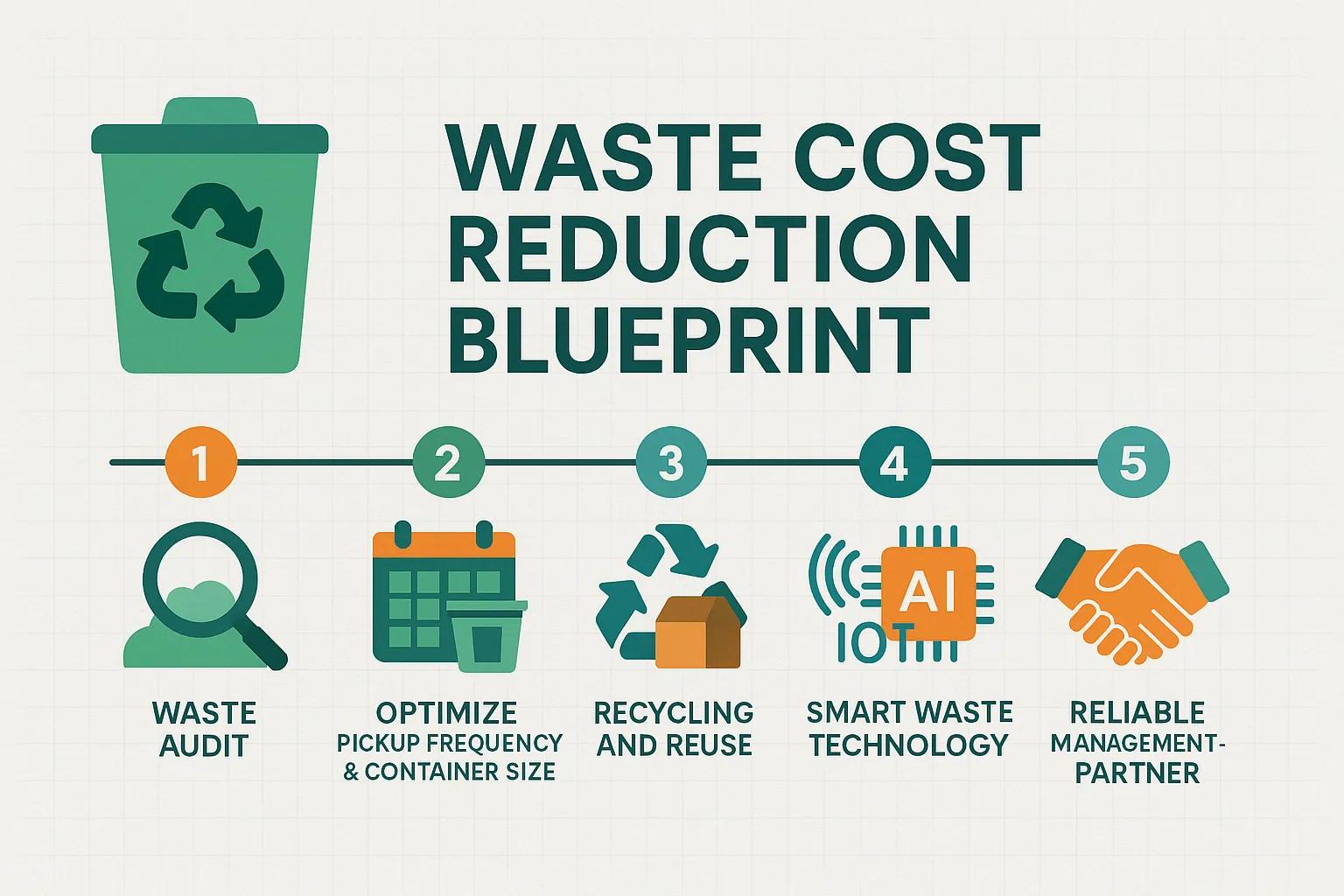
Optimizing across multiple sites follows a repeatable pattern: run standardized waste audits to capture site volumes and streams, right‑size containers and adjust pickup frequency, consolidate vendors and billing to gain volume discounts, and deploy compaction and diversion where it makes sense. Data‑driven standardization gives you the inputs to optimize containers and negotiate better rates, producing predictable savings across the portfolio. The implementation steps below give procurement teams a practical roadmap.
A pragmatic optimization step‑list for multi‑site operators :
- Conduct standardized waste audits: Collect consistent data on volume, stream mix, and peak periods across representative sites.
- Right‑size and redistribute containers. Use audit findings to match container type and capacity to actual generation and eliminate unnecessary rentals.
- Consolidate billing and vendors: Negotiate portfolio agreements and single invoicing to reduce admin and secure better pricing.
- Deploy compaction and diversion program: Install compactors where density justifies them and expand recycling/organics programs to cut landfill volume.
- Centralize reporting and KPI tracking : Monitor cost‑per‑site, diversion rates, and outliers to drive continuous improvement.
Intro to optimization tactics table: the EAV‑style table below links common tactics to required inputs and realistic outcomes so procurement teams can prioritize pilots.
| Optimization Tactic | Required Input / Data | Expected Savings / Outcome |
|---|---|---|
| Waste Audit & Segmentation | Site‑level volume, stream mix, peak times | 5–20% reduction in unnecessary pickups |
| Container Right‑Sizing | Current container inventory and fill rates | Lower rental and overage fees; fewer pickups |
| Consolidated Billing & Vendor Negotiation | Portfolio invoices, service zones | Administrative savings + lower unit rates |
| Compaction Deployment | High‑volume site profiling, capex/lease options | Reduced haul frequency; lower per‑ton cost |
| Recycling/Organics Diversion | Material recovery streams, processing partners | Reduced tipping fees; potential revenue offsets |
Recommendation: Begin with audits and vendor consolidation — those steps typically deliver quick, visible savings and create the foundation to scale additional tactics.
How National Waste Associates (NWA) helps: For multi‑location enterprises ready to act, NWA provides consolidated waste management solutions designed for portfolios. Our approach combines audits, container optimization, consolidated billing, and vendor management to lower total cost, simplify operations, and maintain compliance. Request a multi‑site assessment to map savings opportunities and establish centralized reporting.
What Are the Compliance and Sustainability Considerations Affecting Waste Bin Pricing?

Regulatory compliance and sustainability practices directly affect cost: they can add handling requirements and shape disposal routes, but they also create diversion opportunities that reduce landfill spend. Regulations increase baseline costs when materials need special processing, while successful diversion programs lower tipping fees. Multi‑jurisdiction operations must balance local bans or handling rules with broader sustainability goals that yield long‑term savings and support ESG reporting. The list below outlines the main compliance and sustainability drivers that influence price.
Key compliance and sustainability drivers:
- Tipping fee variability and regional disposal rules: Jurisdictions charge different rates or ban certain streams, changing per‑ton costs.
- Material‑specific handling and documentation: Hazardous or regulated waste may require manifests and specialized transport, increasing fees.
- Recycling and composting programs : Diversion lowers landfill tonnage and can reduce overall disposal spend.
- Sustainability reporting obligations: ESG tracking requires extra data capture and admin, but can reduce audit risk and unlock corporate benefits.
National Waste Associates provides compliance and sustainability services for multi‑site clients, combining local regulatory know‑how with reporting frameworks to limit penalties and capture diversion savings. That expertise reduces surprises and lowers total portfolio cost.
How Do Multi‑Jurisdictional Waste Regulations Influence Costs?
Operating across jurisdictions changes cost structures through varying tipping fees, transport distances to compliant facilities, and local restrictions on certain waste types. What’s allowed or inexpensive in one municipality can be costly elsewhere — adding complexity for centralized procurement. For example, tipping fees can vary widely region‑to‑region, and some materials require special processing or permits that add per‑ton costs. Multi‑site operators should map local rules for every location and include compliance premiums in forecasts to avoid fines and last‑minute service changes. Expertise in regulatory variation and route planning reduces both risk and expense across distributed portfolios.
What Are the Cost Benefits of Sustainable Waste Management Practices?
Recycling, composting, and source separation lower landfill tonnage and, therefore, the tipping fees and haul frequency. The cost benefit comes from diversion: routing material to lower‑cost processing streams or revenue‑generating recycling channels reduces overall disposal spend. Typical outcomes include fewer hauls, lower cumulative tipping costs, and occasional revenue from recovered materials that offsets service fees. Sustainability efforts also support ESG goals and reduce regulatory risk over time. Investing in diversion infrastructure and staff education typically pays back through lower operating costs and better corporate sustainability performance.
What Are the Typical Cost Components and Pricing Models for Commercial Dumpster Rentals?
Commercial dumpster invoices usually break down into rental/lease fees, disposal (tipping) charges, fuel and admin surcharges, and penalty or special‑service fees. Pricing models vary — monthly flat, per‑pickup, per‑ton, or project‑based roll‑offs — and each combines differently across sites. Knowing how these components add up lets procurement teams build accurate scenarios and negotiate from strength. The short breakdown below is followed by a table that shows how each component is charged and calculated. Commercial dumpster rental
Common cost components and how they contribute:
- Rental Fees: Monthly or lease charges for container use and standard routing.
- Disposal/Tipping Fees: Charged per ton or per pickup based on landfill or processor rates.
- Fuel and Administrative Surcharges: Variable fees that cover transport and billing overhead.
- Special Services and Penalties : Emergency pickups, overfills, or contamination fees that create one‑off costs.
EAV‑style table explaining cost components and typical charging methods:
| Cost Component | How It’s Charged | Typical Example Calculation |
|---|---|---|
| Rental / Lease Fee | Monthly flat or lease schedule | Monthly fee × number of containers |
| Disposal / Tipping Fee | Per ton or per pickup | Tipping rate ($/ton) × tons per pickup |
| Fuel / Admin Surcharges | Percentage or fixed fee per invoice | 3–8% of the invoice or a fixed $ per pickup |
| Special Service / Overage | Per incident fee | Emergency pickup fee or contamination surcharge |
Summary: Build total cost by adding rental fees to an estimated per‑ton disposal spend and likely surcharge exposure — that produces a budget you can use for negotiation and benchmarking.
National Waste Associates’ expertise: NWA helps multi‑location clients negotiate service agreements and manage pricing across sites, using consolidated purchasing power to lower rental and disposal fees while centralizing invoicing and dispute resolution.
How Do Rental Fees, Disposal Charges, and Tipping Fees Contribute to Total Cost?
Rental fees create a predictable baseline; disposal and tipping fees are the variable, usage‑driven portion; and surcharges or special services add intermittency. The equation is additive: monthly rental + expected disposal (tons × tipping rate) + likely surcharges = total monthly spend. For budgeting, annualize disposal by averaging historical tonnage per site and applying local tipping rates, then add rental and admin fees. Regional differences in tipping rates and haul distances can skew site totals, so portfolio models need location‑specific inputs for accurate forecasting.
What Pricing Models and Contract Terms Affect Commercial Waste Bin Costs?
Contract type — monthly fixed, per‑pickup, per‑ton, or project‑based — determines who bears volume risk and how stable pricing will be. Longer terms can secure lower base rates but reduce flexibility; per‑ton models pass tipping risk to the customer while lowering rental fees. Watch for clauses that matter: auto‑renewal, exclusivity, service‑level guarantees, and clear surcharge triggers. Negotiation levers for multi‑site deals include aggregated volume commitments, standardized service levels, and defined dispute/contamination processes. For portfolios in change, prioritize term flexibility while locking in volume discounts for standardized locations.
- Monthly Fixed: Predictable monthly cost; best for stable volumes.
- Per‑Pickup: Costs scale with pickups; useful for variable volume sites.
- Per‑Ton: Charges by actual weight; shifts tipping risk to the customer.
- Project‑Based: Roll‑offs and short‑term rentals billed per event; ideal for construction.
These model choices affect budgeting, risk allocation, and negotiation approaches across multi‑site operations. For organizations aiming to simplify and lower costs, centralized contract management and consolidated billing are powerful levers.
Frequently Asked Questions
What are the benefits of using waste compactors over traditional dumpsters?
Compactors can be transformative at high‑volume sites. By compressing waste they reduce haul frequency and transportation costs, which often lowers tipping fees. They also free up space, which is helpful where storage is tight. That said, compactors require higher upfront investment or lease costs and ongoing maintenance; evaluate payback based on your site’s volume patterns and local disposal economics.
How can businesses ensure compliance with local waste regulations?
Stay compliant by running regular audits and documenting the rules that apply in each jurisdiction. Track local tipping fees, material bans, and special handling requirements for hazardous waste. Maintain relationships with local waste authorities for updates, and train staff on correct handling procedures. Those steps reduce the risk of fines and avoid costly last‑minute service changes. Recycling program.
What role does sustainability play in waste management costs?
Sustainability affects costs both ways: it can add administrative work for tracking and reporting, but it also unlocks savings through diversion. Recycling and composting reduce landfill tonnage, lowering tipping fees and haul frequency. In some cases, recovered materials produce modest revenue. Strong sustainability programs also support ESG goals and lower regulatory risk over time.
How can multi‑location businesses standardize their waste management processes?
Standardize by running consistent waste audits across sites, then use that data to set container types, sizes, and pickup schedules. Centralize vendor management and billing to cut admin overhead and secure portfolio pricing. Roll out uniform policies and staff training so each location follows the same procedures — that consistency drives efficiency and cost savings.
What are the common pitfalls to avoid when negotiating waste management contracts?
Watch for hidden fees, vague service‑level definitions, and inflexible terms. Read clauses on auto‑renewal and exclusivity, and ensure the agreement can adapt if your waste profile changes. Use competitive bids and volume commitments to improve pricing, and require clear processes for disputes and contamination charges. Waste management trends .
How can technology improve waste management efficiency for businesses?
Technology increases efficiency through data analytics, route optimization, and real‑time monitoring. Software that tracks generation patterns helps size containers and schedule pickups. IoT fill‑level sensors let you shift from fixed schedules to demand‑based pickups, cutting unnecessary hauls. Better data improves provider communication and supports compliance and reporting.
Conclusion
Understanding how commercial dumpster costs are built lets multi‑location businesses make smarter procurement choices. Focus on container type, pickup cadence, and local regulations — and use audits, standardization, and vendor consolidation — to lower waste costs while improving compliance and sustainability. With the right approach and partner support, these changes add up to meaningful savings portfolio‑wide. Contact us to explore tailored solutions that simplify waste management for your multi‑site operation.
About the author