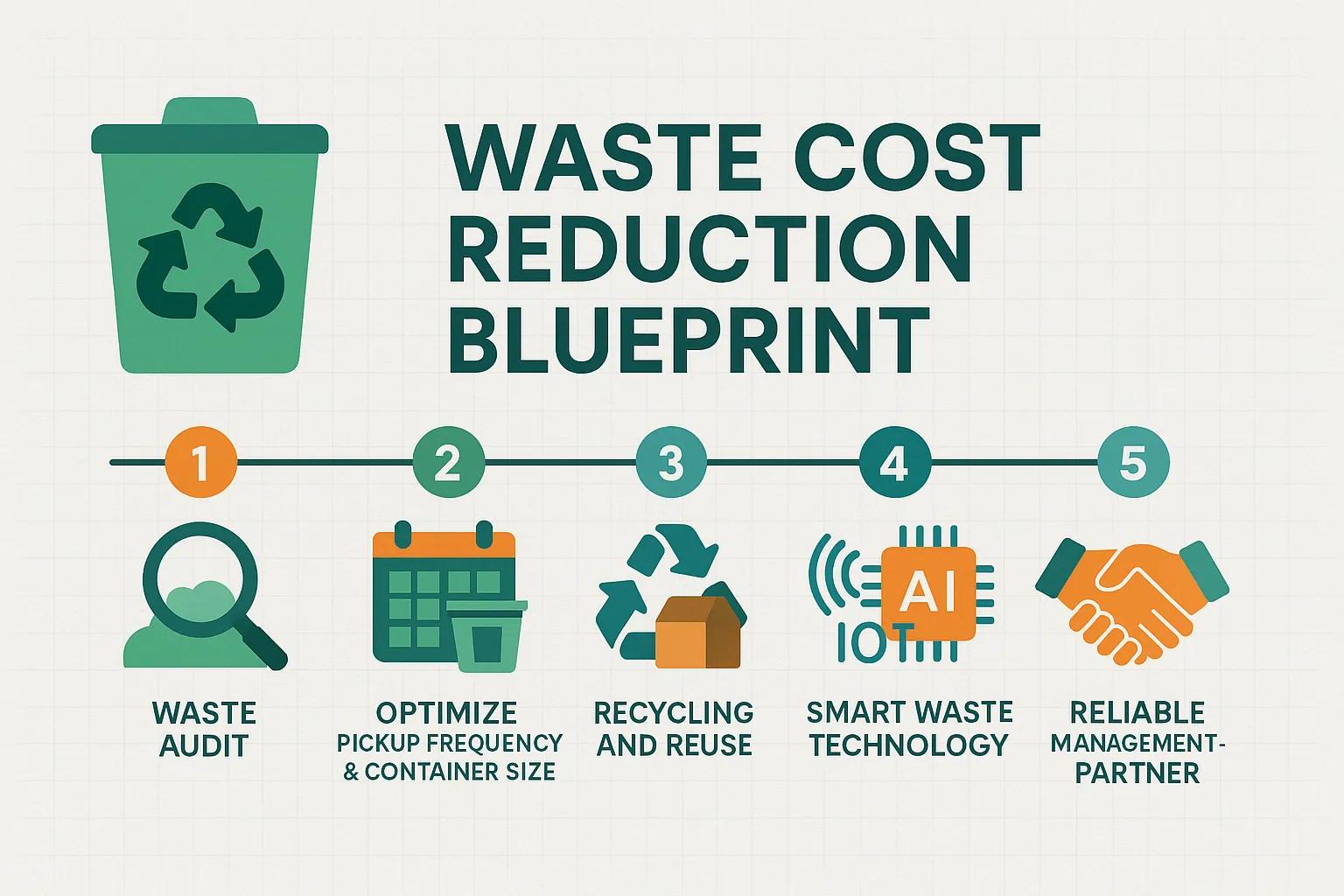
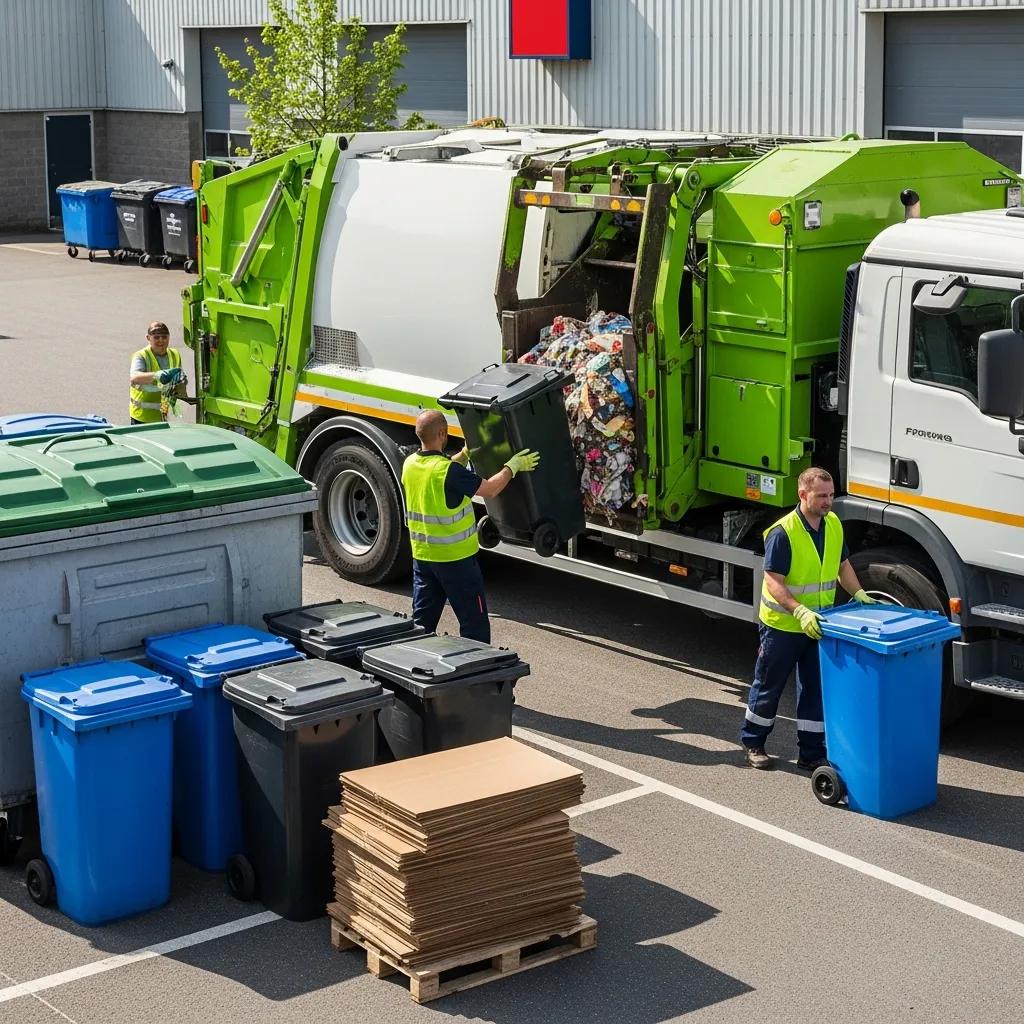
Commercial recycling best practices for multi-location businesses — reduce costs, meet compliance, and accelerate sustainability
By BKThemes
As sustainability becomes non-negotiable, smart commercial recycling is a business advantage — especially for organizations with multiple sites. This guide walks through practical steps to launch and scale recycling programs, run reliable waste audits, and stay on the right side of regulations. You’ll also get a clear view of zero-waste pathways and how better waste practices improve operations and reduce costs.
Managing waste across many locations brings extra complexity: inconsistent processes, different local rules, and varying staff engagement. Below, we break down audits, scalable program design, cost-recovery opportunities, and the tools and expertise that make recycling programs work consistently from site to site.
How can multi-location businesses conduct effective commercial waste audits?
Waste audits are the foundation for smarter recycling. A proper audit shows what you’re generating, where it’s going, and how much you can realistically divert. When done on a regular cadence, audits expose quick wins and recurring cost drivers so you can prioritize actions that move the needle .
What are the key steps in a comprehensive waste audit?

Every thorough audit follows a few clear steps :
- Identifying waste streams : Map the material types at each site — recyclables, organics, and landfill-bound waste — so you know what to target.
- Quantifying waste : Measure volume or weight by stream. Reliable metrics are the only way to track progress and prove savings.
- Analyzing data for insights : Compare results across locations to spot trends, pinpoint contamination sources, and set prioritized action plans.
With that information, you can set realistic diversion targets, standardize interventions, and demonstrate measurable improvements to leadership .
How to standardize waste data collection across multiple sites?
Consistent data is the backbone of scalable programs. Use these practical steps to get everyone reporting the same way :
- Importance of standardization : Standard protocols let you benchmark sites, share best practices, and roll out successful tactics quickly.
- Tools for data collection : Adopt a single waste-tracking platform or mobile app so data flows into one source of truth.
- Training staff on data collection : Train site teams on measuring and logging waste consistently — short, role-specific guides work best.
When data is consistent, decision-making becomes faster and your recycling program scales reliably across regions.
What are the best strategies to design and implement scalable recycling programs?
How do standardized recycling bins and signage improve program efficiency?
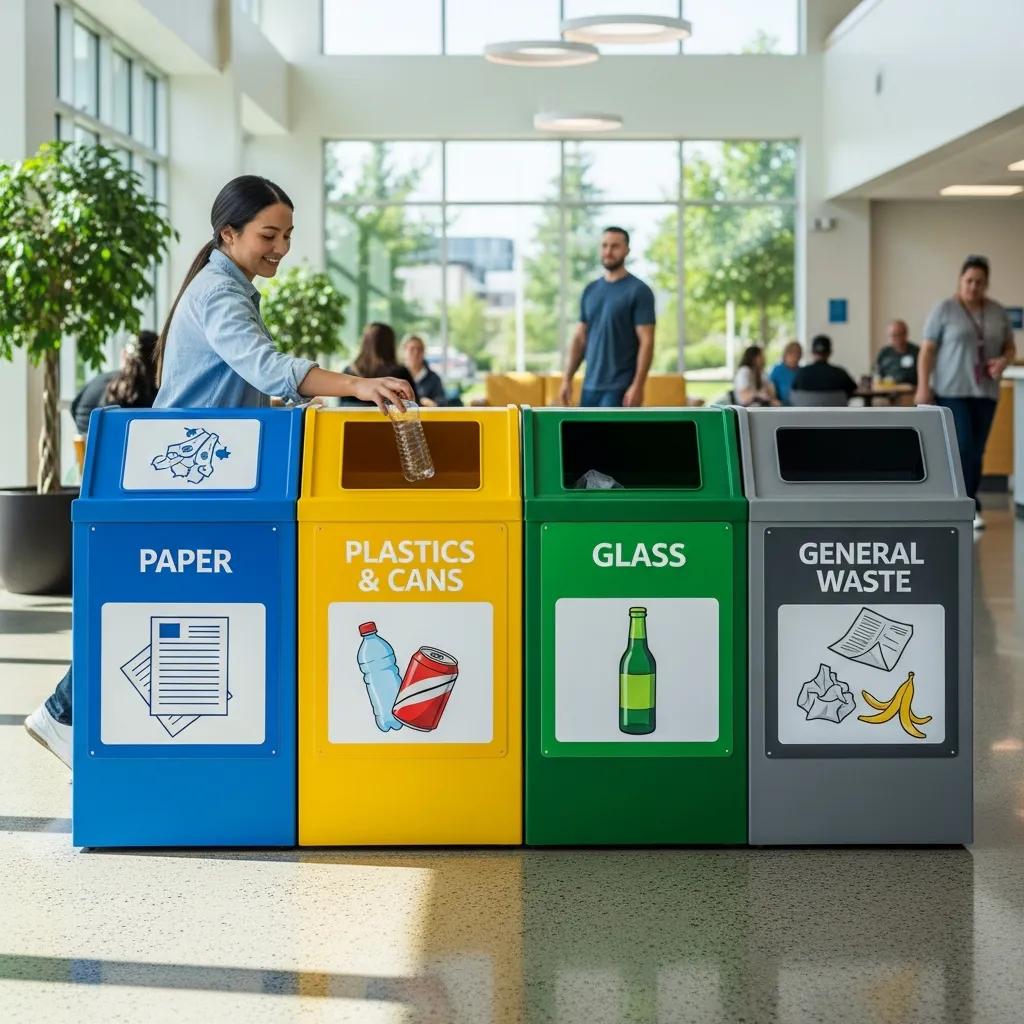
Simple, consistent infrastructure removes friction. Standard bins and clear, uniform signage help people make the right choice fast — and that reduces contamination .
- Types of recycling bins : Use the same bin colors and formats across sites so staff and visitors instantly recognize where items belong.
- Signage best practices : Point-of-decision signs with photos and short dos-and-don’ts reduce confusion more than long policies.
- Impact on recycling rates : Clear, consistent visual cues raise participation and lower contamination — which improves commodity value and lowers handling costs.
Prioritizing easy-to-follow infrastructure and messaging creates consistent user behavior and protects the value of your recyclables .
Research reinforces that posted signage is a cost-effective way to reduce contamination and improve program outcomes .
Reducing recycling contamination with clear signage Recyclers in the U.S. report that contamination undermines both the environmental and economic value of collected materials. Several organizations and municipalities have tested education and posted signage as a practical tool to lower contamination and protect recycling systems. EVALUATING THE EFFECTIVENESS OF SIGNAGE ON REDUCING RECYCLING CONTAMINATION, 2021
What employee training and engagement methods drive recycling success?
People make programs work. Invest in short, repeatable training and engagement that fits day-to-day operations: successful recycling program
- Training program examples : Deliver brief onboarding modules for new hires and quarterly refreshers focused on high-impact behaviors.
- Engagement techniques : Gamification, local champions, and small incentives keep momentum and make recycling a team effort.
- Measuring success of training : Track behavior changes with participation rates and contamination metrics, then iterate on what works.
Turn training into routine practice , not a one-time event, and you’ll see sustained improvements.
Recent work shows gamified approaches can increase participation by rewarding repeatable green behaviors in large organizations .
Gamifying green behaviors to reduce waste Companies have successfully used point systems and participation rewards in eco-workshops to encourage reduction, reuse, recycling, and repurposing — boosting employee engagement and measurable waste reduction. Gamifying sustainability with self-efficacy: motivating green behaviours in large industrial firms, S Haque, 2024
How can businesses achieve cost reduction and financial benefits through optimized recycling?
How does continuous invoice auditing identify hidden fees and overcharges?
Regular auditing of waste invoices is one of the fastest ways to find savings. An ongoing review looks for billing errors, duplicate charges, and misapplied service fees. waste cost reduction solutions .
- Common billing mistakes : Overbilling for pickups, incorrect container sizes, and unauthorized service add-ons are frequent errors.
- How auditing works : Reconcile invoices to contracts and service logs on a monthly basis to catch anomalies early.
- Potential savings from auditing : Correcting errors and renegotiating rates can deliver meaningful cost reductions across all locations.
Make invoice auditing a continuous practice to keep operating costs under control and to provide leverage in vendor conversations .
What are the opportunities to maximize material value and tax incentives?
Recyclables are often an underused revenue source. Combine material identification with policy awareness to unlock value: implement a successful recycling program .
- Identifying valuable materials : Metals, specialty plastics, cardboard, and organics often have the strongest recovery value — prioritize collection and separation for those streams.
- Tax incentives available : Check local, state, and federal programs that reward recycling or investment in circular infrastructure — these can offset implementation costs.
- Selling recyclables for profit : Establish local processing partnerships to sell higher-quality bales and capture resale revenue.
Optimizing material quality and knowing available incentives can turn recycling from a cost center into a net contributor to your bottom line.
How do businesses navigate regulatory compliance in commercial recycling?
What are the federal, state, and local regulations affecting commercial recycling?
Regulatory layers vary by location. Staying compliant means understanding requirements at each level and translating them into site-level procedures :
- Key federal regulations : Familiarize yourself with baseline federal rules like the Resource Conservation and Recovery Act (RCRA) that govern certain waste types.
- State-specific regulations : States often add requirements for recycling, composting, and disposal — review the rules for every state where you operate.
- Local compliance requirements : Municipalities can mandate specific materials, diversion rates, or reporting — incorporate these into your local operating plans.
Document requirements by site and build a compliance checklist to avoid fines and reputational risk .
How does in-house compliance management prevent penalties?
Centralizing compliance activities reduces risk and creates consistency across sites:
- Benefits of in-house management : A dedicated compliance owner or team ensures policies are implemented, audits are scheduled, and records are retained.
- Common compliance pitfalls : Mislabeling streams, missing records, and inconsistent disposal practices are frequent sources of non-compliance.
- Strategies for effective management : Combine routine site audits, role-based training, and clear documentation to close compliance gaps.
Proactive management cuts exposure to penalties and keeps programs running smoothly.
What are the steps to drive sustainability and achieve zero waste certification?
What is the zero waste concept and its benefits for businesses?
Zero waste shifts the focus from disposal to design: reduce inputs, recover resources, and keep materials circulating. The business benefits are measurable .
- Overview of zero waste : The aim is to divert as much material as possible from landfill through better reuse, recycling, and composting systems.
- Benefits for businesses : Reduced disposal costs, stronger brand positioning, and higher employee engagement are common outcomes.
- Impact on the environment : Less landfill volume means lower greenhouse gas emissions and conserved raw materials.
Adopting zero waste principles is a long-term commitment that pays back through cost avoidance and operational improvements. sustainable waste solutions
Zero waste thinking often pairs naturally with lean practices, both aiming to eliminate unnecessary waste in processes and supply chains. For more information on waste management services , check our comprehensive resources.
Applying lean principles to eliminate waste Lean approaches that remove overproduction and inefficiency align with zero waste strategies — together they reduce unnecessary resource use across supply chains and operations. Reducing global supply chains’ waste of overproduction by using lean principles: A conceptual approach, CK Chen, 2019
How does membership in the U.S. Zero Waste Business Council support certification?
Joining industry groups gives practical support on the certification journey :
- Membership advantages : Access to templates, benchmarks, and a community that shares proven tactics and lessons learned.
- Resources available : Toolkits, implementation guides, and assessment frameworks help streamline the certification process.
- Success stories from members : Case studies from peers illustrate common pathways and realistic timelines for achieving certification.
Use membership resources to accelerate planning, avoid common mistakes, and demonstrate progress to stakeholders .
How does technology and expertise enhance commercial recycling success?
What features does the NWA360 client portal offer for waste management transparency?
NWA360 is designed to give you clear, actionable visibility into waste performance across locations :
- Key features of NWA360 : Real-time tracking, consolidated reporting, and configurable dashboards that surface the metrics you care about.
- Benefits for clients : Centralized insights let you compare sites, validate savings, and prioritize high-impact projects.
- How it improves waste management : Better visibility speeds decision-making and strengthens collaboration with waste service partners.
Technology that centralizes data makes program management repeatable and defensible .
How does ongoing gap analysis optimize recycling programs continuously?
Regular gap analysis keeps your program responsive and effective:
- What is gap analysis? : It’s a structured review comparing current practices to industry standards and internal goals to find improvement opportunities.
- Benefits of continuous optimization : Continuous reviews help you adapt to new regulations, market shifts, and operational changes.
- Case studies of successful implementations : Companies that schedule recurring gap reviews consistently raise diversion rates and reduce costs.
Make gap analysis a routine part of program governance to keep momentum and refine tactics over time.
Frequently asked questions
What are the common challenges multi-location businesses face in recycling?
Common hurdles include inconsistent practices across sites, different local regulations, and difficulty getting comparable data. Employee engagement often varies by location, which creates uneven participation and contamination issues. Solving these requires a mix of standardized processes, centralized data, and targeted training .
How can technology improve recycling efforts in multi-location businesses?
Technology simplifies data collection and reporting, giving you a single view of performance across locations. Waste-tracking platforms and mobile apps reduce manual work, enable real-time monitoring, and reveal patterns you can act on. That data supports faster decisions and more consistent program rollout .
What role does employee engagement play in successful recycling programs?
Engaged employees are the difference between a program that exists and one that performs. Training, local champions, visible feedback, and incentives all increase participation. Regular recognition and easy, practical guidance turn recycling into a predictable part of daily operations. recycling program .
How can businesses measure the success of their recycling programs?
Track KPIs like diversion rate, contamination rate, cost per ton, and invoice savings. Combine those with participation metrics and periodic waste audits to get a full picture. Use the data to set targets, report progress , and refine your approach.
What are the benefits of achieving zero waste certification?
Zero waste certification signals commitment and brings tangible benefits: lower disposal costs, better resource recovery, and stronger brand credibility. The certification process also forces systematic improvements that can unlock operational savings and employee engagement.
How can businesses stay updated on recycling regulations?
Subscribe to industry newsletters, join relevant associations, and use a compliance calendar for each jurisdiction. A dedicated compliance lead or team helps translate regulatory changes into site-level requirements and ensures consistent implementation.
Conclusion
Multi-location businesses that treat recycling as an operational priority win on both sustainability and cost. Start with reliable audits, standardize tools and training, use data to guide decisions, and pursue continuous improvement. Those steps will reduce costs, keep you compliant, and build a measurable sustainability program. Explore our tools and resources to begin scaling consistent recycling across your sites.
About the author