Zero Waste Programs: How Businesses Can Achieve Lasting Impact with Effective Waste Reduction Strategies
By BKThemes
Could your organization cut disposal costs, reduce environmental impact, and meet sustainability goals by implementing zero-waste programs? Businesses that adopt comprehensive waste reduction strategies often achieve cost savings up to 20 percent through optimized operations and invoice auditing while diverting more than 90 percent of materials from landfills. This guide reveals how zero waste programs integrate waste audits, the 5 Rs of resource management, circular economy principles, and certification frameworks to deliver lasting impact. You will learn step-by-step implementation methods, advanced diversion solutions—from recycling to composting to specialized streams—and how National Waste Associates’ consolidated dumpster rental and management services support each phase. We also cover certification requirements for TRUE and ZWIA programs, as well as industry-specific roadmaps for retail, manufacturing, and healthcare, and provide strategies to overcome common challenges. By following this blueprint, multi-location enterprises can reduce costs, enhance brand reputation, and build a sustainable foundation for future growth.
What Is a Zero Waste Program and Why Does It Matter for Businesses?
A zero waste program is a structured approach to resource efficiency defined by diverting at least 90 percent of waste away from landfills through reduction, reuse, recycling, and composting, aligning operations with circular economy principles. This framework reduces disposal fees and preserves valuable materials for reintegration into production cycles, as illustrated when a nationwide retailer cuts cardboard disposal by 88 percent and saves thousands monthly. Establishing this program promotes regulatory compliance, strengthens corporate sustainability commitments, and positions firms competitively in markets where customers reward environmental stewardship.
How Does the Zero Waste International Alliance Define Zero Waste?
The Zero Waste International Alliance defines zero waste as designing and managing products and processes to systematically avoid waste, conserve resources, and promote the circular economy. Its guidelines require facilities to divert 90 percent of waste from landfill or incineration through source reduction, material reuse, and closed-loop recycling. By adopting these standards, businesses align with global best practices and demonstrate measurable progress toward sustainability goals. ( efficient waste management )
UC Berkeley Chou Hall: Achieving TRUE Zero Waste Certification. “We initiated the TRUE Zero Waste certification for Chou Hall as our beacon to demonstrate that zero waste is definitely achievable for the …UC Berkeley Chou Hall: Can the TRUE Zero Waste Team Overcome Challenges to Achieve Top Certification?, Unknown Author, 2024
What Are the Core Principles of Zero Waste and the Circular Economy?
Zero waste and circular economy principles center on eliminating waste at the source, keeping materials in continuous use, and regenerating natural systems. This approach emphasizes product design for longevity, repairability, and recyclability while leveraging byproducts as inputs for new processes. Businesses that embed these principles reduce procurement costs, foster innovation in material reuse, and support resilient supply chains.
How Do Zero Waste Programs Benefit Businesses Economically and Environmentally?
Zero waste programs lower operational costs by reducing tipping fees and generating revenue from recyclables, often cutting waste expenses by up to 20 percent. Environmentally, diverting organic and recyclable materials mitigates greenhouse gas emissions and conserves resources. Companies that track diversion rates through data analytics can quantify savings and claim verified green credentials to investors and customers.
What Role Does Sustainability Play in Corporate Waste Reduction?
Sustainability provides the strategic context for corporate waste reduction by tying diversion targets to Environmental, Social, and Governance objectives. Embedding sustainability in procurement, production, and end-of-life management ensures continuous improvement in resource efficiency. Organizations that integrate sustainability reporting into zero waste programs enhance transparency and stakeholder trust.
How Do You Implement a Zero Waste Program Step-by-Step?
Implementing a zero waste program involves a clear sequence of actions—from auditing waste streams to setting SMART targets and engaging employees—to embed waste reduction in operations. This method transforms raw data into actionable insights, aligns personnel incentives with diversion goals, and ensures supportive infrastructure like recycling bins and composting systems. For example, a manufacturing facility conducted a baseline audit, set a 75 percent diversion target within six months, and achieved 92 percent through strategic recycling initiatives.
How Is a Comprehensive Waste Audit Conducted for Business Waste Streams?
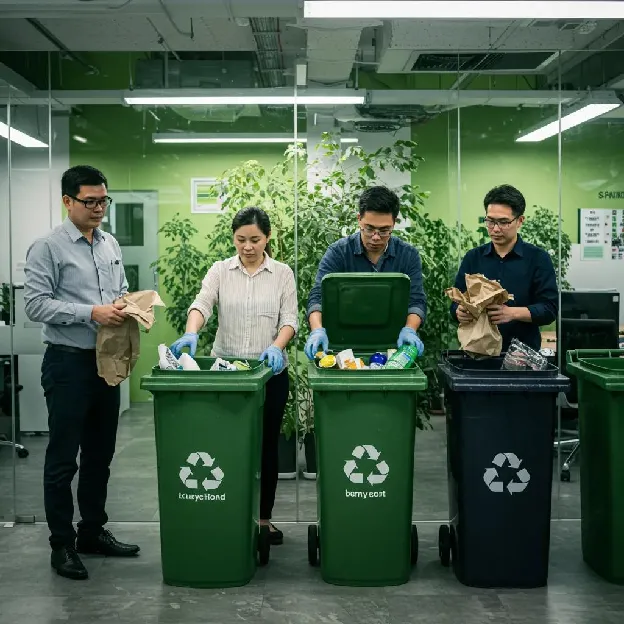
A comprehensive waste audit systematically collects and categorizes all materials generated over a defined period to establish baseline diversion rates. Teams sort waste into discrete streams—paper, plastics, organics, metal, electronic—and weigh each category to quantify volume and cost impact. This analysis reveals high-impact reduction opportunities, such as eliminating single-use packaging or separating food scraps for composting.
How Do You Set Measurable Zero Waste Goals and Targets?
Measurable zero waste goals follow the SMART framework: Specific, Measurable, Achievable, Relevant, Time-bound. For instance, aim to reduce landfill disposal by 50 percent within 12 months or increase commercial recycling rates to 60 percent by quarter four. Regular tracking against these milestones ensures accountability and drives continuous progress.
What Are the 5 Rs of Zero Waste and How Do They Apply to Businesses?
Below is a breakdown of the 5 Rs—Refuse, Reduce, Reuse, Recycle, Rot—illustrating how each principle optimizes waste management :
| Practice | Strategy | Business Impact |
|---|---|---|
| Refuse | Decline unnecessary materials and packaging | Prevents waste generation before it occurs |
| Reduce | Minimize resource consumption and excess | Cuts procurement costs and disposal fees |
| Reuse | Repurpose items and equipment internally | Extends asset life and reduces purchase needs |
| Recycle | Process materials into new goods | Generates revenue from recyclables and lowers disposal |
| Rot | Compost organic waste on-site or off-site | Diverts organics, enriches soil, and reduces methane risk |
Applying these Rs sequentially yields compound cost and environmental benefits. Next, engaging staff ensures each principle is embedded in everyday routines.
How Can Employee Engagement Foster a Zero Waste Culture?
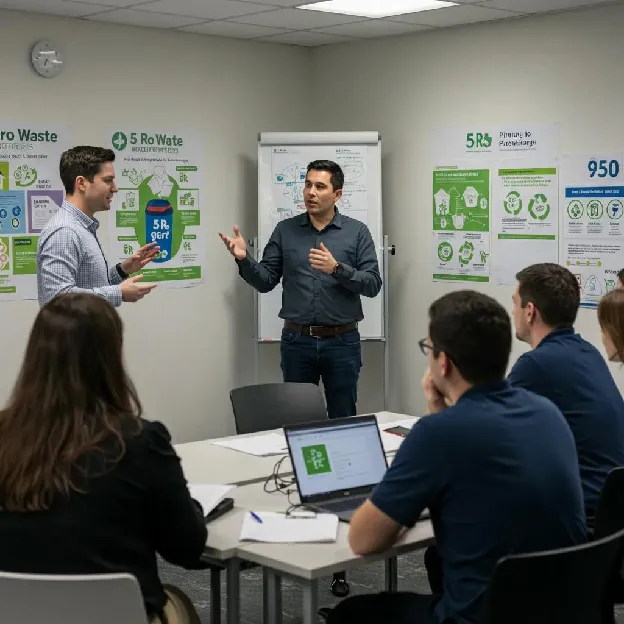
Employee engagement fosters a zero-waste culture by empowering teams with training, clear roles, and recognition programs tied to diversion milestones. Workshops on sorting protocols, regular communications of progress metrics, and incentive structures reinforce behaviors. When staff participate in brainstorming reduction ideas, innovation accelerates and program ownership deepens.
How Does National Waste Associates Support Zero Waste Implementation?
National Waste Associates provides end-to-end support for zero waste implementation, from conducting baseline waste audits to designing tailored dumpster rental and recycling solutions across multiple locations. Their consolidated waste management platform delivers real-time diversion data, invoice auditing, and a dedicated account manager to ensure compliance and continual improvement. Partnering with their network of 3,500 haulers streamlines logistics and maximizes cost savings.
What Are Effective Waste Diversion Strategies and Solutions for Businesses?
Effective waste diversion combines advanced recycling systems, organics management, specialized stream handling, and optimized container deployment to capture value from all waste types. This multi-faceted strategy integrates infrastructure, training, and analytics to achieve high diversion rates. For example, a large retailer implemented front-load recycling bins, on-site organics composting, and e-waste collection, which collectively boosted diversion from 60 percent to 92 percent in nine months.
How Do Advanced Commercial Recycling Programs Work?
Advanced commercial recycling programs deploy specialized bins for paper, plastics, metals, and glass, supported by vendor coordination and scheduled pickups. Materials collection is tracked via barcode scanning and weight reporting, enabling granular diversion analytics. Businesses benefit from reduced landfill volumes and generate revenue or cost offsets through recyclable commodity streams.
What Are the Benefits of Commercial Composting and Organics Management?
Commercial composting transforms food scraps, landscaping debris, and paper fibers into nutrient-rich soil amendments. Diverting organics from landfill cuts methane emissions and often qualifies businesses for sustainability incentives. Integrating composting bins in cafeterias and landscaping operations can achieve up to 30 percent additional diversion.
How Should Specialized Waste Streams Like E-Waste and Construction Debris Be Managed?
Specialized streams such as e-waste, batteries, and construction debris require dedicated handling through certified recycling and disposal partners. E-waste programs ensure data destruction and material recovery, while construction waste protocols separate concrete, wood, and metal for reuse or recycling. Proper segregation reduces environmental liability and captures salvage value from materials. construction debris and waste protocols separate concrete, wood, and metal for reuse or recycling. Proper segregation reduces environmental liability and captures salvage value from materials.
How Can Optimized Dumpster Rental Improve Waste Diversion?
Optimized dumpster rental improves diversion by matching container types and sizes to specific waste streams, reducing cross-contamination and minimizing container turnover. National Waste Associates’ roll-off dumpsters and compactors are calibrated to each site’s volume profiles, ensuring cost-efficient pickups and maximizing recycling potential. This infrastructure underpins reliable segregation and drives higher diversion percentages.
How Can Businesses Achieve Zero Waste Certification and What Are the Requirements?
Achieving zero waste certification requires meeting diversion thresholds, documenting waste reduction processes, and undergoing a third-party assessment to validate program integrity. Certification signals environmental leadership and supports corporate sustainability reporting. For example, TRUE certification mandates documented diversion of at least 90 percent of waste over 12 months, while ZWIA recognition focuses on adherence to global zero waste principles.
What Is TRUE Zero Waste Certification and How Does It Work?
TRUE Zero Waste Certification is a performance-based program managed by Green Business Certification Inc. that verifies facilities divert at least 90 percent of waste from landfill and incineration. Applicants submit waste audit data, process documentation, and diversion reports, which are reviewed by GBCI auditors. Certified organizations demonstrate continual improvement and transparent diversion metrics.
Zero Waste Management: Lessons Learned and Guidelines. This study reveals that the scope of the zero waste studies is diverse, and a zero waste … the zero waste programmes are applied in many countries without any holistic zero waste …A comprehensive review of the development of zero waste management: lessons learned and guidelines, AU Zaman, 2015
How Does the Zero Waste International Alliance Certification Support Businesses?
The Zero Waste International Alliance certification endorses organizations that apply ZWIA’s definition and guidelines, including source reduction, closed-loop recycling, and circular economy design. This recognition validates processes that prevent waste generation and aligns companies with an international community of zero-waste practitioners. Certification raises stakeholder confidence and can unlock partnership opportunities.
Moving Toward Zero Waste Cities: A Nexus for Collaboration. The theory of zero waste reconceptualises waste as a resource, which must be conserved, used efficiently, and cycled back into the economic system. Zero waste seeks to assertively redirect the focus of society’s innovation, investment, education, R&D, government, business, and community policies and programs away from value-destroying ‘burn-bury’ disposal practices. Moving toward zero waste cities: A nexus for international zero waste academic collaboration (NIZAC), A Zaman, 2019
How Can National Waste Associates Help Businesses Prepare for Certification?
National Waste Associates assists businesses in preparing for certification through comprehensive waste audits, data management platforms, and advisory support on diversion strategies. Their consultants guide documentation, track progress against certification thresholds, and recommend infrastructure adjustments, such as adjusted dumpster sizes and additional recycling streams. This partnership accelerates readiness and ensures compliance with certification standards.
What Are the Key Differences Between TRUE and ZWIA Certifications?
| Certification | Provider | Diversion Requirement | Focus |
|---|---|---|---|
| TRUE Zero Waste | Green Business Certification Inc. | ≥ 90 percent | Performance-based, facility level |
| ZWIA Certification | Zero Waste International Alliance | ≥ 90 percent | Guideline-based, process design |
While both programs share diversion targets, TRUE emphasizes audited performance metrics, whereas ZWIA highlights adherence to circular economy design and organizational practices. Businesses may pursue one or both to reinforce their sustainability leadership.
What Are Industry-Specific Zero Waste Solutions for Different Business Sectors?
Zero waste strategies must adapt to each industry’s operational realities, from packaging reduction in retail to material scrap management in manufacturing and medical disposal in healthcare. Tailored solutions address sector-specific waste profiles and regulatory requirements, driving higher diversion and compliance.
How Can Retail Chains Implement Zero Waste Programs Effectively?
Retail chains implement zero waste by optimizing packaging materials, establishing in-store recycling and organics drop-off points, and partnering with reusable container systems. Consolidated dumpster rental ensures consistent waste stream separation across multiple locations, while centralized data dashboards track diversion performance and identify high-impact reduction opportunities.
What Are the Best Practices for Zero Waste in Manufacturing Facilities?
Manufacturing facilities minimize scrap through material reuse loops, in-house recycling of metal and plastic offcuts, and process optimization to reduce defects. On-site compactors and balers consolidate recyclables, and granular bin placement near production lines facilitates immediate sorting. These practices reduce raw material costs and improve operational efficiency.
How Do Healthcare Facilities Manage Medical and Disposable Waste Sustainably?
Healthcare facilities segregate regulated medical waste from general and recyclable streams, employing autoclave sterilization for certain items and partnering with certified e-waste recyclers for electronic disposables. Sharps containers, pharmaceutical take-back programs, and specialized recycling bins ensure compliance while maximizing diversion within safety guidelines.
How Does Consolidated Waste Management Simplify Multi-Location Businesses’ Zero Waste Efforts?
Consolidated waste management centralizes vendor coordination, invoice auditing, and performance reporting across 50 to 5,000 sites, delivering uniform service standards and volume-based pricing. National Waste Associates’ platform provides real-time analytics on dumpster rental usage, diversion rates, and cost savings, enabling enterprise-wide program optimization and streamlined compliance.
How Does Implementing Circular Economy Principles Enhance Zero Waste Programs?
Implementing circular economy principles strengthens zero-waste programs by shifting the focus from end-of-life management to product redesign, resource recapture, and reuse systems. This endows organizations with resilient supply chains and reduced raw material dependency while extending product lifecycles. The circular economy changes your waste
What Are the Key Elements of the Circular Economy in Business Operations?
Key elements include designing products for disassembly, establishing reverse logistics for material return, and leveraging byproducts as feedstock for new production. This systemic approach transforms waste streams into resource streams, driving innovation and reducing procurement costs.
How Do Circular Economy Strategies Reduce Waste and Costs?
Circular economy strategies reduce landfill disposal by reclaiming materials and reintroducing them into production cycles, cutting raw material purchases, and avoiding disposal fees. Companies report savings of up to 30 percent on procurement and 20 percent on waste management through closed-loop programs.
How Can Technology and Data Analytics Optimize Waste Streams?
Technology and data analytics enable real-time tracking of waste volumes, container fullness, and diversion rates through IoT-enabled sensors and cloud dashboards. Predictive algorithms optimize pickup schedules, container sizes, and recycling vendor selection, further lowering costs and maximizing diversion efficiency.
What Are Common Challenges in Zero Waste Programs and How Can They Be Overcome?
Zero-waste programs face hurdles, including staff buy-in, inconsistent segregation practices, and infrastructure gaps. Addressing these challenges requires targeted training, standardized sorting protocols, and robust partner support to sustain momentum and reach diversion goals.
How Do Businesses Address Employee Engagement and Training Barriers?
Combat engagement barriers by conducting role-specific training sessions, gamifying diversion targets, and recognizing teams for milestones reached. Embedding clear sorting guides at disposal points and hosting periodic refreshers reduces confusion and boosts participation.
What Are Typical Obstacles in Waste Stream Segregation and Diversion?
Common obstacles include contamination of recycling bins, lack of clear signage, and irregular pickup schedules that disrupt diversion efforts. Standardized container color coding, scheduled audits, and timely haul pickups mitigate these issues and maintain consistent program performance.
How Can Partnering with Expert Waste Management Services Mitigate Risks?
Partnering with expert services like National Waste Associates mitigates risks by providing proven segregation protocols, infrastructure optimization, and regulatory compliance guidance. Their consolidated model and dedicated account management ensure rapid issue resolution and continual program refinement.
Businesses that embrace these strategies transform waste liabilities into resource opportunities while reinforcing sustainability leadership. National Waste Associates stands ready to support zero-waste initiatives with tailored dumpster rental, comprehensive audits, and industry-leading diversion solutions.
Achieving zero waste is a structured journey that hinges on data-driven audits, SMART targets, and the 5 Rs of resource management. By integrating circular economy design, sector-specific best practices, and certification processes, organizations unlock significant cost savings and environmental benefits. National Waste Associates’ consolidated waste management platform and dumpster rental infrastructure provide the essential support to meet and exceed diversion thresholds across all locations. Commit to zero waste today and secure a sustainable future for your enterprise.
About the author