Learning how to effectively recycle at home is one of the easiest ways to reduce your environmental footprint. It doesn’t require expensive equipment or drastic lifestyle changes. With a few simple habits, you can turn daily waste into reusable resources and keep recyclable materials out of landfills.
Many households want to recycle but feel confused about what goes where. The good news? Once you create a clear system, recycling becomes second nature. This guide explains practical steps you can start today.
Why Home Recycling Matters
Recycling helps conserve natural resources, reduce pollution, and lower energy use. For example:
- Recycling paper saves trees and water.
- Recycling aluminum uses far less energy than producing new metal.
- Recycling plastic can reduce landfill waste.
- Recycling glass keeps materials in use indefinitely.
When millions of homes recycle consistently, the combined impact is huge.
Understand What Can Be Recycled
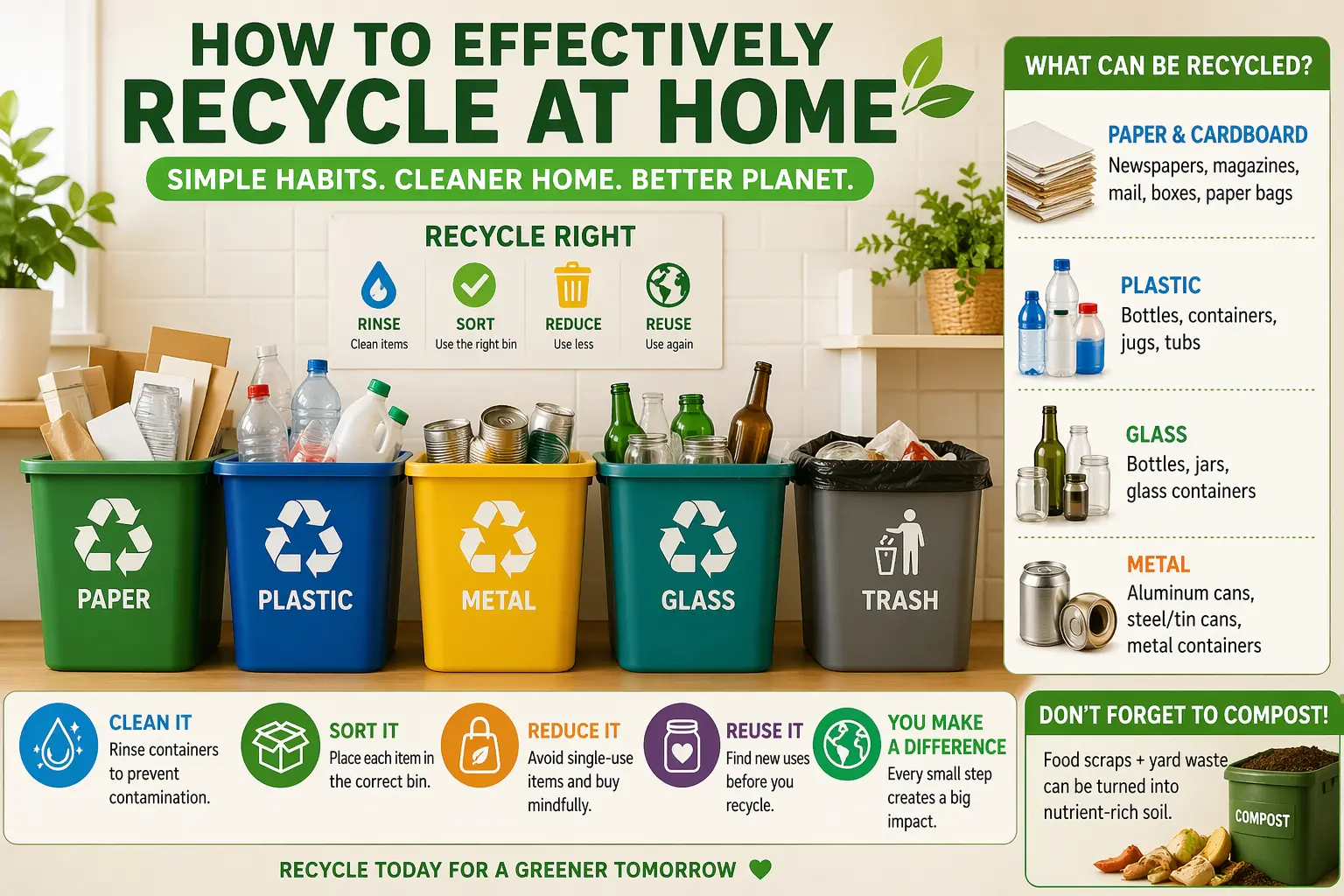
Before tossing items into a recycling bin, know your local rules. Different cities accept different materials. Common recyclable items include:
| MaterialOften | Accepted |
|---|---|
| Paper | Newspapers, office paper, mail |
| Cardboard | Shipping boxes, cereal boxes |
| Plastic | Bottles, jugs, containers |
| Glass | Bottles and jars |
| Metal | Aluminum cans, steel tins |
Visit your local municipality website or for guidance.
Set Up a Smart Recycling Station
Creating an easy system at home makes recycling effortless.
Choose the Right Bins
Use separate containers for:
- Paper/cardboard
- Plastics
- Glass/metal
- Compost
- Trash
If space is tight, use stackable bins.
Label Everything Clearly
Labels prevent confusion. Use words or pictures so children and guests can help too.
Clean Items Before Recycling
One greasy pizza box or sticky container can contaminate other recyclables. Rinse quickly before tossing items in the bin.
Best examples:
- Rinse milk jugs
- Wash food cans
- Empty peanut butter jars
- Remove leftover liquids from bottles
No need to scrub spotless—just make them clean enough.
Sort Materials Correctly
Proper sorting improves recycling success.
Paper and Cardboard
Recycle:
- Newspapers
- Dry cardboard boxes
- Paper bags
Do not recycle:
- Greasy paper
- Wax-coated paper
- Wet cardboard
Plastic Containers
Check the resin number on the bottom. Many programs accept #1 and #2 plastics commonly.
Recycle:
- Water bottles
- Shampoo bottles
- Detergent jugs
Glass and Metal
Recycle:
- Glass jars
- Soda cans
- Food tins
- Aluminum containers
Remove lids if required locally.
Reduce Before You Recycle
The best waste is waste never created. Try these habits:
- Buy in bulk
- Use reusable shopping bags
- Choose refillable bottles
- Avoid single-use plastics
- Buy durable products
Reducing consumption lowers the need for recycling altogether.
Reuse Household Items Creatively
Before discarding something, ask: can it be reused?
Examples:
- Glass jars as storage containers
- Old shirts as cleaning rags
- Cardboard boxes for organizing closets
- Tin cans as plant holders
Reusing extends product life and saves money.
Compost Food Waste
Many kitchen scraps should not go in trash. Composting turns food waste into nutrient-rich soil.
Good compost items:
- Fruit peels
- Vegetable scraps
- Coffee grounds
- Eggshells
- Dry leaves
Avoid:
- Meat
- Dairy
- Oily foods
Even a small countertop compost bin can make a difference.
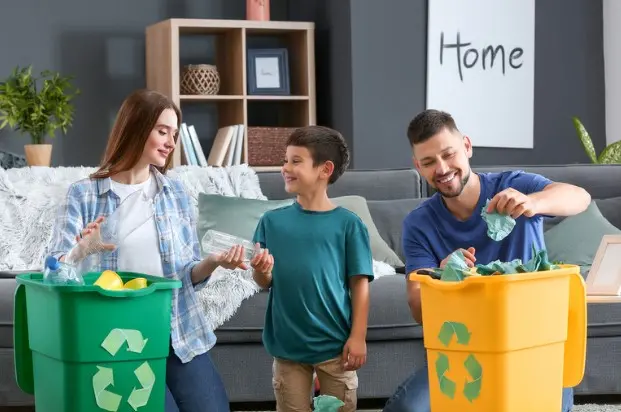
Teach the Whole Family
Recycling works best when everyone joins in.
Ways to involve family:
- Give children labeled bins
- Turn sorting into a game
- Set weekly recycling goals
- Explain why recycling matters
Habits built at home often last a lifetime.
Common Recycling Mistakes to Avoid
Avoid these common errors:
- Putting plastic bags in curbside bins
- Recycling dirty food containers
- Tossing batteries in regular recycling
- Including electronics in household bins
- “Wish-cycling” items you hope are recyclable
When unsure, check local rules first.
Best Tools for Easier Recycling
Helpful items include:
- Stackable sorting bins
- Compost pail with lid
- Reusable grocery bags
- Label maker
- Storage containers for bottle returns
Simple tools make habits stick.
FAQs
1. What is the best way to start recycling at home?
Begin with one labeled recycling bin for paper, plastic, and cans based on local guidelines.
2. Should recyclables be washed?
Yes, rinse food residue to prevent contamination.
3. Can pizza boxes be recycled?
Only clean parts. Greasy sections usually belong in trash or compost.
4. What plastics are easiest to recycle?
1 PET and 2 HDPE are commonly accepted.
5. Is recycling enough to reduce waste?
No. Reducing and reusing are even more effective.
6. How do I recycle batteries or electronics?
Use special drop-off centers or retailer take-back programs.
Conclusion
Knowing how to effectively recycle at home can transform everyday habits into real environmental impact. Start small: set up bins, rinse containers, sort correctly, and reduce waste where possible. Over time, these actions become automatic and create a cleaner, more sustainable home.
Every bottle, can, box, and jar recycled properly counts. Small steps today lead to a healthier tomorrow.
About the author